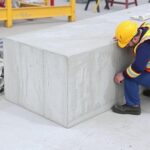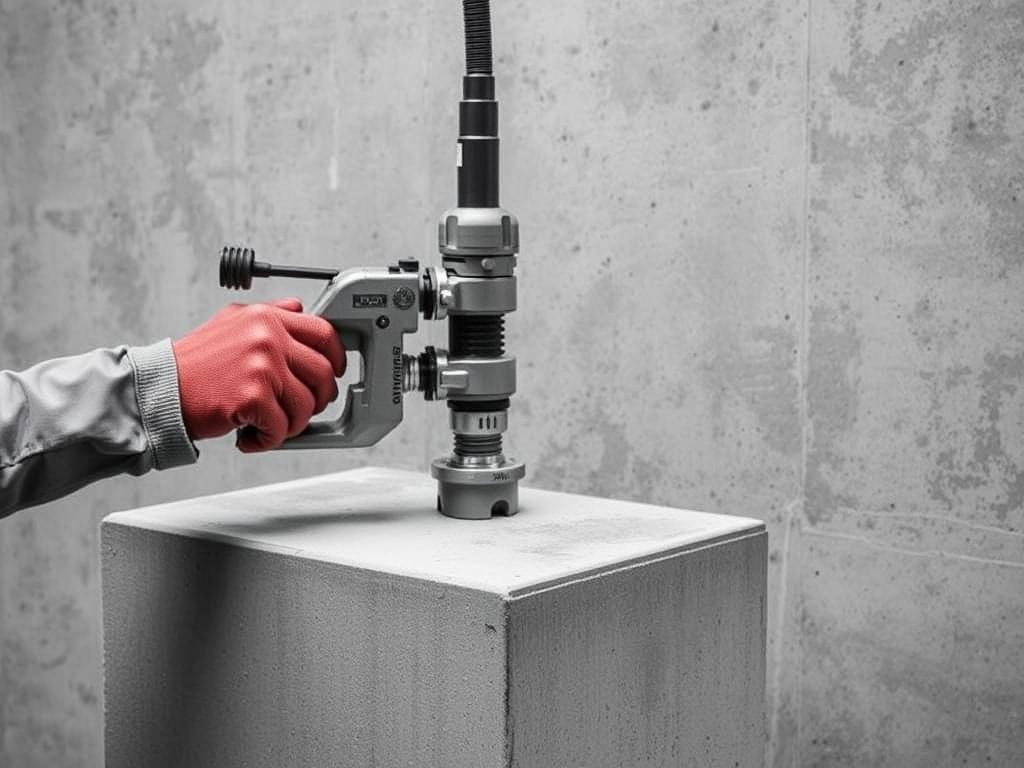
Concrete keeps our cities standing and our roads carrying traffic, but knowing how strong that concrete is often means more than visual inspection. Engineers and inspectors rely on a toolbox of non-destructive testing methods for evaluating concrete strength so they can detect deterioration, plan repairs, or confirm design assumptions without drilling up half a structure.
This article walks through the principles, common instruments, limitations, practical tips, and real-world uses of those methods. I’ll share field observations I’ve gathered over years of inspections and rehabilitation projects, and give guidance you can use when commissioning or performing tests on bridges, columns, slabs, or precast elements.
Why nondestructive evaluation matters
Cutting cores or demolishing sections of a structure gives direct information, but those approaches are expensive, time-consuming, and sometimes impossible on critical elements. Non-destructive techniques let you sample the structure’s behavior in place and make informed decisions about safety and service life.
Beyond preserving the element under test, these methods reduce traffic disruptions, avoid weakening structural continuity, and often allow more measurements across a larger area—yielding better statistical confidence than a few isolated cores.
Basic physical principles behind the tests
Most non-destructive techniques infer strength indirectly from physical properties that change as concrete cures or deteriorates. Two of the most common proxies are elastic wave speed and surface hardness; both respond to factors such as density, cracking, and microstructure.
Elastic waves (ultrasonic pulses and impact-generated waves) travel faster in denser, more intact concrete. Surface hardness tests measure the resistance of the near-surface mortar and aggregate to indentation, which loosely correlates with compressive strength. Both are influenced by moisture, temperature, aggregate type, and carbonation, so interpretation requires care.
Overview of common methods
There is no single universal test that fits every situation. The typical strategy is to combine two or more methods—each with different sensitivities—to build a coherent picture. Below are the most widely used techniques, what they measure, and when they’re most useful.
Each method is described in its own subsection with practical notes on field use and typical pitfalls to watch for.
Rebound hammer (surface hardness)
The rebound hammer, often called the Schmidt hammer, gauges surface hardness by measuring the rebound of a spring-driven mass after it strikes the concrete. The resulting rebound number is then correlated to compressive strength through charts or site-specific calibration.
Its advantages are speed and simplicity: dozens of readings can be taken in minutes and the instrument is portable. The downside is that it’s heavily sensitive to surface conditions—moisture, roughness, carbonation, and even the presence of finish layers can skew results.
In one bridge deck inspection I worked on, rebound numbers on exposed edges differed by more than 20 points from those on finished surfaces. We had to mechanically remove thin surface laitance before getting usable, repeatable readings.
Ultrasonic pulse velocity (UPV)
UPV measures the travel time of a high-frequency sound pulse through concrete. Faster pulses indicate denser, more homogeneous material while slow or attenuated pulses can reveal cracking, voids, or degradation.
There are direct, semi-direct, and indirect measurement configurations, and selecting the right one depends on accessibility. Direct transmission (transducers on opposite faces) is the most reliable, but not always possible in the field.
UPV is useful for locating internal flaws and estimating elastic properties, and when combined with surface hardness tests it improves strength estimations. In a pier inspection I recall, high attenuation and reduced velocity signaled delamination before it was visible; targeted cores then confirmed internal cracking due to corrosion-induced expansion.
Penetration resistance (Windsor probe)
Penetration resistance tests drive a probe into the concrete surface with a known energy and measure the penetration depth. The depth is related to near-surface compressive strength and is commonly used on-site for quality control of new pours.
Because the procedure penetrates the surface, it is minimally invasive and faster than full coring. However, it still leaves small holes and is sensitive to aggregate hardness and cover depth, so local calibration is essential.
Pull-out and pull-off tests
Pull-out and pull-off tests measure the force required to extract an embedded insert or pull a bonded disc from the surface. These tests probe in-situ tensile or near-surface bond strength and are more directly related to structural capacity than surface hardness alone.
They are often used when pull-out behavior is critical, such as for anchorage design or to evaluate bonded repair materials. Because pull tests exert significant localized stresses, they are more invasive and require careful restoration of the test location afterward.
Impact-echo and acoustic emission
Impact-echo treats concrete like a thin plate and interprets reflected elastic waves to detect delamination, voids, and thickness. A mechanical impulse creates stress waves; their reflection frequencies reveal internal defects and layer thicknesses.
Acoustic emission listens for ongoing crack growth under load or environmental action by recording transient stress waves. It’s especially valuable for monitoring active deterioration processes rather than static strength alone.
Ground-penetrating radar (GPR)
GPR sends electromagnetic waves into the structure and measures reflections from interfaces of different dielectric properties. It is excellent for locating rebar, voids, and delamination in concrete elements and for mapping cover thickness across large areas.
GPR is non-contact and fast, but interpretation requires experience because signals depend on moisture content, aggregate type, and layering. It is commonly paired with other tests to confirm suspected anomalies.
Infrared thermography
Infrared cameras detect surface temperature variations that can indicate subsurface defects like delaminations or moisture ingress. Thermal gradients appear because voids and delaminated regions change how the surface heats and cools.
Thermography is non-contact and can quickly survey large areas, but it is indirect and depends on environmental conditions—wind, solar loading, and ambient temperature can mask or create false indications.
Combination approaches and hybrid techniques
Because each method targets different physical properties, combining them often yields the most reliable inference about compressive strength and integrity. For example, pairing rebound hammer readings with UPV and a few cores produces a stronger statistical correlation than any single method.
In practice, I often start with broad-coverage, noncontact surveys (GPR, thermography) to map the structure, then apply contact-based probes (UPV, rebound) in suspect zones and remove a handful of cores for laboratory verification and calibration.
How non-destructive measurements relate to compressive strength
Most non-destructive methods are proxies rather than direct measures of compressive strength. That means you infer strength through empirical correlations or predictive models that must be validated for the specific materials and conditions at the site.
Common approaches include simple linear regressions between rebound number and lab-measured compressive strength, multivariate models combining UPV and rebound, and more sophisticated statistical methods that account for sources of variation and measurement uncertainty.
Calibration: the single most important step
A set of cores taken near test locations provides ground truth and lets you calibrate your field measurements. The calibration should be large enough to capture material variability and reflect representative construction areas—not just the obvious good or bad spots.
On a rehabilitation project I managed, we extracted 12 cores across three girders and found a systematic offset between Schmidt hammer numbers and lab strengths because the structure used a hard coarse aggregate. Adjusting the correlation based on those cores reduced prediction errors significantly.
Common confounders and how to account for them
Moisture substantially affects results: wet concrete conducts ultrasonic waves differently and gives higher rebound numbers due to surface softening. Carbonation increases surface hardness without improving internal strength, misleading surface-based tests.
Other confounders include cover thickness, aggregate type, reinforcement proximity, curing history, and surface condition. Good practice is to control or record these variables, apply corrections where standards provide them, and avoid overreliance on a single technique.
Practical workflow for field testing
A structured testing program improves both efficiency and the quality of conclusions. A typical workflow starts with planning, broad screening, focused testing, calibration, and then reporting with quantified uncertainty.
Below is a practical checklist you can adapt for most concrete inspections.
- Define objectives: strength estimation, defect detection, or quality control.
- Review drawings and previous reports to identify critical areas.
- Conduct non-contact surveys (GPR, thermography) for mapping anomalies.
- Perform contact tests (rebound, UPV, penetration) in a statistically sound grid and in suspected zones.
- Extract representative cores for laboratory compressive testing to calibrate correlations.
- Analyze combined data, apply statistical models, and document uncertainty and limitations.
Choosing test locations and sample size
Test locations should represent the structure’s range of conditions: near supports, at midspan, at locations of high exposure, and where visual distress appears. Avoid clustering all tests in one accessible area; randomness and stratification help capture variability.
There’s no universal rule for sample size, but a handful of well-placed cores (commonly 6–12 for a typical small structure) plus many rapid field tests usually provide a sound basis. For large or critical structures, increase the number until the confidence interval on estimated strength becomes acceptable to stakeholders.
Field setup and environmental considerations
Temperature, wind, and wetness affect many instruments. Most standards recommend testing at moderate temperatures and avoiding readings immediately after rainfall or when the surface is sun-heated. Record environmental conditions with every test batch.
Calibration of instruments before and during the campaign is essential. Carry reference blocks for rebound hammers and check UPV transducer coupling materials. Small mistakes in setup are responsible for many false leads in field reports.
Interpreting and combining results
Raw numbers from the instruments mean little without context. Interpretations should include statistical measures—mean, standard deviation, minimum and maximum—and describe correlations with core results.
When combining different techniques, consider weighted approaches that favor more direct indicators. For example, UPV combined with rebound often yields a better prediction of compressive strength than either method alone, and cores should be used to anchor the regression model.
Simple statistical methods
Linear regression between field readings and core strengths is the most common method for developing a predictive relationship. Always report the coefficient of determination (R²) and the standard error of estimate to show how well the model performs.
When data show heteroscedasticity or nonlinearity, transform variables or use nonlinear models. For structures with substantial material heterogeneity, prefer robust statistical techniques that resist the influence of outliers.
Advanced approaches: machine learning and Bayesian methods
Recent projects have successfully used machine learning models—random forests, support vector machines, and neural networks—to fuse multisensor data and predict strength or defects. These models can capture complex interactions between variables but require more data and careful cross-validation.
Bayesian approaches are also useful: they let you combine prior information (design strength, age, known exposure) with current measurements and explicitly quantify uncertainty. For critical assets where conservative decision-making matters, probabilistic outputs can be more informative than single-point estimates.
Reporting: what a useful field report contains
A clear report is as important as the tests themselves. Decision-makers need understandable conclusions, not just pages of numbers. A useful report links tests to actions and spells out confidence levels and limitations.
Include the following essentials: objectives, test methods and standards used, environmental conditions, instrument calibration records, raw data tables, statistical analyses, photographs and maps of test locations, core test results, and recommended next steps.
Quantifying uncertainty
Every non-destructive prediction should carry an uncertainty estimate. This could be a standard error from the regression model or a Bayesian credible interval. Reporting uncertainty prevents overconfident decisions and clarifies whether further testing is warranted.
For example, if the estimated compressive strength has a ±10% uncertainty and the design required 20 MPa, decision-makers can weigh whether immediate action is needed or if additional cores will narrow the uncertainty.
Standards, accreditation, and training
Testing must follow recognized procedures to be defensible. Many countries adopt standards produced by technical bodies that define test setup, calibration, and interpretation. Familiar standards exist for the Schmidt hammer and UPV, and accredited laboratories can handle core testing and petrographic analysis.
Operators should be trained and periodically requalified because much of the value in these methods comes from correct instrument handling and data interpretation—not just the hardware itself.
Common standards to consult
When planning a program, consult relevant national and international standards for specific procedures and reporting formats. Standards will typically specify instrument calibration requirements, testing geometry, and methods for correcting environmental influences.
Where standards differ, document which one you used and why, so that the report remains auditable and consistent with client expectations or regulatory needs.
Limitations and common pitfalls
No non-destructive method is foolproof. A common pitfall is treating a single surrogate measurement as if it were a direct readout of compressive strength. Another is failing to account for surface-altering processes like carbonation or repairs that change local properties.
False negatives and false positives occur: a high rebound number might mask internal voids, while a low UPV might simply reflect an aggregate type rather than low strength. That’s why cross-validation with cores and combining techniques is essential.
Case studies and real-world examples
On a mid-sized highway bridge I inspected, GPR flagged areas of suspected delamination across several panels. We followed up with impact-echo scans and targeted UPV; those combined readings suggested localized shallow delaminations rather than through-depth loss. Limited coring confirmed near-surface separation and allowed repair prioritization without extensive traffic closures.
In a precast yard I visited, the production line used rebound measurements for quality control. Over time, however, readings drifted because a new aggregate source produced harder coarse particles. Only when routine cores were taken did the subtle bias become apparent, prompting a recalibration of the site correlation curve.
Costs, time, and logistical considerations
Non-destructive tests vary in cost and speed from cheap, handheld rebound hammers to relatively expensive GPR systems and laboratory-cored tests. Choose tools that match the project’s objectives: rapid screening for surface anomalies or detailed characterization where safety is in question.
Also plan for downtime, access constraints, and restorative work after minimally invasive tests. Coordination with traffic control, scaffolding, or confined-space permits can dominate logistics more than the testing itself.
Best-practice checklist for engineers and owners
Follow these pragmatic steps to get the most from non-destructive testing:
- Define clear objectives up front—don’t test for curiosity alone.
- Survey the structure broadly before focused testing.
- Use instrument-specific reference checks and take environmental notes with each measurement set.
- Collect representative cores for calibration whenever possible.
- Combine methods and report uncertainty transparently.
- Engage qualified technicians and interpreters familiar with local materials and construction practices.
Future directions and innovations
Sensors and data fusion are changing the field. Distributed fiber-optic sensing, permanent embedded sensors, and automatic interpretation algorithms can provide continuous insight instead of episodic snapshots. These tools promise earlier detection of deterioration and more informed lifecycle management.
Nevertheless, field validation remains essential. New techniques need to be benchmarked against traditional methods and cores before they can replace time-tested approaches in critical decision-making.
Practical final advice from the field
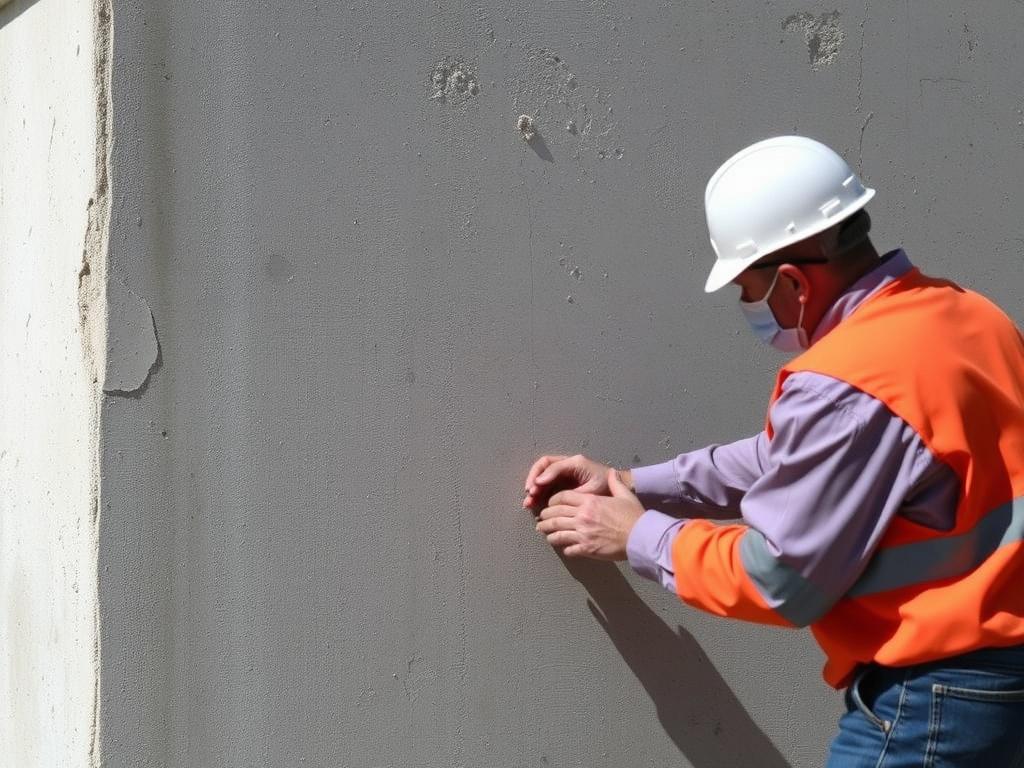
Non-destructive tools extend your eyes and ears into concrete but never replace thoughtful engineering judgment. Start broad, focus testing logically, and always anchor your interpretations with some form of material verification.
When I lead inspections now, I treat non-destructive results as hypotheses to be confirmed or refined. That mindset makes reports more reliable and keeps repair programs targeted, cost-effective, and safe for users of the structure.