Building a concrete wall that reads true and holds up over decades starts long before the first bag of cement hits the truck. This guide walks through the planning, layout, forming, placement, and finishing steps that matter most when your goal is clean lines and reliable performance. Read on for field-tested techniques, tool lists, and troubleshooting strategies that keep walls square, steady, and durable.
Why straight and plumb matters
A straight, plumb wall is more than aesthetic virtue; it affects structural performance, load transfer, and the fit of doors, finishes, and cladding. Misaligned walls lead to difficult retrofits, uneven loads on foundations, and higher labor costs later when trim and masonry don’t sit properly. Contractors and homeowners both save time and money when they prioritize accuracy on day one.
Straight walls reduce the risk of water pooling behind cladding and eliminate gaps that invite moisture and pests. Plumb walls carry compressive loads evenly, which is especially important for retaining walls and load-bearing systems. Even nonstructural partition walls benefit when they are square: electrical, plumbing, and millwork all depend on predictable surfaces.
Accuracy also governs long-term maintenance: small deviations compound over time, making future alterations difficult. A wall that’s plumb and true simplifies insulation and vapor barrier installation, leading to more consistent thermal performance. In short, accuracy buys you durability, function, and a cleaner finish.
Planning and design: where precision begins
Begin by reviewing drawings, soil reports, and site constraints to define tolerances and finishes before breaking ground. Establishing acceptable deviation — often expressed in 1/8″ per 10 feet for cosmetic walls or tighter for precision work — guides layout and quality control throughout construction. If the project involves veneers or machinery, tighten those tolerances early.
Select wall height, thickness, reinforcement, and joint patterns with both structural needs and construction tolerances in mind. Taller walls require stiffer formwork and more robust bracing; thin walls magnify placement and vibration challenges. Note any interfaces with floors or roofs where exact dimensions are critical and detail those in the design phase.
Plan for joints — control, construction, and expansion — and how they affect straightness when forming and pouring. Position joints to minimize visual impact while allowing for concrete movement and shrinkage. Choosing joint locations now prevents awkward cutting or retrofit devices later.
Site preparation and layout: getting the footprint right
Lay out the wall centerlines and edges using a combination of total station, laser level, and traditional transit shots to triangulate corners accurately. Mark both the top and bottom of the footing and use batter boards or stakes set beyond the excavation to preserve layout after digging. Redundancy in reference points helps you recover accurate lines if a stake gets bumped.
Excavate to the correct elevation and compact subgrade in lifts, verifying elevations with a laser or optical level at multiple points along the line. Any differential settlement in the footing subgrade translates directly to wall misalignment, so invest time in compaction and testing. A simple nuclear or proctor test can validate compaction if the budget allows.
Before pouring footings, re-check diagonals and corner stakes using a 3-4-5 triangle or a total station to verify squareness. It’s surprisingly easy to assume the layout is accurate; field checks eliminate guesswork. Take photos of the layout relative to fixed site features for reference during form installation.
Protect the layout from the elements and traffic; mark the zone with high-visibility tape and barriers so the reference points remain undisturbed. If work pauses for days, re-check critical dimensions before resuming. Small shifts in stakes or batter boards can sneak in unnoticed over a weekend or storm.
Foundations and footings: the base of accuracy
Footings must be formed and poured with the same concern for straightness and plumb as the wall above; a crooked footing makes a good wall impossible. Use long straight screeds and rigid forms for footings, and place level and alignment checks every few feet along the length. Pay special attention to step footings — each step introduces an opportunity for cumulative error.
When forming footings, tie the formwork to the layout strings and batter boards so the top of the footing references the planned wall face. Verify the top of footing elevation multiple times; walls often follow footing tops, not layout strings. If your design calls for keyways or dowels, ensure they are accurately located and protected during pour.
Allow proper cure time for footings when required by the design; avoid driving heavy equipment over fresh footings that could create settled or disturbed zones. If the project schedule forces sequential pours, protect cured footings from rain and traffic that could erode edges. A stable, undisturbed footing makes forming and pouring the wall itself far easier.
Formwork: choosing the right system and building it straight
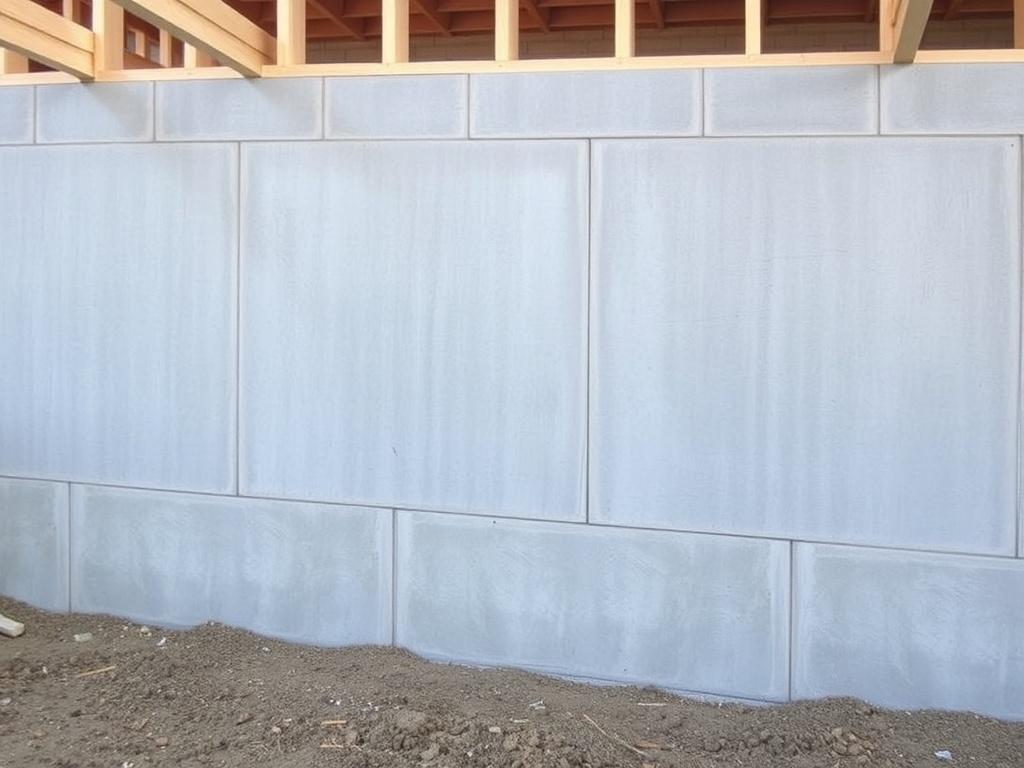
Select formwork that matches your tolerance and finish requirements: plywood-lined timber forms are flexible for irregular work while engineered aluminum or steel systems provide repeatable accuracy on larger projects. Consider the desired surface finish as well — plywood faces give a warmer look, while smooth metal forms produce a cleaner architectural surface. Whatever material you choose, the key is rigidity and repeatability.
When erecting forms, run full-length jambs and walers to resist bulging under pressure. Short lathes or poorly supported panels deflect when the concrete is placed, causing waves and loss of plumb. Continuous horizontal walers and diagonal bracing form a stiff cage that maintains faces under the weight of fresh concrete.
Fasten formwork with consistent spacing of ties and ties rated for the expected hydrostatic pressure; mark tie centers and ensure they are plumb relative to the wall face. Misplaced ties create local high spots during stripping and can leave holes or blemishes if not planned. Use tie systems that allow cleaning and patching when the forms come off to maintain a uniform finish.
Use templates, gauges, and full-height guides when repeatability is required across multiple panels. A simple plywood template clamped to each panel guarantees consistent corner details and reveals. For long runs, set a running string or laser target at the planned face and work each panel to that datum rather than eyeballing alignment.
Bracing and support during the pour
Bracing isn’t optional; it’s the control system that keeps forms true under pressure. Design bracing to resist both lateral loads from the concrete and dynamic loads from concrete trucks and vibrators. Cross bracing, knee bracing, and strongbacks anchored back to solid ground keep forms from moving during high-intensity work.
Place bracing on the pour side as well as the form exterior to distribute forces evenly and prevent twisting. Monitor braces during the pour — shims can settle and straps can slip — and adjust if you see movement. Periodic laser or plumb checks during placement allow you to catch small shifts before they compound.
Consider staged pours for very tall walls to reduce lateral load at any one time and allow time for partial curing. When staging, use overlap forms and dowels to transfer loads and maintain alignment between lifts. Coordination between form setters, concrete crews, and supervisors is essential to prevent misalignment at joints between lifts.
Reinforcement and ties: alignment inside the wall
Rebar cage geometry affects wall stiffness during placement; misaligned bars can push against forms and cause bulges. Tie reinforcement securely at the correct cover and use chairs and spacers rated for the expected load from placement and vibration. These elements maintain the designed cover and help keep the rebar cage from shifting.
Place vertical and horizontal reinforcement to the plan coordinates and measure critical bar spacing during set-up; small errors at this stage translate to surface irregularities. For thin walls or tight cover, use non-corroding spacers where appropriate to preserve long-term performance. Note that field-bent bars should match shop-bent geometry to prevent fit-up issues.
When dowels or embedded items are required, set and verify them before pouring; use templates to hold positions during concrete placement. Embedded anchors can be knocked loose by concrete movement, so sturdily brace them. Clear documentation and photographs of embedded items before the pour help with later inspections and tie-ins.
Choosing your concrete: mix, slump, and workability
Select a mix design that balances strength with placement characteristics crucial for vertical forms: a moderately high slump and good cohesiveness reduce honeycombing and improve surface finish. Avoid excessive slump, though, as high-water mixes can cause segregation and form pressure issues. Work with your supplier to tailor admixtures—retarders, plasticizers, and air entrainment can make a big difference.
Test slump and temperature on site before the pour and again during the pour if ambient conditions change significantly. Hot weather requires attention to set time and pumpability, while cold weather slows setting and can demand accelerators or heated aggregates. Consistency throughout the pour is important; large variations in slump cause differential head and irregular finishes.
For architectural concrete or walls that will receive thin veneers, specify a denser, less porous mix and consider a higher cement content for a harder surface. Discuss surface tolerance and patching expectations with the supplier so they can adjust the mix for your finish. Document the mix used and any admixtures for future reference and warranty purposes.
Placement and consolidation: pouring without compromise
Plan the pour sequence to minimize form pressure peaks and to ensure consistent fill. Pour in layers that are manageable for vibration and consolidation — often two to four feet per lift depending on the wall height and reinforcement density. Maintain a steady placement rate rather than dumping large volumes in one spot.
Use internal vibrators to consolidate concrete near reinforcement and form faces, moving them vertically and slightly laterally to avoid creating void patterns. Beware of over-vibration, which can cause segregation and weaken the surface. Train crews to use vibrators like a clinician uses a stethoscope: intentionally, and only where needed.
Keep finishing operations off until vibration and bleed water have settled to prevent smearing aggregates into the surface. Where honeycombing appears, mark and remedy it immediately; delayed repairs become larger and more difficult. Continuous inspection by the foreperson during placement saves rework later.
Screeding, striking, and controlling face tolerances
For walls with architectural requirements, install strike-off guides and screed rails at consistent offsets from the face to guide the concrete surface. These guides maintain planar alignment and provide a reference for final finishing. Where a smooth finish is required, a template dragged along the rails produces a consistent profile.
Check the face against the layout string or laser target frequently during the pour and adjust form alignment as necessary between lifts. If a panel begins to bow, shore it and correct the geometry before the concrete sets. Small corrections now are easier than large patching later.
After forms are removed, use straightedges and levels to scan the surface for localized deviations and mark areas needing grinding or patching. Keep a log of each panel’s deviations so you can assess systemic formwork or placement problems. For thin veneers, tighter face tolerances may require grinding rather than patching; plan for that in your schedule and budget.
Finishing vertical surfaces and edges
Finishes for concrete walls range from board-formed texture to honed, smooth architectural faces; choose methods that match the design and the crew’s skills. For smooth faces, use type III or better plywood for forms, keep joints tight, and use release agents sparingly to avoid staining. For textured finishes, control the form material and seam patterns to achieve intentional variation rather than random defects.
Detail edges and corners with chamfers or fillets to reduce chipping and visually soften transitions; these features also help preserve form health during stripping. Install edge forms carefully and brace them hard because corners are often the first places to bulge. A consistent corner detail across the project signals quality to building inspectors and clients alike.
When patching tie holes or bugholes, use a compatible repair mortar and match texture before the repair sets hard for the best visual match. Test patches on spare panels if appearance is critical. Keep a list of approved repair materials and trained applicators for consistent results across multiple crews and phases.
Curing and protecting walls after placement
Curing is a performance step, not an afterthought: adequate moisture and temperature control during the first 7 to 14 days strongly influence strength and durability. Apply curing compounds, wet burlap, or polyethylene blankets depending on exposure and finish requirements to keep hydration consistent. In hot, windy, or cold conditions take special measures: fogging, heated enclosures, or insulation blankets can be lifesavers.
Protect fresh walls from impact, water runoff, and freeze-thaw cycles during the critical early cure period. Temporary bracing or protection panels can prevent accidental damage from equipment or people on site. Label vulnerable areas and restrict access to reduce the chance of scratches or dings before the concrete reaches handling strength.
Monitor curing progress with maturity meters or compressive tests when specification requires documented strength before continuing with adjacent trades. For structural projects, do not assume a standard cure period; follow the engineer’s required minimum strength before applying loads. Document all curing methods and conditions for the project record.
Measurement and quality control: tools and techniques to stay on target
Use a calibrated plumb bob, torpedo level, and laser level as your basic toolkit for verifying verticality and alignment. A digital inclinometer or smartphone app with a high-quality sensor can also flag small deviations quickly. Regularly check and calibrate these instruments to ensure accuracy across the project.
Set a schedule for dimensional checks: measure formface alignment before each pour, check plumb during the pour at predetermined intervals, and verify final face tolerances after stripping. Keep a quality-control log with recorded measurements, who performed them, and time stamps to trace errors if they arise. A few minutes of logging prevents arguments and rework down the line.
For long runs, establish control points every 10 to 20 feet tied back to a master benchmark so cumulative error doesn’t creep in. Tape measures alone are rarely sufficient for long distances; use a total station or a long-range laser to reference a master line. Cross-check diagonal measurements to confirm squareness between opposing walls.
When tolerances are tight, consider using pre-marked templates or jigs during form setting and embed installation; these reduce reliance on operator skill alone. Templates work exceptionally well for repeated details like recesses, niches, or conduit sleeves. Treat the template as a quality-control device — inspect and recalibrate it after any drop or damage.
Common problems and field fixes
Bulging forms are often caused by excessive pour rate, low-strength bracing, or runaway slump; slow the pour, add bracing, and re-evaluate mix design when you see bulges develop. If the concrete has already set with a bulge, assess whether grinding or patching is feasible or if the panel needs removal and rework. Small bulges can sometimes be corrected with bonded overlay systems if structural integrity isn’t compromised.
Honeycombing and voids usually result from poor consolidation around dense reinforcement or low-workability mixes. For small localized voids, chase them out with a chisel and repair with a proper patching mortar; for systemic honeycombing consider partial removal and re-pour of the affected section. Preventing the issue by adjusting vibration technique and mix design is always preferable to repair.
Cold joints appear when fresh concrete meets set concrete with inadequate bonding. If a cold joint is expected, plan for keyways or dowels; if it’s accidental, remove the laitance and create a roughened surface before placing repair grout or a bonding layer. Document the joint and inform the structural engineer when joints affect capacities or continuity.
Surface discoloration and stains often arise from uneven form release agents, bleed water traps, or inconsistent aggregates. Where appearance matters, test release agents in advance and keep form surfaces clean and uniform. Surface treatments and sealers can homogenize appearance but should be selected after trial areas and vendor consultation.
Tools, materials, and accessories: an essential checklist
Having the right tools on-site saves time and preserves accuracy; invest in a few precision instruments rather than a long list of marginal tools. Below is a compact table of core items and their primary purpose to help you plan purchases and rentals.
| Item | Purpose |
|---|---|
| Total station / laser level | Layout, long-run alignment, and elevation control |
| Plumb bob / digital inclinometer | Verifying verticality of forms and finished wall |
| Stiff form ties and walers | Maintain form geometry under concrete pressure |
| Internal vibrators | Consolidate concrete around reinforcement and faces |
| Rebar chairs and spacers | Hold reinforcement to required cover |
| High-quality plywood / metal forms | Control surface finish and repeatability |
| Curing materials (membranes/burlap) | Maintain hydration and prevent rapid drying |
Efficiency tips and crew coordination
Assign clear roles for layout, form setting, concrete placement, vibration, and finishing so each operator can focus on their quality-critical tasks. A single point of decision-making for alignment questions reduces contradictory changes on the fly. Hold a short pre-pour meeting to review sequence, signaling, and contingency steps.
Stagger labor so that as soon as one crew finishes its work, another follows immediately for the next step — for instance, a finishing crew ready when vibration is winding down avoids bleed-water problems. Keep tools and replacement parts staged in a single location to reduce downtime hunting for wedges or anchors. Efficiency and accuracy are daily habits, not one-time events.
Schedule pours during favorable weather when possible; avoid pouring long exterior walls in gusty wind or extreme temperatures. When conditions don’t cooperate, use wind screens, misting, or heated enclosures to create a predictable microclimate. Weather planning reduces surprises that harm straightness and surface quality.
Safety, environmental, and regulatory considerations
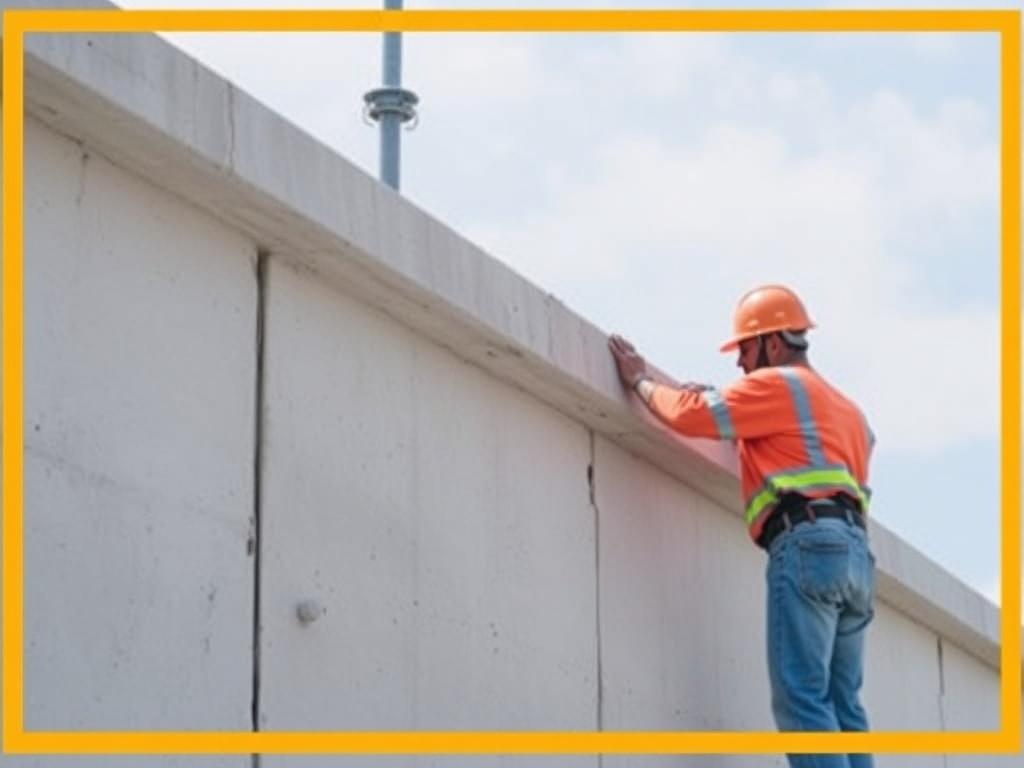
Concrete work involves heavy materials, powered equipment, and chemical exposure; enforce PPE such as gloves, eye protection, and respirators for cutting or grinding activities. Train crews in safe vibrator handling to prevent hand-arm vibration injury and ensure rigging and bracing meet OSHA standards for temporary structures. Safety planning intersects with quality: an accident pauses work and increases the risk of hurried, sloppy corrections.
Manage waste and washout responsibly to prevent environmental contamination; provide dedicated washout areas away from storm drains and sensitive soils. Dispose of form-release agents and excess concrete per local regulations to avoid fines and remediation costs. Document environmental controls as part of your project records for inspections and client transparency.
Common mistakes to avoid
Relying on a single reference point for alignment is a frequent error that invites cumulative drift; always set multiple benchmarks. Similarly, under-bracing forms to save time almost always costs more in rework and time when forms deflect. Invest in redundancy early and you’ll avoid corrective headaches later.
Another common mistake is changing concrete mixes mid-pour without validating compatibility; such changes can cause segregation, color differences, or altered set times. Maintain communication with your supplier and perform small trial batches if adjustments are necessary. Keep detailed batch tickets and delivery logs for traceability.
Finally, skipping post-stripping inspection and documenting deviations leaves you exposed to disputes with owners and inspectors. Inspect immediately after form removal, photograph issues, and start repairs quickly while the problem is fresh in everyone’s mind. Proactive documentation reduces conflict and clarifies responsibility.
Advanced techniques and alternatives
For projects demanding ultra-tight tolerances, consider insulated concrete forms (ICFs) or stay-in-place steel or aluminum forms that offer repeatable geometry and speed. Tilt-up panels and precast concrete walls provide factory-controlled precision but require different site logistics and lifting equipment. Each alternative has tradeoffs in cost, schedule, and finish quality.
Post-tensioned or precast systems can eliminate some formwork challenges entirely, but they need early coordination and different quality-control regimes. If you use precast, audit the fabricator’s tolerances and transport protections to ensure the pieces arrive straight and ready to assemble. For hybrid systems, clearly define who is responsible for final alignment — the erector or the cast-in-place contractor.
Advanced laser-guided formwork systems and digital measurement apps now allow live feedback during pouring and finishing, reducing guesswork. Use these technologies where the budget and project complexity justify them to catch alignment drift in real time. Even modest investments in digital control pay off on long, continuous walls where small deviations grow.
Real-life example from the field
On a mixed-use project I supervised, a long retaining wall initially exhibited a 3/8″ bulge after a single stiff pour; the cause was traced to a combination of a high pour rate and insufficient cross-bracing between panels. We halted the pour, installed top-to-bottom strongbacks, slowed placement, and reduced slump slightly; the remaining pours stayed within tolerance. The quick fix saved several thousand dollars in patching and preserved the architect’s planned reveal lines.
Another example: a client wanted a smooth architectural finish but insisted on using old, warped plywood to cut costs. We insisted on new, face-grade panels and a consistent release agent after a mock-up showed unacceptable float marks on the older panels. The small upfront cost preserved the finish, avoided corrective grinding, and improved the owner’s perception of quality.
Maintenance and long-term monitoring
Once the wall is in service, inspect it periodically for hairline cracks, spalls, and signs of moisture infiltration that can indicate alignment or drainage problems. Address small cracks with appropriate sealants and monitor their behavior; recurring or widening cracks merit engineering review. A simple scheduled walk-around every few months for the first year catches problems before they grow.
Maintain drainage and grading around retaining walls and exterior concrete faces to prevent undermining and freeze-thaw deterioration. Clean off staining and biological growth as needed and reseal surfaces if the design calls for it. Proper site maintenance keeps your straight, plumb wall performing and looking good for decades.
Final practical checklist before you pour
Before the first bucket leaves the chute, run through a concise checklist: layout verified, forms plumbed and braced, rebar tied with correct cover, embed locations confirmed, mix and equipment confirmed, and crew roles reviewed. Create a single-page signoff for the shift supervisor to verify these items; accountability reduces errors. With that last check, you’re ready to pour with confidence and control.
Accuracy in concrete walls combines good planning, the right tools, attentive crews, and disciplined measurement. When those elements come together the result is predictable, durable, and visually satisfying — a wall that does its job and stays true to the design intent for years to come.