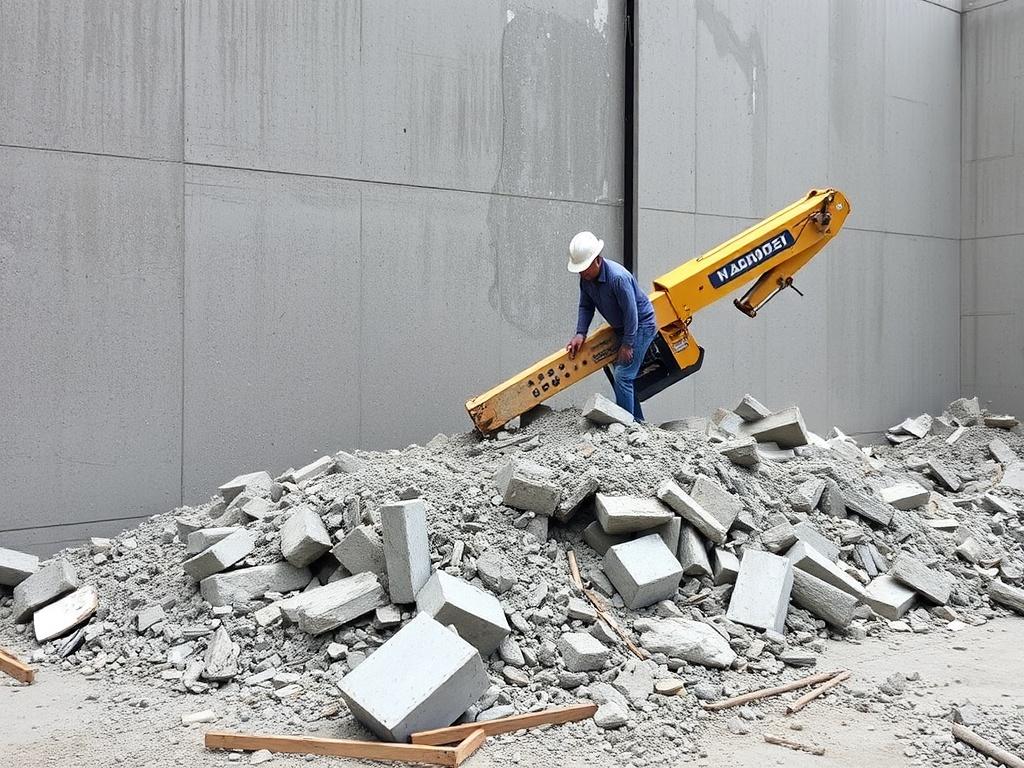
Removing an aged concrete slab is more than swinging a sledgehammer and hauling rubble away. It is a process that blends planning, the right tools, safety protocols, environmental awareness, and an eye toward reuse or replacement. This article walks through the practical choices contractors and homeowners face when deciding how to break, extract, and responsibly dispose of old concrete.
When removing concrete makes sense
Concrete replacement becomes necessary for several familiar reasons: serious cracking, heaving from tree roots, sewer or utility access needs, or when the surface no longer meets functional or aesthetic goals. Small hairline cracks or surface spalling often suit patching and resurfacing, but once the slab has lost structural integrity or interferes with new work, removal is usually the most economical long-term option. Deciding to remove depends on evaluating the slab’s condition, site constraints, and future use.
Age alone is not a reason to demolish, but age often correlates with embedded problems such as steel corrosion, freeze-thaw damage, and chemical contamination. Driveways and patios degraded by repeated freeze cycles often have undermining voids that make overlays unreliable. On commercial sites, deterioration that affects drainage or ADA compliance can force a removal to meet code requirements.
Function drives many removals. If you need to reroute utilities, install deeper footings, or change the slab’s thickness, demolition becomes a prerequisite. Early planning and inspection can reveal whether partial removal—such as a trench or localized full-depth break—or total slab replacement will deliver the best outcome for cost and longevity.
Initial assessment and planning
Before demolition begins, perform a systematic assessment that documents slab dimensions, thickness, reinforcement, buried utilities, and surrounding structures. Verify slab thickness with test cores or by consulting original drawings when available; typical residential slabs range from 3 to 6 inches while industrial slabs can be 6 inches to several feet thick. Knowing reinforcement type and pattern helps choose the right breaker or saw and estimates scrap weight for hauling.
Locate utilities using professional services and mark them clearly. Potholing or mark-out with soft excavation can verify utility positions to avoid costly damage. Plans should also include access for equipment, staging areas for broken concrete, runoff control measures, and traffic management if the site is adjacent to sidewalks or roadways.
Budgeting requires realistic estimates for labor, equipment rental, haul-off, and disposal or recycling fees. Factor in permits, dust and noise mitigation, and any required environmental testing for contaminants such as hydrocarbons or heavy metals. Adding a contingency for unforeseen conditions—buried obstructions, overly thick sections, or subsurface voids—reduces the chance of unpleasant surprises once work begins.
Safety, permits, and regulatory considerations
Safety planning is nonnegotiable because demolition creates airborne dust, loud noise, heavy lifting hazards, and the potential for flying debris. Personal protective equipment should include eye protection, hearing protection, respirators or dust masks, steel-toed boots, and high-visibility clothing. For powered equipment, ground fault protection and lockout/tagout procedures for nearby utilities are essential.
Permits vary by locality and scope of work, and many municipalities require demolition permits, erosion and sediment controls, and disposal documentation. Check local codes for stormwater protection rules, as concrete washout and fines can quickly pollute drainage systems. If the site is in a historic district or near protected trees, separate approvals may be needed before any breaking starts.
If the slab is suspected of contamination from fuels, solvents, or other industrial chemicals, conduct soil and concrete testing before removal. Contaminants can alter disposal options and increase costs dramatically. When contamination is confirmed, coordinate with environmental consultants to develop proper remediation and disposal plans that meet regulatory obligations.
Tools and equipment overview
Tool choice depends on slab thickness, reinforcement, accessibility, and the desired speed of work. Hand tools like sledgehammers, pry bars, and concrete chisels are appropriate for small patches or decorative elements. For larger areas, walk-behind saws, jackhammers, hydraulic breakers, and excavators are the industry standard.
Specialized equipment deserves attention: diamond blade saws provide clean cutting and are often used to create relief joints or to isolate sections for removal. Hydraulic breakers mounted on excavators handle heavy slabs and reinforced concrete efficiently. For confined spaces, remote-controlled micro-robots and compact hydraulic breakers allow precise work without exposing operators to continuous vibration.
Support equipment such as wheel loaders, skid steers, and dump trucks enables rapid removal of broken concrete. Dust suppression systems—typically water-spray rigs or on-tool water lines—are critical for worker safety and neighbor relations. If noise is a concern, electric equipment options exist for saws and some small breakers, though availability and power limitations must be weighed.
Hand and small-scale tools
For homeowners tackling small jobs, sledgehammers, pry bars, and small demolition hammers are effective and inexpensive. These tools are suitable for removing patio slabs, stoops, or sections up to a few square feet. The work is labor-intensive, and tool vibration combined with repetitive motion demands frequent rest and proper technique to avoid injury.
Saw cutters, including circular saws fitted with diamond blades and angle grinders for tight corners, permit controlled cuts that limit collateral damage. Stringing a straight, shallow cut before deeper breaking helps preserve adjacent surfaces when only part of a slab needs removal. Sawing minimizes random fracturing, which simplifies debris handling and often reduces the volume of waste.
Wheelbarrows and small dumpsters work fine for homeowners, but remember that broken concrete is heavy. A cubic yard of broken concrete can weigh close to 3,000 to 4,000 pounds depending on density, so plan material movements and vehicle weight limits accordingly. Renting a small skid steer with a breaker attachment can change a weekend-long manual job into a one-day mechanical project.
Mechanical demolition: jackhammers and excavators
Pneumatic or electric jackhammers are the backbone of most concrete demolition projects. Handheld breakers are versatile for sidewalks, driveways, and curbs; they work well where precision and maneuverability are needed. For larger slabs, hydraulic breakers mounted on excavators provide far greater power and productivity.
Excavator-mounted breakers can pound through thick, reinforced slabs and handle overhangs and drop-offs safely from a controlled distance. Match the breaker size to the excavator’s hydraulic capacity to avoid inefficiency and equipment damage. For heavily reinforced concrete, periodic changes of chisels and monitoring of hydraulic fluid temperatures extend tool life and prevent downtime.
Mechanical breakers produce considerable vibration that can affect nearby structures. For work near foundations or fragile surfaces, pre-weakening with saw cuts or using lower-impact methods reduces the transmission of vibratory energy. Monitor adjacent buildings for cracks and use vibration meters if the project sits close to sensitive infrastructure.
Hydrodemolition and water-based techniques
Hydrodemolition uses high-pressure water jets to remove concrete selectively, leaving embedded reinforcement intact or prepared for rebar treatment. This method is common in bridge and marine work where preserving rebar and minimizing impact to adjacent concrete are priorities. It produces minimal vibration and reduces microcracking in remaining concrete compared with mechanical breakers.
Hydrodemolition equipment ranges from small jet units to large robotic arms for heavy infrastructure projects. Water and slurry management are key because the process generates contaminated runoff rich in fines and potential contaminants. Containment, filtration, and proper disposal of slurry must be part of the project plan to prevent environmental damage and regulatory violations.
Hydro methods are not ideal where groundwater infiltration or sensitive soils would complicate water handling, and their upfront equipment costs can be higher than mechanical options. However, for controlled removal with high-quality substrate exposure, hydrodemolition often delivers the best long-term results.
Chemical and expanding grout methods
Chemical demolition agents, commonly called expanding grout or non-explosive demolition agents, fracture concrete by producing expansive pressure in drilled holes. These products are useful where vibration, noise, or flying debris must be minimized, such as near historic structures or in confined urban settings. They require careful drilling patterns and time to cure before the concrete splits.
Expanding grout is a slower method but has advantages in controlled splitting and safety. It avoids the hazards of powered breakers and produces no airborne dust, which reduces PPE requirements for bystanders. For thick footings and boulders where heavy machinery cannot reach, expanding agents provide an alternative to blasting.
Temperature and moisture affect chemical agent performance, and strictly following manufacturer instructions for hole diameter, spacing, and curing times is necessary. While slower than mechanical methods, the predictable fracturing and low noise profile make this method attractive for niche situations.
Thermal techniques and controlled explosives
Thermal methods include cutting with oxy-fuel torches or plasma for embedded steel, and thermal lances for very selective removal. These approaches target rebar or steel inclusions and are not typically used to fracture normal concrete slabs. They require trained operators and strict safety protocols due to fire risk and fume generation.
Controlled blasting is rare in urban or residential settings but can be used in quarries, mining, or extremely remote industrial contexts where other methods are impractical. Blasting demands specialized permits, pre-blast surveys, and strict exclusion zones to protect people, structures, and utilities. Given the regulatory burden and risk, most contractors prefer mechanical or chemical alternatives in populated areas.
Both thermal and explosive approaches increase operational complexity and often require environmental monitoring for emissions and vibration. When used, they are part of a comprehensive plan that balances speed, cost, and community impact.
Cutting and sawing strategies
Sawing controls where a slab breaks and reduces collateral damage to surrounding materials. For demolition, contractors often make a perimeter saw cut to define the removal area and create manageable sections. This method simplifies loading and hauling and protects nearby surfaces by concentrating fracturing forces within the cut area.
Walk-behind saws, handheld saws, and gang saws offer different benefits depending on slab thickness and job size. Diamond blades are the standard for cutting reinforced concrete, and water on the blade reduces dust and cools the cutting edge. For very deep cuts, multiple passes with gradually deeper blades or a series of saws may be necessary.
When slab removal will expose a finished surface beneath, cutting minimizes damage and preserves those surfaces. Precision cuts also help in staged demolition where only portions of a slab are removed for access or phased replacement plans.
Breaking reinforced concrete
Reinforced slabs present more work because rebar binds pieces together and resists fracture. Start by cutting across the reinforcement grid if possible, then remove concrete to expose the steel for cutting or bending. Gas-powered rebar cutters, hydraulic shears, or torching are common ways to sever steel efficiently.
Relaxing the slab into smaller blocks makes handling and removal easier. Aim to produce pieces that are manageable for the site’s lifting equipment and narrow enough to fit into loaders or trucks without excessive hand sorting. Crushing reinforced piles is an option, but separation of steel on-site increases recycling value and reduces disposal fees.
Handling steel safely is important because exposed rebar is a trip and impalement hazard. Cap or bend protrusions and secure loose pieces before moving crews into the area. Recycling centers typically accept separated steel and concrete, paying for scrap rebar or charging less for mixed loads depending on local demand.
Handling, hauling, and disposal
Broken concrete must be staged, loaded, and transported in a way that minimizes double handling and complies with local weight limits. Establish a staging area near the demolition zone for sorting and loading, and keep pathways clear for machinery. For larger commercial jobs, a loading rack or ramp speeds operations and reduces worker fatigue.
Disposal strategies include direct landfill, permitted recycling facilities, and on-site crushing for reuse as base material. Recycling concrete is common and environmentally preferable; many crushing operations will accept mixed loads and remove steel with magnets. Recycled concrete aggregate (RCA) can serve as subbase, road base, or fill depending on quality and local standards.
Know local tipping fees and recycling options ahead of time, because disposal costs often drive demolition budgets. Some municipalities offer free or reduced-cost drop-off at municipal recycling yards, while commercial landfills typically charge per ton. Accurate volume and weight estimates help choose the most economical disposal route.
On-site crushing and reuse
On-site crushing turns rubble into usable aggregate, reducing hauling and purchase of new base material. Mobile crushers come in various sizes and can be cost-effective for large volumes. Crushing allows contractors to reuse material immediately as subbase, backfill, or bedding for new concrete.
Quality control matters because recycled aggregate varies in gradation and may contain contaminants like asphalt or organic matter. Screening and magnetic separation reduce contaminants and create a more consistent product. When reused beneath new slabs or pavements, properly processed RCA provides a stable foundation and reduces embodied carbon compared with virgin aggregate.
Check local specifications if reclaimed material will be used in regulated infrastructure projects. Some agencies require testing for gradation, compaction characteristics, and contaminants before accepting RCA for structural applications.
Environmental and health considerations
Concrete demolition produces silica dust that can cause silicosis and other respiratory illnesses if inhaled over time. Wetting the work area, using on-tool water delivery systems, and equipping workers with N95 or P100 respirators dramatically reduce airborne silica exposure. Keep neighbors informed and control dust drift with physical barriers when necessary.
Stormwater protection is critical because fine concrete particles readily wash into drains and waterways, harming aquatic life and violating regulations. Use silt fences, sediment basins, and designated washout areas to contain slurry. Properly manage water used for dust suppression and concrete saw cutting through filtration or settling before discharge or hauling to disposal.
Noise and vibration management improves community relations and may be mandated by local ordinances. Schedule the loudest operations during permitted hours, use noise-attenuating machinery where feasible, and employ quieter methods like chemical splitting when close proximity to residences or hospitals requires it. Advance notice to neighbors and signage helps reduce complaints.
Cost factors and budgeting examples
Costs for breaking and removing concrete vary widely based on slab thickness, reinforcement, accessibility, local labor rates, and disposal fees. Expect a small residential driveway removal to run from a few hundred to a few thousand dollars, while commercial or industrial jobs can quickly escalate into tens of thousands. Obtain multiple quotes and ask for line-item breakdowns to compare equipment, labor, haul-off, and disposal charges.
For rough planning, breaking and hauling concrete from a typical residential driveway might cost between $2 and $6 per square foot, though prices fluctuate regionally. On-site crushing and reuse can lower hauling costs if large volumes justify renting a crusher, but the rental and operating costs must be weighed against tipping fees. Specialty services like hydrodemolition or environmental remediation carry higher per-hour rates but can reduce long-term project costs by delivering better substrate or avoiding contamination penalties.
Include contingency in the budget for unexpected issues such as buried foundations, thicker-than-expected slabs, or contaminated materials. A 10–20 percent contingency on top of detailed estimates helps prevent budget overruns while permitting a more flexible approach to complex site conditions.
Permits, utility locating, and neighbor relations
Before work begins, call local utility notification services to mark buried gas, water, and electrical lines. In many areas, this is a legal requirement and a safety imperative. Respect marked areas and use vacuum excavation or soft digging methods when working near utilities to prevent costly and dangerous strikes.
Obtain any required demolition and disposal permits, and maintain records for inspections and waste manifests when dealing with contaminated materials. Some jurisdictions require notification of neighbors or posting of permits on-site. Early communication reduces the risk of citizen complaints and simplifies inspection scheduling.
Good neighbor practices include setting reasonable work hours, posting contact information for the job foreperson, and controlling dust and debris at the property line. When scheduling disruptive activities such as jackhammering or heavy truck loads, try to avoid early morning or late evening hours to minimize disturbance.
Restoration and reconstruction after removal
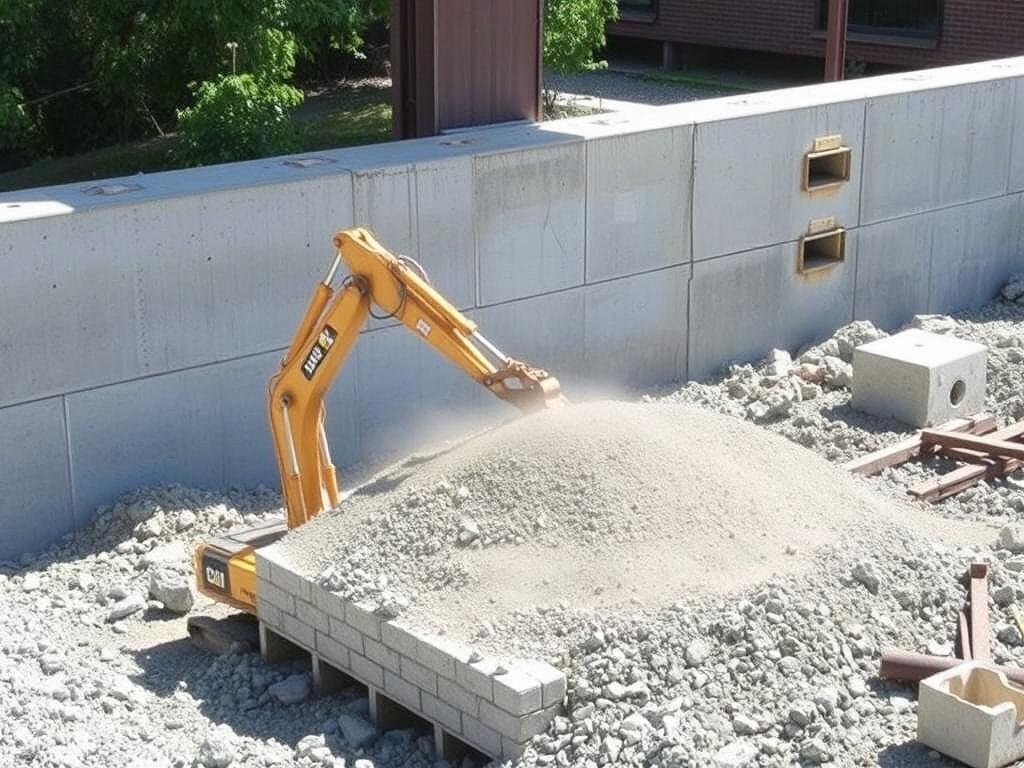
Once the slab is removed and the site cleared, prepare the subgrade before placing new material. Remove any organics or soft soils and compact granular fill to appropriate densities. If drainage will change, install proper conveyance and compacted subbase to avoid future heaving or settlement problems.
When pouring new concrete, use control joints, reinforcement, and proper mix design suited to the intended use. For driveways and sidewalks, consider air-entrained mixes with adequate strength and curing practices to resist freeze-thaw damage. Proper finishing and curing often determine the life of the new slab more than the demolition of the old one.
For homeowners, adding a geotextile separator between reuse aggregate and underlying soils can prevent fines migration and maintain long-term stability. For landscaping or permeable pavement installations, consider permeable concrete or pavers over a well-graded base to preserve drainage and reduce runoff.
Sustainable options and carbon considerations
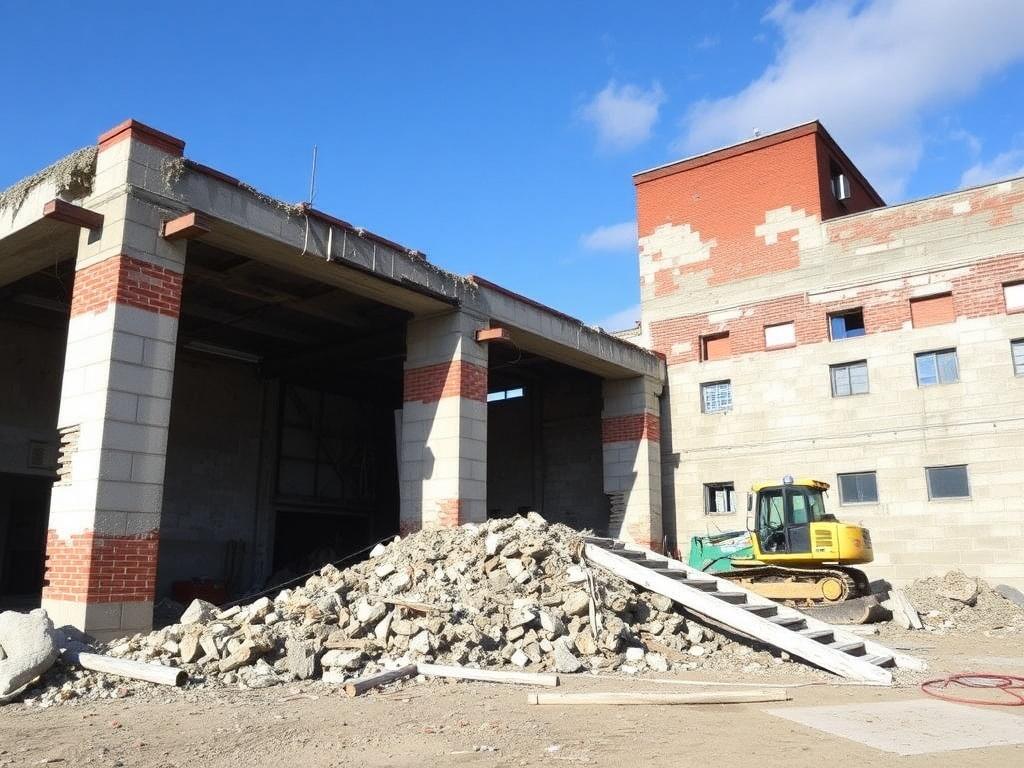
Reusing crushed concrete onsite or sourcing recycled aggregate locally reduces transportation emissions and the carbon footprint of new construction. Concrete recycling conserves natural stone resources and diverts large volumes of material from landfills. Choosing recycled aggregate for base courses or backfill is a practical step toward more sustainable site work.
Concrete itself stores CO2 in the aggregate and cementitious matrix reversibly through carbonation, but producing cement is energy-intensive. Reducing the need for new cement by reusing aggregate and designing mixes with supplementary cementitious materials like fly ash or slag lowers embodied carbon. Discuss mix designs with suppliers to balance performance and sustainability objectives.
Consider the lifecycle impact when choosing demolition methods. Techniques that allow for separation and recovery of clean concrete and steel add value and reduce environmental burdens. Planning for reuse during the design phase—such as specifying slabs that can be crunched and reused below new pavements—creates long-term resource efficiency.
Choosing a contractor and vetting bids
Select contractors with demonstrated experience in concrete demolition and proper liability insurance. Ask for references, photos of recent similar projects, and evidence of equipment capability. A competent contractor will provide a clear scope of work, an itemized estimate, and a timeline that accounts for permitting and waste handling.
Compare bids not just on price but on approach, equipment, waste management plan, and safety measures. Low bids sometimes hide additional charges for haul-off or unexpected conditions, so insist on written terms for handling surprises. Get a firm price or a clear method for pricing contingency work to avoid disputes as the job progresses.
Make sure the contractor understands local disposal rules and has relationships with recycling centers if reuse is part of the plan. Confirm that the firm will secure required permits and provide proof of insurance and worker certifications, especially when using specialized methods like hydrodemolition or explosives.
Common pitfalls and lessons from the field
A frequent mistake is underestimating debris weight and the logistics of removal, which leads to higher-than-expected hauling costs. In one neighborhood driveway replacement I supervised, the crew initially assumed a single dump truck would handle the load, but misjudged slab thickness and required a second trip, doubling haul fees. Accurate sampling and realistic volume estimates avoid this problem.
Another common error is neglecting dust and runoff control until complaints arrive. Early investment in water systems and containment pays off through smoother operations and better relations with neighbors. Small measures—like a temporary washout and silt fence—prevent fines and preserve community goodwill.
Improper support for nearby structures during demolition creates avoidable damage. In a recent project near an older house, the lack of pre-weakening cut led to vibration cracking in a neighboring foundation. Sound planning, pre-cutting, and monitoring are inexpensive insurance against such claims.
Practical checklist for homeowners and DIYers
For small-scale projects, follow a practical checklist to keep work safe and efficient. Prepare the site by removing vegetation and any fixtures, mark utilities, arrange for a dumpster or haul-off service, and decide whether to rent powered tools or hire a contractor for complex sections. Safety gear should be on-hand and used consistently throughout the job.
- Mark utilities and call for locates
- Obtain required permits
- Plan access for equipment and trucks
- Arrange for dust suppression and washout
- Provide a designated staging area for debris
- Confirm disposal or recycling location and fees
- Use proper PPE and rotate workers to limit vibration exposure
For larger projects, involve a qualified contractor early in planning. They can provide equipment selection guidance, staging layouts, and informed cost projections. Even when doing much of the work yourself, a one-time consultation often prevents costly mistakes.
Comparison table of common demolition methods
The following table summarizes typical advantages and limitations of several common techniques to guide method selection and budgeting.
| Method | Best use | Pros | Cons |
|---|---|---|---|
| Hand tools (sledge, chisel) | Small patios, steps | Low cost, simple | Labor-intensive, slow |
| Jackhammers / handheld breakers | Sidewalks, driveways | Versatile, affordable rental | High vibration, dusty |
| Excavator with hydraulic breaker | Large slabs, reinforced concrete | Fast, powerful | Requires access, costly |
| Diamond sawing | Controlled cuts, perimeter isolation | Precise, reduces collateral damage | Costly blades and water handling |
| Hydrodemolition | Bridge decks, selective removal | No vibration, preserves rebar | High water handling needs |
| Chemical expanding agents | Noise-sensitive areas, confined spaces | Quiet, low vibration | Slow, requires drilling pattern |
Real-life example: driveway replacement project
A recent driveway project I supervised began with an assessment that revealed 5 inches of deteriorated concrete over a sandy base and an old sewer line running beneath one corner. The homeowner wanted a full replacement with improved subbase drainage, so we planned a perimeter saw cut, excavator-assisted removal, and on-site crushing to reuse aggregate under the new pavement. Reusing crushed concrete saved about 20 percent of the aggregate cost and reduced truck trips through the neighborhood.
We controlled dust by linking water to both the saw and the breaker and used silt fencing to prevent runoff during a forecasted rain event. Locates revealed a buried irrigation main, which we potholed by hand and adjusted our excavation plan accordingly. The project finished on schedule and under budget because of up-front testing and a contractor willing to adjust the plan when conditions deviated from expectations.
The key lessons were clear: precise locating of utilities, a flexible disposal plan, and investment in dust and water management reduce delays and community friction. The homeowner appreciated the lower lifecycle cost of a properly prepared subbase and the improved drainage the new driveway provided.
Final considerations before you start
Concrete demolition is a trade-off among time, cost, impact, and final quality. Choosing the right demolition method requires accurate assessment, attention to safety and environmental rules, and coordination of logistics for haul-off and reuse. Think beyond the immediate ripping out and consider how demolition methods influence the ease of rebuilding and the long-term performance of the new installation.
Well-executed demolition can save money on reconstruction, reduce environmental impact, and avoid costly surprises. Whether you are a homeowner tackling a small patio or a contractor managing a large site, planning, the right tools, and responsible waste management turn a disruptive process into a straightforward step toward a better-built replacement.
When the dust settles and the crushed concrete is compacted beneath the new slab or recycled for another use, the effort spent on thoughtful demolition pays dividends in durability, cost control, and neighborhood relations. Plan carefully, protect people and the environment, and choose methods that match the project’s scale and sensitivity to deliver the outcome you want.