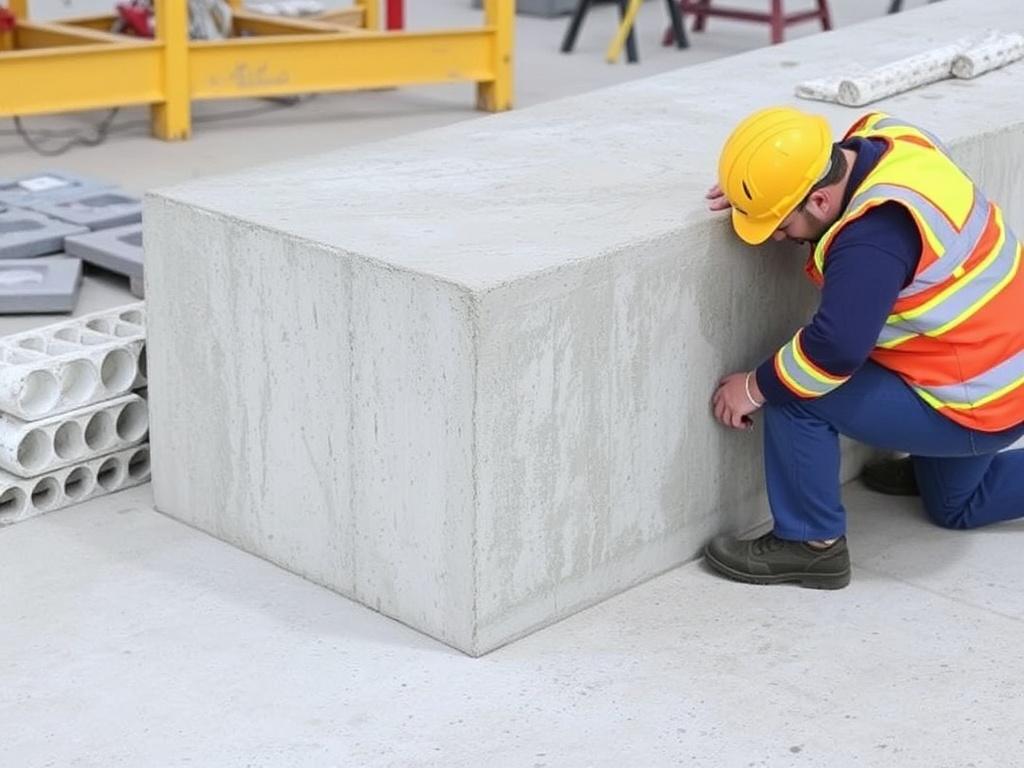
Concrete has always felt inevitable: heavy, gray, and dependable. But adding fibers changes that script, turning a brittle mixture into a composite that stretches, tames cracks, and often simplifies construction details. This article explores the benefits and the step-by-step process of using fiber-reinforced concrete so you can decide when and how to choose it for a project.
What fiber-reinforced concrete is and why it matters
At its core, fiber-reinforced concrete (FRC) is ordinary cementitious concrete that contains discontinuous fibers distributed randomly through the matrix. Those fibers can be steel, synthetic polymers, glass, or natural materials; their job is to bridge micro- and macro-cracks, giving the material post-crack resistance and improved toughness.
That simple change to the mix alters performance in predictable ways. Instead of failing suddenly when a crack forms, FRC can continue to carry loads across cracks, resist impact, and limit crack widths that allow aggressive agents to enter and degrade the concrete.
Because fibers work inside the matrix rather than replacing it, designers use them alongside—sometimes in place of—traditional reinforcement depending on the application. This flexibility is why FRC has become more common in industrial floors, overlays, shotcrete, and many precast elements.
Common fiber types and how they behave
Not all fibers are created equal. Steel fibers are high-strength and stiff, offering excellent toughness and fatigue resistance. Synthetic fibers—often polypropylene or polyethylene—are typically used for controlling plastic shrinkage and early-age cracking because they distribute in the mix easily and are corrosion-free.
Glass fibers, specially alkali-resistant glass, can provide tensile reinforcement in thin elements and architectural panels but require careful handling to avoid weakening in highly alkaline cement environments. Natural fibers, such as cellulose or hemp, are gaining attention for low-load applications and sustainable mixes, though they have constraints in durability and consistency.
Choosing the right fiber type depends on performance targets: do you want improved toughness, crack-width control, impact resistance, or reduced cracking at early ages? The fiber’s geometry—length, diameter, aspect ratio—and its material properties dictate that performance.
Fiber comparison table
Below is a concise comparison to help match fiber types to common needs. The table uses qualitative descriptions to avoid misleading numeric precision while still being practical for designers and contractors.
| Fiber type | Best for | Advantages | Limitations |
|---|---|---|---|
| Steel fibers | Structural slabs, shotcrete, precast elements | High toughness and fatigue resistance; good post-crack load capacity | Can corrode if exposed; heavier; may complicate finishing and cutting |
| Polypropylene (synthetic) | Plastic shrinkage control, moderate toughness | Corrosion-free, low cost, improves finishability | Low stiffness; limited structural load carrying on its own |
| Alkali-resistant glass | Thin architectural panels, reinforcement for non-structural elements | Corrosion-resistant variant available; good tensile properties | Sensitive to mix chemistry if not properly treated |
| Natural fibers | Low-load or sustainable applications | Renewable, low embodied energy | Variable properties, durability concerns in alkaline environments |
Mechanical benefits: strength, toughness, and crack control
People often ask whether fibers increase concrete strength. The short answer is: it depends. Fibers are less effective at increasing peak compressive strength than at improving tensile behavior, toughness, and post-crack capacity. In many cases, FRC shows only modest gains in compressive strength but significant improvements in flexural toughness and energy absorption.
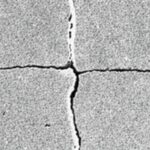
The most visible benefit is crack control. Fibers arrest and narrow cracks by transferring stresses across them, which reduces crack widths and delays the growth of larger cracks. That behavior makes FRC especially useful for slabs-on-grade, overlays, and industrial floors where tight crack control matters for traffic and machinery.
Another mechanical advantage is improved impact and abrasion resistance. Steel fibers and certain synthetic blends create a tougher surface that resists spalling and wear under repeated loading, which extends service life for heavy-use areas.
Durability and lifecycle advantages
Limiting crack widths is about more than appearance. Smaller, tighter cracks slow the ingress of water, chlorides, and other corrosive agents that attack reinforcement and the cement matrix. By reducing penetration pathways, FRC can enhance long-term durability and lower maintenance frequency.
For structures exposed to freeze-thaw cycles or deicing salts, fiber-reinforced mixes often show reduced scaling and longer intervals between repairs. The fibers themselves—if corrosion-resistant like synthetic or alkali-resistant glass—resist deterioration, making them a durable component of the composite.
When designers account for the extended service life and reduced repair needs, FRC can be cost-competitive on a lifecycle basis even if initial material costs are slightly higher than plain concrete.
Design considerations and specifying fibers

Designing with FRC starts by identifying the required performance: tensile capacity, residual strength after cracking, crack-width limits, or simply plastic shrinkage control. Specifications must express those requirements clearly so contractors know which fiber type and dosage meet project goals.
Dosage rates are typically given as a weight or volume fraction and vary widely by fiber type and application. For example, polypropylene might be used at small dosages for shrinkage control, while steel fibers intended to replace some conventional reinforcement will be specified at higher dosages. The mix must accommodate the fibers without losing workability, so water, admixtures, and aggregate grading are part of the design conversation.
Practical performance testing—trial batches and representative test specimens—helps verify that the chosen combination meets structural and durability targets. Familiarity with local codes and the project team’s tolerance for innovation is also critical when specifying FRC for structural members.
Mixing, placing, and finishing: the practical process
Implementing fiber-reinforced concrete on a jobsite follows the same broad steps as conventional concrete, but with attention to a few fiber-specific details. Proper mixing ensures uniform fiber distribution and minimizes clumping, which is essential for consistent performance throughout the element.
Typical mixing practice introduces fibers gradually into the mixer, avoiding the addition of large amounts all at once. Mechanical mixers with enough energy and mixing time help disperse fibers, and admixtures like high-range water reducers can offset the drag fibers introduce, keeping the mix workable.
Placing and finishing require awareness of how fibers influence surface behavior. Some fibers, especially steel, can make surface finishing a little more demanding because of the added internal friction, and cutting, grinding, or saw operations must account for embedded fibers to avoid damage to equipment.
Step-by-step placing and finishing
Here is a practical sequence contractors typically follow when working with FRC: mix to uniformity, transport promptly to avoid bleed segregation, place and consolidate using appropriate vibration or hand techniques, finish the surface carefully, and then begin curing as soon as feasible. Each step matters for fiber distribution and the eventual performance of the slab or element.
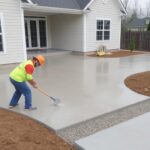
When placing thick sections or heavily reinforced areas, pay attention to potential fiber orientation caused by flow. While random distribution is the target, flow and formwork constraints can bias fiber alignment; adjusting placement methods can mitigate that. For overlays and thin toppings, light screeding and manual finishing preserve the fiber network near the surface.
Curing practices are common sense but non-negotiable: fibers do not replace the need for moisture conservation, temperature control, and time for the matrix to gain strength. Proper curing preserves the bond between fibers and cement paste and maximizes the composite action you expect from FRC.
Curing, testing, and quality control
Curing affects fiber performance indirectly by influencing the concrete microstructure and bond to the fibers. Adequate moisture and temperature control in early ages produce a denser matrix and stronger fiber–matrix interaction, which translates to better post-crack load transfer.
Quality control includes visual inspection for fiber balling, consistency checks on workability, and sampling for lab tests. Test methods that measure flexural toughness, residual strength, and crack-width under load give designers quantitative evidence that the mix performs as specified. Field tests and trial pours are essential on first-time projects.
On-site quality checks should also monitor fiber feed systems if fibers are added at the plant or dosing station. Automated feeders reduce human error and improve repeatability across batches, but they require calibration and maintenance to remain accurate.
Applications where fiber-reinforced concrete excels
FRC shines in places where crack control, impact resistance, or simplified reinforcement can lower life-cycle costs. Typical applications include industrial warehouse floors, parking structures, tunnel linings, shotcrete for slope stabilization, and precast elements where additional toughness is valuable.
In overlays and thin toppings, microfibers reduce plastic and drying shrinkage cracking, improving durability and reducing maintenance. In shotcrete, fibers add toughness and reduce rebound, improving deposition efficiency and worker safety in tunneling and underground work.
Steel fibers are commonly specified for slabs where designers want to reduce or replace welded wire mesh and sometimes even lower the amount of conventional rebar in certain elements. The decision depends on code acceptance, load paths, and the designer’s comfort with alternative reinforcement strategies.
Real-world examples and practical lessons

In my work as a construction consultant, I saw a distribution center slab upgraded to a hybrid solution—polypropylene microfibers for early-age crack control combined with a modest amount of conventional reinforcement. The owner recovered the cost quickly through reduced slab repairs and faster return-to-service after construction.
Another project involved replacing welded wire mesh in a lightweight precast element with engineered steel fibers. The result was a simpler mold process, fewer manual handling steps, and an element with improved post-crack capacity. The precaster had to adjust cutting procedures, but production speed ultimately improved.
These examples underline a recurring lesson: successful adoption requires coordination among designers, suppliers, and crews. Early engagement, trial mixes, and clear specifications avoid surprises during placement and finishing.
Limitations and potential pitfalls
FRC is not a universal substitute for traditional reinforcement. For members where large tensile loads are carried by reinforcement in a specific direction, discontinuous fibers may not provide the required capacity or fail safely as rebar does. Designers must not assume fibers will always replace steel reinforcement unless rigorous design and testing justify that choice.
Overdosing fibers or choosing the wrong fiber type can create workability problems, increase voids, or complicate finishing. Conversely, underdosing may leave the concrete no better than plain mix in terms of crack control. Both outcomes are avoidable with proper mix design and supervision.
Another pitfall involves cutting and drilling. Embedded steel fibers can damage cutting tools and produce sparking, while synthetic fibers may clog blades. Forethought about future operations—saw cutting, anchor installation—keeps later surprises to a minimum.
Codes, standards, and specifying language
Civil and structural codes increasingly recognize fiber-reinforced systems, and industry bodies provide guides and test methods for specifying fibers, measuring flexural toughness, and validating performance. Referencing recognized standards in specifications helps ensure acceptance by owners and authorities having jurisdiction.
Typical specification language spells out required fiber type, dosage, acceptance criteria (often expressed as residual flexural strength or toughness indices), and testing procedures. Owners and engineers should request trial mixes and performance testing rather than relying solely on generic guarantees.
Working with experienced suppliers and labs familiar with fiber testing speeds the approval process. Ask for documented test results on similar mixes and for assistance translating performance targets into practical dosage and mix changes.
Cost considerations and lifecycle analysis
At first glance, fibers add cost to a concrete mix. But that initial expense must be balanced against the potential reduction in secondary reinforcement, faster construction schedules, reduced repair frequency, and longer service life. When accounted for in a lifecycle analysis, fiber-reinforced solutions frequently show favorable economics.
For industrial floors, the combination of faster placement, fewer joints, and less downtime for repairs can produce a measurable return on investment in months or a few years. For infrastructure elements exposed to corrosive environments, the durability gains can translate into decades of extended service life before major rehabilitation is needed.
To evaluate cost-effectiveness, owners should request whole-life scenarios from designers: initial material and labor costs, typical maintenance cycles for conventional concrete, and expected performance improvements with FRC. Real project data often makes the case far more convincingly than theoretical estimates.
Practical tips for contractors and owners
Start with a clear performance specification rather than a brand name or fiber type. State the problem you need solved—shrinkage cracking, impact resistance, or reduced reinforcement—and let designers and suppliers propose solutions that meet that need.
Run trial batches and mock-ups. Even experienced crews benefit from a dry run to adjust mixing times, finishing sequence, and curing timing. Trial pours reveal if fibers affect slump, finishability, or tool wear so teams can plan accordingly.
Communicate with cutting and saw crews about embedded fibers, and specify the use of suitable blades and dust control when cutting. Maintain good records of mix batches, fiber lot numbers, and QC tests to support future maintenance and warranty claims.
Environmental and sustainability considerations
Fiber-reinforced concrete can support sustainability goals by extending service life, reducing the need for repair materials, and enabling thinner sections or lighter precast units in some cases. Synthetic fibers have relatively low embodied energy compared with some steel products, and natural fiber research seeks further reductions in environmental impact.
Recycled steel fibers recovered from industrial processes or post-consumer sources offer another sustainability angle, but designers must verify cleanliness and consistent properties before use. Selection should consider not just embodied carbon of the fibers but the whole-life emissions associated with maintenance and replacement.
Specifying FRC with a lifecycle lens often reveals environmental benefits that are invisible when looking only at first-cost material comparisons.
Innovations and future trends in fiber-reinforced concrete
Research continues into hybrid fiber systems that combine microfibers for shrinkage control with macrofibers for toughness, optimizing performance across ages and loading conditions. Advances in polymer chemistry and engineered glass fibers expand the range of workable, durable options for thin and architectural applications.
Automation in fiber dosing and new admixture technologies improve mixing consistency and reduce the risk of fiber clumping, which has been a barrier to adoption in the past. Digital modeling and more sophisticated test methods also help designers predict residual strength and crack widths with greater confidence.
In the near future, expect to see more prescriptive guidance in codes and wider acceptance of fiber-reinforced solutions for mainstream structural elements, not just specialized applications. As data accumulates, the technology will move from clever alternative to standard tool in the designer’s toolbox.
Using fiber-reinforced concrete is a pragmatic way to change the behavior of a familiar material. When chosen and executed correctly, fibers can reduce cracking, increase toughness, and simplify construction while improving durability and lifecycle economics. The key is matching the fiber type and dosage to the job’s performance needs, testing in realistic conditions, and coordinating the team from design through finishing.
For owners and contractors willing to invest in planning and trials, fiber-reinforced concrete offers tangible advantages on many projects. It isn’t a panacea, but it is a powerful option that often pays dividends in durability, functionality, and reduced maintenance over the long haul. Consider it when cracking, impact, or long-term durability are central concerns—then let the test results and practical experience guide the final specification.