Deciding between rebar and wire mesh feels straightforward until you’re standing at a job site with drawings in hand, a truck of concrete on the way, and a dozen small but important trade-offs to weigh. Both materials strengthen concrete, but they do it in different ways and suit different jobs. This article walks through the mechanics, costs, codes, and real-world judgment calls that let you choose the right reinforcement for the task at hand.
Understanding the role of reinforcement in concrete
Concrete is excellent in compression and weak in tension, which is the basic reason reinforcement exists. Steel—whether in bar form or welded wire—resists tensile forces, controls shrinkage cracks, and helps the structure carry loads it otherwise couldn’t.
Reinforcement also serves practical construction purposes: it stabilizes pours, controls crack widths to acceptable limits, and keeps structural elements acting together. Choosing the wrong type or placing it incorrectly can reduce service life and lead to premature maintenance.
Before selecting a product, it helps to separate two common goals: controlling shrinkage and thermal cracking, and providing structural capacity for bending, shear, and tension. Wire mesh often targets the first problem; rebar typically addresses the second.
What rebar is and how it works
Rebar—short for reinforcing bar—is a steel bar with surface deformations (ribs) that help it bond to concrete. Bars are sized in standard increments (for example, #3, #4, #5 in US practice) and are available in different grades and alloy compositions to meet strength and ductility requirements.
Because rebar comes in discrete diameters and can be arranged into cages, mats, or complex assemblies, it excels at resisting tensile forces across larger spans and at concentrated load points. Engineers use rebar when a predictable structural response is required under bending or shear loads.
Design codes expect rebar to be placed with specified cover, spacing, and anchorage. It’s typically tied with wire or mechanically spliced and supported on chairs or bolsters to maintain position during the pour.
What welded wire mesh is and how it behaves
Welded wire fabric—often called wire mesh or WWF—is a grid of steel wires welded at intersections. It’s sold in sheets or rolls, and common designations include spacing (for example, 6×6) plus wire size expressed in pounds per linear foot or a wire gauge equivalent.
Wire mesh distributes tensile reinforcement more uniformly through a thin layer of concrete, which makes it effective at controlling plastic shrinkage and temperature cracking in slabs on grade, sidewalks, and thin overlays. It’s less convenient for carrying large bending moments or resisting concentrated loads unless used in multiple layers or combined with heavier reinforcement.
Installation is generally faster: mesh rolls or sheets can be unrolled over formwork, and intersections are already welded, so fewer field ties are needed. However, the mesh must be located properly in the slab depth; if it sits too near the surface it loses effectiveness and corrodes faster.
How rebar and wire mesh behave differently in concrete
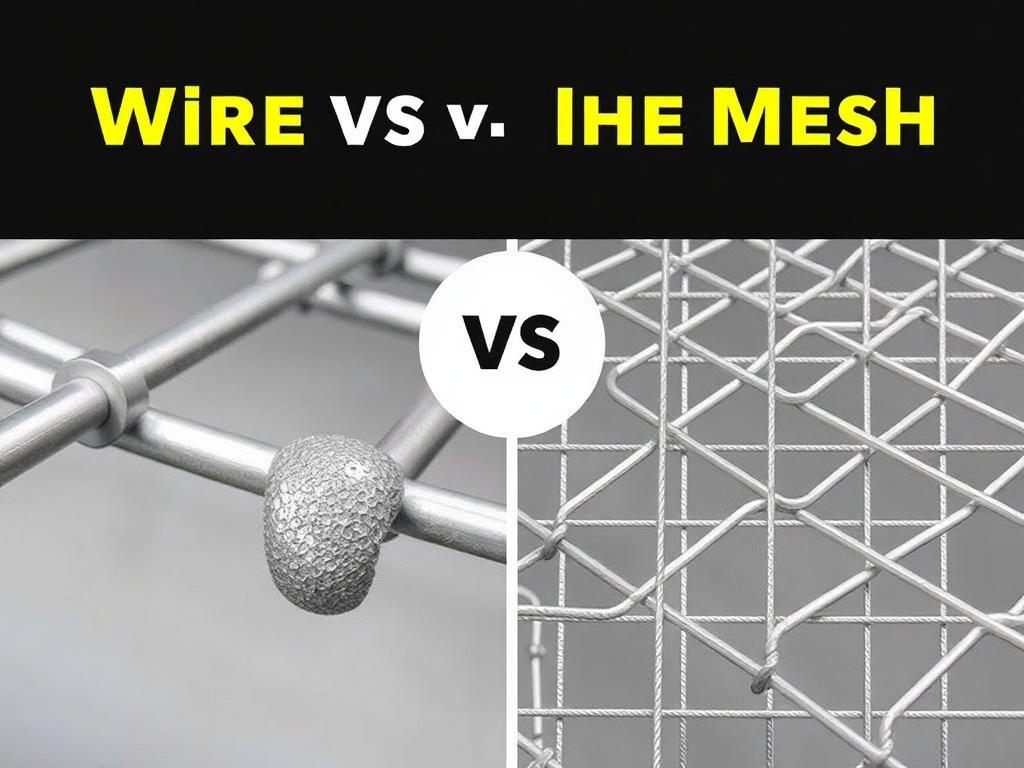
At the core, the difference is one of scale and continuity. Rebar is larger and designed to resist significant tensile stresses over structural spans; mesh is more continuous but composed of smaller-diameter wires better suited for crack control.
Rebar’s larger cross-section and placement depth allow it to develop higher moment capacity and to be anchored via bends, hooks, or mechanical splices. Wire mesh, by contrast, is limited by the wire diameter and weld strength at intersections; its contribution is more distributed and less able to resist localized forces.
Another functional difference is ductility. Properly specified rebar (for example, Grade 60 deformed bars) yields predictably under overload, giving warning through large deformations. Wire mesh can fracture abruptly if overloaded because individual wires may be thin and welds may fail before significant yielding occurs.
When to choose rebar: typical structural applications
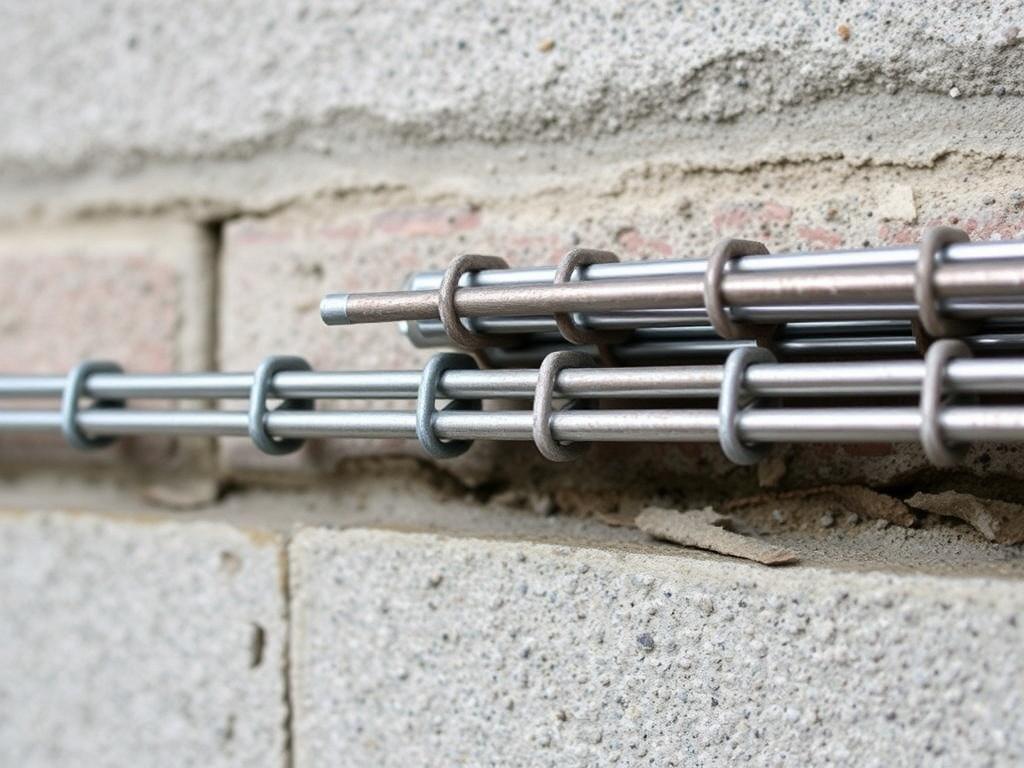
Choose rebar when the element must carry structural loads: beams, columns, footings under columns or concentrated loads, retaining wall reinforcement, and heavily loaded slabs such as warehouse floors. In these cases, the bar sizes and spacing are calculated to resist bending, shear, and axial forces.
Slabs supporting heavy equipment or forklift traffic commonly require rebar mats or dowelled joints with specified bar sizes and spacing. Rebar gives engineers the ability to design for deflection limits and load capacity, not just crack control.
Rebar is also the default in foundation footings, especially under load-bearing walls or columns, where bending moments occur along the footing length and reliable anchorage is essential. The continuous line of reinforcement helps the footing act as a single unit under varying loads.
When seismic performance or ductility is required, specific grades and detailing of rebar (including confinement reinforcement and adequate lap splices) are essential; wire mesh cannot substitute for these seismic detailing requirements.
When to choose wire mesh: crack control and thin slabs
Wire mesh is a practical choice for slabs on grade that primarily need shrinkage and temperature crack control rather than large structural capacity. Residential driveways, patios, sidewalks, and thin floor slabs are common applications.
In these slabs, the mesh’s distributed reinforcement reduces the spacing of controlled cracks and limits crack widths, improving serviceability. If loads are light and soil support is uniform, mesh performs well and speeds installation.
Mesh is also useful for topping slabs, overlays, and precast elements where the applied loads are moderate and the main concern is preventing random cracking. Its welded grid makes it simple to place and often less expensive than a full rebar mat for comparable coverage.
However, thin-wire mesh should not be used where structural capacity, large spans, or concentrated loads are present unless supplemented with heavier reinforcement designed by an engineer.
Hybrid and combined approaches: getting the best of both
Often the right decision is not purely rebar or mesh but a combination: rebar for primary structural support and wire mesh for secondary crack control. Hybrid systems take advantage of each material’s strengths without overengineering the entire slab.
A common example is a warehouse slab: a designed rebar grid or top and bottom bars handle bending and wheel loads, while welded wire fabric near the surface controls shrinkage cracks between the main reinforcement. This reduces the amount of large-diameter rebar required while keeping cracks tight.
Another hybrid approach uses welded wire as a placement aid for small rebar—tying lightweight bars to mesh helps maintain spacing during pouring and reduces labor time. Engineers can specify both elements in the drawings so contractors know the intent.
Design codes and standards you should consult
Design and detailing of concrete reinforcement should follow applicable codes. In the U.S., ACI 318 is the principal standard for structural concrete, covering reinforcement requirements, cover, development length, and splicing. Local building codes may add or modify requirements.
Material standards are also important: ASTM A615 and A706 specify carbon-steel bars for concrete reinforcement, with A706 used when low-alloy bars are required for better ductility. For welded wire fabric, ASTM A1064 or ASTM A185 provide specifications depending on the product and application.
Always ensure shop drawings and contractor submittals match the design intent and that the placement tolerances meet code-specified cover and spacing. If you’re uncertain about substitution proposals (for example, replacing rebar with mesh), request an engineer’s approval in writing.
Durability and corrosion: planning for the environment
Corrosion is one of the main long-term threats to reinforced concrete. The concrete cover—the thickness of concrete between the outside surface and the reinforcement—protects steel from moisture and chlorides. Codes specify minimum covers based on exposure conditions.
Wire mesh, often being closer to the slab surface, is vulnerable if placed too high; shallow cover accelerates corrosion and reduces effective reinforcement. Rebar is typically placed deeper, giving it better protection when chairs and spacers are used properly.
For corrosive environments—coastal structures, parking garages, or where de-icing salts are present—options include increasing cover, using epoxy-coated or stainless steel rebar, or specifying supplementary corrosion protection. Be mindful that coated reinforcement has different bond characteristics and may affect development lengths.
Cost, availability, and labor considerations
Material cost alone is only part of the picture. Welded wire mesh is often cheaper per square foot in small, light-duty slabs because it’s fast to place. Rebar may cost more in material and labor but is necessary for structural capacity and can reduce long-term maintenance and repair costs.
Labor impacts are significant: tying rebar into a cage or grid is labor-intensive, whereas mesh can be unrolled and overlapped quickly. For large projects, prefabricated rebar mats or rebar cages can save labor time but require handling equipment and careful coordination.
Availability and lead times matter too. Specialty rebar sizes, coated bars, or custom bent cages may have longer delivery times than standard welded wire fabric. Plan procurement early to avoid on-site delays that can push concrete pours and increase costs.
Practical installation best practices
Correct placement is as important as the choice of material. Reinforcement should be positioned where it can do the work it was designed for; for example, bottom reinforcement in a one-way slab should sit in the tension zone after loading and not sag to the bottom of the trench during the pour.
Chairs, bolsters, and spacers keep rebar at the proper elevation. When using mesh, lift it slightly with chairs or use a second layer if the design requires reinforcement at mid-depth. Avoid the common mistake of setting mesh directly on subgrade where it will be covered by only a skim of concrete.
Maintain specified overlap (lap splice) lengths and proper anchorage. Never assume that welded intersections are equivalent to continuous bar strength for design splicing; follow the engineer’s details for splices and dowels, especially at construction joints.
Common mistakes and how to avoid them
One frequent error is using wire mesh as a substitute for rebar in a structural application—this under-reinforces the element and can lead to catastrophic failure. Always check structural drawings and consult the engineer before making substitutions.
Another mistake is poor placement: both rebar and mesh can be ineffective if they are too close to the surface. This shortens development length, reduces cover, and accelerates corrosion. Use adequate chairs and verify placement before pouring concrete.
Improper splices and insufficient anchorage cause local failures. Make sure splices meet code lengths, and understand that epoxy-coated or stainless bars may require longer development lengths. Inspect splices and dowels carefully during the pre-pour review.
Decision checklist: how to choose on a project
Use this checklist to guide choices on site. It’s best to pair practical judgment with structural guidance from the project engineer rather than relying on general rules alone.
- Load conditions: heavy or concentrated loads? Favor rebar.
- Span length: large spans or long unsupported distances? Favor rebar.
- Primary objective: crack control only? Mesh may be sufficient.
- Thickness of slab: thin sections often work better with mesh for shrinkage control.
- Exposure and durability concerns: provide extra cover or use coated bars if corrosion risk exists.
- Schedule and labor: limited time and low loads can justify mesh for speed.
- Budget: account for long-term maintenance costs, not just immediate material prices.
Here’s a compact comparison table to summarize common attributes. Use it as a quick reference, but always follow engineered drawings and local codes.
| Attribute | Rebar | Welded wire mesh |
|---|---|---|
| Primary purpose | Structural capacity, bending and shear | Crack control, shrinkage |
| Typical use | Beams, footings, heavily loaded slabs | Driveways, sidewalks, light slabs |
| Installation speed | Slower, labor-intensive | Faster, unroll or lay sheets |
| Durability sensitivity | Better when properly covered | Higher risk if placed shallow |
| Cost | Higher material and labor cost | Lower initial cost for light-duty use |
Real-world examples from the field
I once supervised a small commercial remodel where the contractor suggested replacing specified rebar in a mezzanine slab with welded wire to save money. The engineer refused, noting the slab supported concentrated loads from equipment; the job used rebar as designed, and the owner avoided an expensive failure and retrofit later.
On another project at a residential development, crews installed wire mesh directly on the subgrade for concrete patios. Within three years, the patios developed salt-related corrosion near edges because the mesh was too shallow. Re-pouring with proper chairs and increased cover fixed the issue at a higher cost than if it had been done correctly the first time.
These examples underline two lessons: follow the engineer for structural elements, and invest a little more in correct placement and cover. Often the extra care in installation pays off in reduced maintenance and fewer headaches.
Tips for contractors and DIYers
For contractors: carry a tape measure and check cover and spacing before every pour. Don’t accept a mesh-only substitution for designed rebar without written approval. Pre-bend and prefabricate where possible to speed up installation and reduce tying time.
For DIYers tackling small slabs and sidewalks: welded wire mesh is usually the practical choice for crack control if the slab will see pedestrian loads only. Make sure the mesh is lifted into the middle third of the slab depth, not sitting on the dirt or at the very top.
Always allow for proper curing and control joints. Reinforcement doesn’t eliminate the need for joints; it controls crack width and spacing but won’t prevent cracks at hard restraint points or poor jointing details.
Maintenance, inspection, and when to repair
Inspect reinforced concrete periodically, especially in harsh environments. Look for rust staining, spalling, wide cracks, or exposed steel, which indicate corrosion and loss of cover. Early detection often allows targeted repairs rather than wide-scale replacement.
Repair strategies vary: for minor corrosion near the surface, clean and patch with repair mortar and provide additional cover or corrosion inhibitors. For extensive reinforcement loss or structural distress, consult a structural engineer to design a repair that may include external reinforcement, overlays, or replacement.
Keep records of the original reinforcement type and cover as-built drawings can speed up inspection and help you plan maintenance. If you plan to retrofit a slab for heavier loads, don’t guess—get an engineer’s assessment before adding reinforcement or altering use.
Purchasing and specifying reinforcement
When specifying reinforcement, be precise: list bar sizes, spacing, grades, coating (if required), and lap splice lengths. For welded wire fabric, specify spacing, wire size, sheet or roll lengths, and whether it’s plain or galvanized.
Order slightly more material than the plan quantity to account for waste, cuts, and overlaps. For rebar cages or mats, consider prefabrication if on-site labor or congestion is a schedule constraint. Prefab saves onsite tying labor but requires crane or handling capacity.
Finally, inspect deliveries for material conformity: check bar mill marks, verify welded mesh gauge and spacing, and confirm that coated products are not damaged. Accepting compromised material on site can be costly down the road.
When innovations change the game
New materials—such as fiber reinforcement, stainless-clad bars, and advanced coatings—provide more options today than ever before. Synthetic and steel fibers mixed into concrete can reduce early shrinkage cracks and sometimes replace lightweight shrinkage mesh in thin slabs.
However, fibers are not a universal replacement for conventional reinforcement where structural capacity is required. Often they are complementary, reducing the need for light wire mesh in certain slabs while rebar remains essential for load-bearing elements.
Keep an eye on product data and tested performance rather than marketing claims. When in doubt, ask for laboratory test results, material standards compliance, and independent validation or case studies to support performance claims.
Weighing the trade-offs and making the call
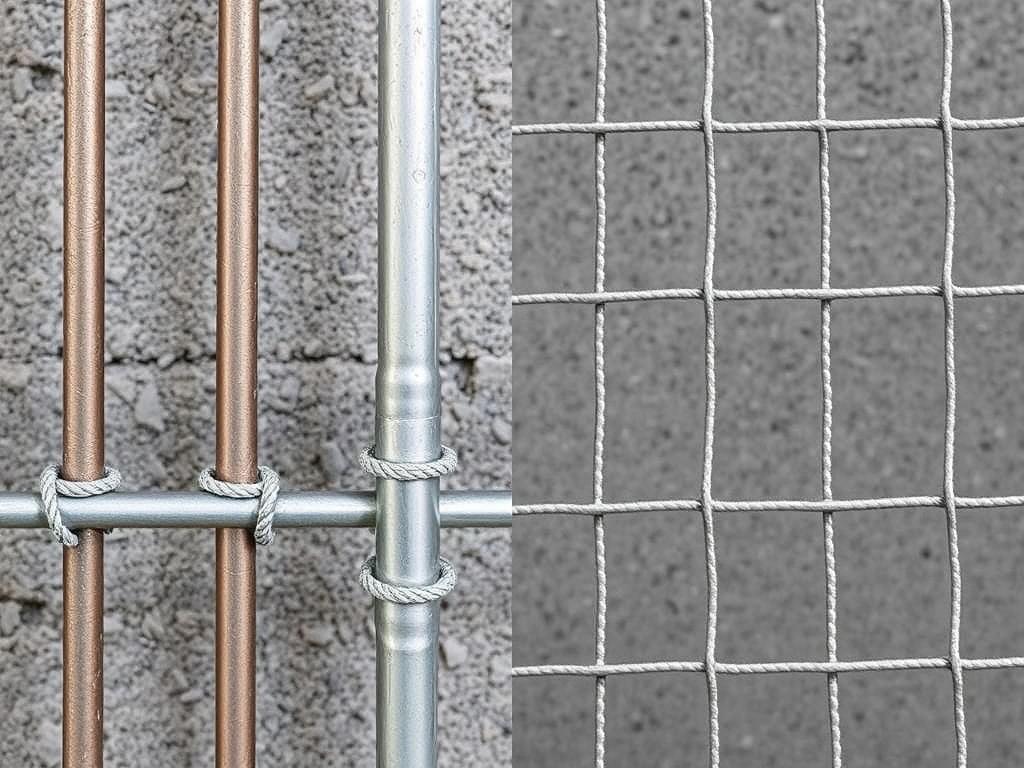
The choice between rebar and wire mesh isn’t about which is better in the abstract; it’s about which is better for the specific structural demands, durability needs, schedule, and budget of your project. Structural elements with calculated loads need rebar; light slabs and shrinkage control tasks are where mesh shines.
Make your decision based on the element’s purpose, the loading conditions, environmental exposure, and the engineer’s design. If you’re a contractor, ask for clarifications when plans are ambiguous. If you’re a homeowner or owner-builder, insist that an engineer review any substitution proposals for structural elements.
Good reinforcement practice balances design intent, proper materials, accurate placement, and decent curing. When these pieces align, concrete performs well for decades. When they don’t, repairs become costly and disruptive—so choose carefully and install thoughtfully.