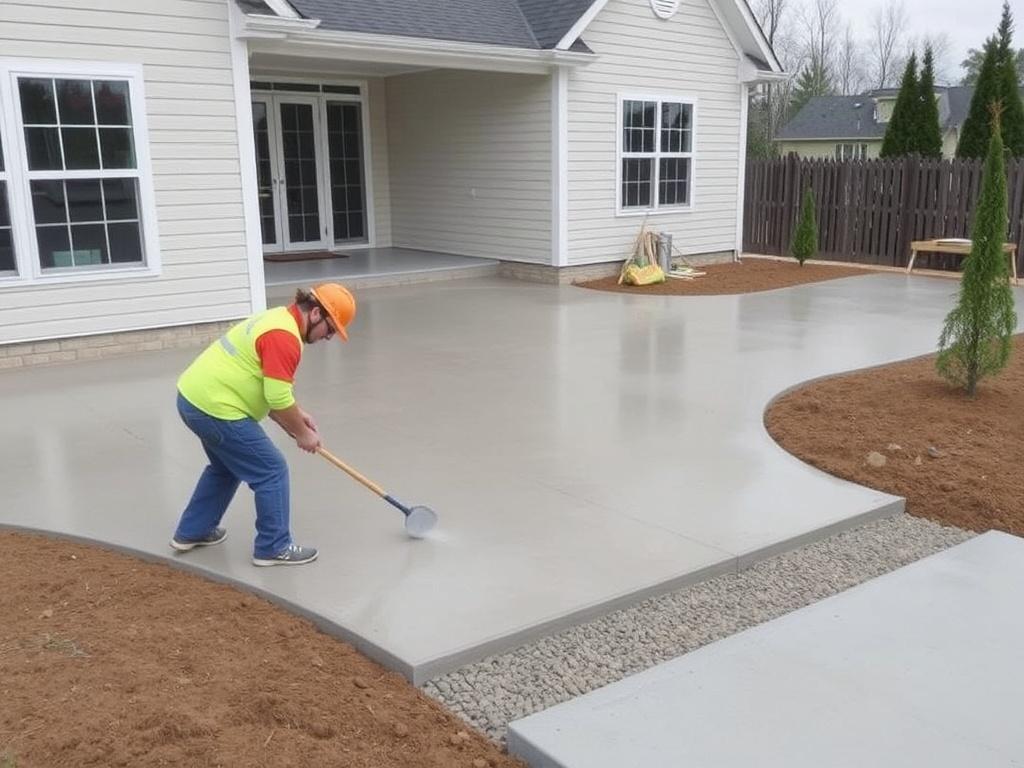
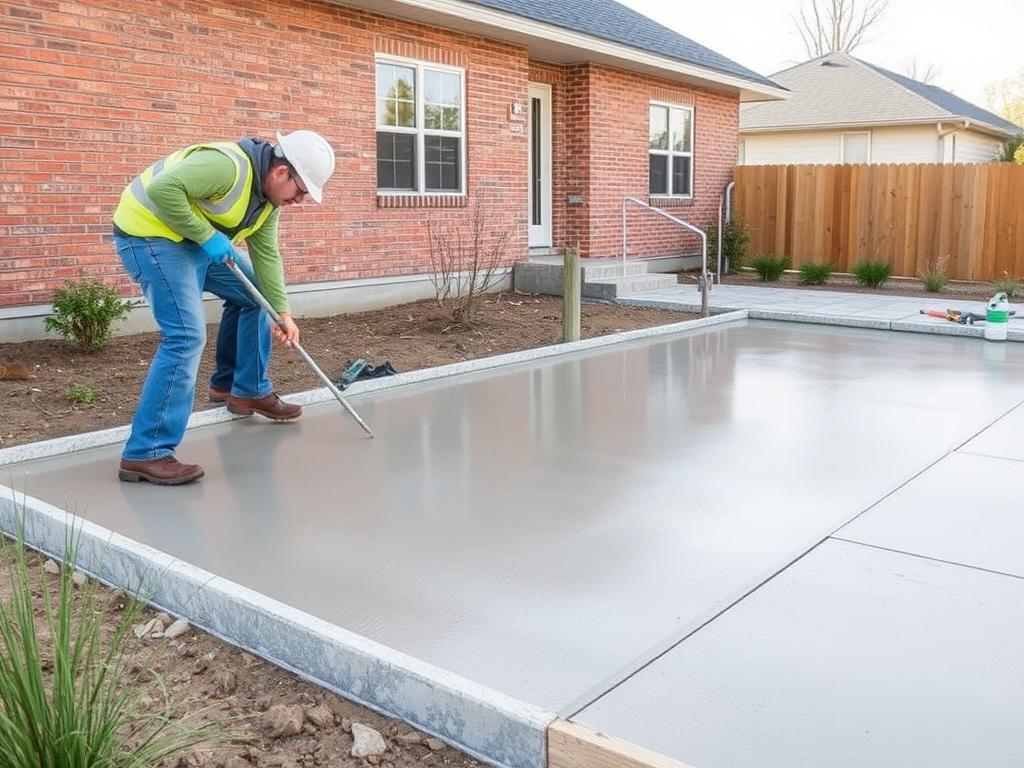
Getting concrete right isn’t glamorous, but it’s the foundation of durable patios, driveways, and foundations. This article lays out a thorough, practical checklist so your residential pour goes smoothly from planning through curing. Read on for the tools, techniques, timing tips, and mistakes to avoid that will save you time and money while improving long-term performance.
Start with a clear plan and the right permits
Before a single scoop of dirt is moved, establish scope: what are you pouring, where, and why? A clear plan defines slab thickness, dimensions, intended loads, reinforcement needs, and finished surface type, and it helps you calculate materials and labor with confidence.
Check local building codes and permit requirements early. Driveway and structural slabs often require inspections, and failing to secure permits can lead to costly tear-outs or fines. Call your municipal building department or review their website for drawings and submittal checklists.
Assess the site carefully
Walk the site with a tape measure and a level. Note slopes, nearby trees, underground utilities, and drainage patterns that could affect the slab. If water pools near the intended slab, fix grading before you pour; concrete can’t perform if its base stays wet.
If the job sits near mature trees, understand root locations. Arborists can advise whether roots must be cut and stabilized; careless root removal often causes future settling. For complex sites, a professional survey or soil report is worth the money.
Permits, inspections, and documentation
Documents you might need include a site plan, slab detail, reinforcement schedule, and erosion-control measures. Keep a folder with permits and inspection reports on-site during the pour. Inspectors will look for proper subbase, reinforcement, and formwork before concrete arrives.
Scheduling inspections in advance reduces downtime. Many municipalities allow electronic submittals and appointment booking; take advantage of these tools to avoid delays on pour day.
Design choices that control performance and cost
Design decisions greatly influence durability and expense. Choose concrete strength, slab thickness, and reinforcement based on use: a walkway needs far less than a garage slab that will carry vehicles. Overdesign wastes money; underdesign leads to early failure.
Consider finished surface and weather exposure when selecting admixtures and finishes. An exterior driveway exposed to freeze-thaw cycles will benefit from air entrainment and a slightly different finishing approach than an interior garage slab.
Concrete mix and compressive strength
Select a concrete mix with appropriate compressive strength (psi) for the application. Common residential slabs use 3,000 to 4,000 psi; sidewalks often use 3,000 psi while garage slabs may use 3,500 psi or more. Ask your supplier about local practices and availability.
Don’t obsess over psi alone. Mix consistency and proper water-cement ratio determine long-term strength. Never add excess water at the jobsite to make placing easier; that reduces strength and increases shrinkage and cracking risk.
Thickness, reinforcement, and control joints
Standard residential slab thicknesses are 4 inches for walkways and patios, 6 inches for driveways and heavier loads, and thicker where soil is poor. Reinforcement—wire mesh or rebar—helps control crack widths and improves load distribution.
Plan a joint layout before the pour. Control joints create intentional weak points where cracks can form neatly. A good rule is to space joints roughly 24 to 36 times the slab thickness in inches, or about every 10 to 12 feet for a 4-inch slab. Mark joints on forms or string lines so finishing teams can follow the plan.
Tools, materials, and a shopping checklist
Assemble tools and materials well ahead of time. Having everything organized on-site prevents last-minute runs that slow a truck and increase costs. Inventory what you own versus what you need to rent or buy.
Here’s a compact table summarizing common tools and their purpose so you can check items off quickly.
Tool or material
Purpose
Concrete forms (2x4s, stakes)
Define slab edges and heights
Vibratory plate compactor
Compact subbase and backfill
Level, laser level, or transit
Establish grades and flatness
Wheelbarrows, concrete pump/hopper
Transport and place concrete
Screed board and bull float
Initial leveling and smoothing
Edger, jointer, hand trowels
Edge finishing and jointing
Broom, power trowel
Texture and final finishing
Rebar, wire mesh, chairs
Reinforcement and proper cover
Curing compound, plastic sheeting
Curing and moisture retention
Personal protective equipment
Safety for workers
Ordering concrete: quantities and timing
Calculate the required cubic yards using slab area × thickness, then add 5–10% for waste and small grade differences. Most ready-mix providers will help with calculations if you provide accurate dimensions and thicknesses. Booking the truck early ensures timely delivery.
Communicate a precise start time with your supplier and crew. Concrete sets quickly; you need enough people and equipment on-site at the scheduled time. Plan breaks and contingencies so finishing doesn’t slow while trucks sit idling.
Rentals and extras to plan for
Rentals like concrete pumps, plate compactors, and power trowels can be economical if you don’t use them often. Reserve them days in advance to avoid schedule conflicts. Inspect rented equipment before the job and confirm fuel and operator needs.
Always have extra supplies: form oil, spare screws, additional stakes, and extra curing compound. Small shortages on pour day can create big headaches and tempt unsafe shortcuts.
Preparing the subgrade and drainage
A quality subgrade is invisible but essential. Poor compaction or inadequate drainage leads to settling, heaving, and cracking. Spend time here and you’ll avoid most future problems.
Excavate to the required depth, allow room for the compacted subbase and forms, and check grades with a laser or trustworthy leveling tool. Bring in granular base material where soils are weak or wet.
Subbase selection and compaction
Granular base, such as crusher-run or compacted gravel, provides strength and drainage under the slab. A typical base for a patio might be 4 inches; heavier-loaded slabs need 6 inches or more, compacted in layers. Compact each lift with a plate compactor to at least 95% of standard Proctor density where possible.
Pay attention to edge conditions. Edges that rest on soft or unconsolidated soil will settle faster than the center. Widen and thicken base material near edges and maintain consistent compaction across the entire area.
Drainage considerations
Concrete is strong but not tolerant of standing water. Guarantee positive drainage away from the house and toward storm drains or graded swales. Even a subtle slope (1/8 to 1/4 inch per foot) keeps water moving and reduces freeze-related damage in colder climates.
Where necessary, install drain pipes under concrete slabs or provide perimeter drains for patios that abut foundations. Consult a civil engineer on projects that alter existing flow paths significantly.
Formwork that stays true under pressure
Sturdy forms hold line and elevation during placement. Weak or flexible forms bow outward and create lips that interfere with finishing and weaken the slab edge. Nail, screw, and brace forms thoroughly.
Use straight lumber (or steel forms for repeated jobs) and stake them at regular intervals. Consider breaking long forms into shorter sections with internal bracing to prevent outward movement when the concrete arrives.
Setting levels and screed guides
Attach string lines or screed rails to the forms as guides for initial leveling. Confirm top-of-form elevations at several points with a level to ensure consistent thickness. A laser level speeds this work on larger slabs and keeps everyone aligned.
Remember to allow for finished surface materials when setting forms. If you’ll add a stamped finish, stepping away a fraction of an inch for the stamp depth might be necessary. Always think forward to the final profile, not just the poured surface.
Edge details and connection points
Where your new slab meets existing construction, plan for proper bearing and sealant. Provide dowels or keyed joints for load transfer into existing concrete and leave room for control joints near connections. Misplanned interfaces often become the first place to fail.
If adding embedded items—posts, conduit, or sleeves—lay them out and secure them before the pour. Taping or capping conduit prevents concrete from entering and complicating future wiring runs.
Reinforcement strategies
Reinforcement controls crack widths and improves load-bearing capacity but isn’t a cure-all. Use reinforcement appropriate to the slab function, and position it correctly in the slab thickness to be effective.
Typical choices include welded wire mesh, deformed rebar, fiber reinforcement, or a combination. Each offers benefits: mesh helps reduce surface cracking; rebar carries tensile forces across joints and thick sections; fibers improve overall crack resistance and may reduce need for mesh in some designs.
Positioning and support for reinforcement
Place wire mesh or rebar in the upper third of the slab depth, not resting on the subbase. Use chairs, bricks, or specialty supports to maintain cover and keep reinforcement from touching the bottom of the slab. Too low and it won’t control cracks; too high and the reinforcement can corrode at the surface.
Overlap reinforcement per manufacturer and code requirements; typical rebar lap might be 40 times the bar diameter or follow project drawings. Tie overlaps with wire to prevent movement during placement.
When fibers can replace mesh
Synthetic fibers are a practical solution to reduce plastic shrinkage and early-age cracking and can sometimes replace mesh for non-structural slabs. Fibers distribute throughout the mix, reinforcing micro-cracks that form as concrete dries.
Consult the mix supplier and code requirements before substituting fibers for traditional reinforcement in load-bearing or structural slabs. For many patios and walkways, a modest fiber dosage simplifies placement without sacrificing performance.
Admixtures and mix adjustments
Admixtures tailor concrete to weather conditions and project timelines. Use plasticizers for workability without extra water, retarders to slow setting in hot weather, and air-entraining agents for freeze-thaw resistance in cold climates.
Buy mixes pre-mixed with the needed admixtures whenever possible; on-site adjustments carry risk. Always confirm admixture compatibility with the concrete supplier and follow dosage recommendations carefully.
Air entrainment and freeze-thaw protection
Air entrainment is essential in climates with freeze-thaw cycles. Properly entrained mixes have microscopic air bubbles that accommodate ice expansion, reducing surface scaling and spalling. Typical air contents range from 4% to 8% depending on exposure and aggregate.
Too much air reduces strength, so balance is critical. Suppliers control air content during batching; if you see unexpected slump or air issues on site, notify the batch plant immediately.
Setting accelerators and retarders
Accelerators speed strength gain and can be useful in cold weather to reach early strength for finishing and form removal. Retarders extend set time in hot weather and during long placement runs. Both require careful dosing and knowledge of how they interact with your mix.
Don’t mix incompatible admixtures; consult the supplier or manufacturer for a compatibility chart. When in doubt, use a standard mix and control setting with temperature management and scheduling instead of chemical alterations.
Pour-day logistics and crew coordination
Pour day is choreography: trucks, crew, tools, and weather must all align. Assign roles ahead of time—who handles forms, who receives the concrete, who finishes, and who manages joints and edging. Clarity reduces confusion when the clock starts ticking.
Staging the site for truck access, pump placement, and spoil containment simplifies placement. Keep a clear path for the truck and room for equipment. If trucks must back into tight spaces, use spotters and communicate clearly to avoid damage.
Concrete arrival and batching expectations
Confirm batch counts and delivery windows with the supplier the day before. A miscount of cubic yards or wrong mix at arrival is a major disruption. Compare ticketed quantities against your order and keep a copy in your project folder.
Expect variations in slump and temperature. If something feels off—an unexpectedly watery mix, extreme temperature, or a truck with the wrong color or aggregate—stop and verify before placing. It’s easier to reject a bad load than to repair a failed slab.
Placement and consolidation methods
Place concrete as close to final position as possible to minimize handling and segregation. Use wheelbarrows, buckets, or pumps for distance placement. Avoid dropping concrete from excessive heights to prevent aggregate separation from the paste.
Consolidate concrete with a combination of rodding and vibration. For slabs, light internal vibration or surface poking with a spud wheel followed by screeding is usually sufficient. Over-vibrating can cause segregation, while under-vibrating traps voids and honeycombing.
Screeding, floating, and finishing techniques
Proper screeding sets the slab profile and removes excess material. Use a straight screed board or screed rails, and draw the screed across the forms with a sawing motion for consistent elevation. After screeding, follow quickly with bullfloating to embed aggregate and smooth the surface.
Timing is everything in finishing. Waiting too long to float or trowel causes the surface to require more effort or produce weak laitance layers; doing it too early smears the mix and pushes water and fines to the surface, weakening the top layer.
Float, trowel, and surface texture
Start with a bull float to eliminate screed marks and bring cream to the surface. After the water sheen dissipates, use an edging tool and power or hand trowels for a denser surface. Finish schedule varies by weather—cool, damp conditions extend work time; hot, windy days shorten it.
For exterior walking surfaces, consider a broom finish for traction. Do the broom stroke in the same direction the surface will be used, and practice on a small board if you’re inexperienced. For decorative or smooth finishes, carefully control trowel passes to avoid burnishing that looks glassy but can be slippery when wet.
Control joints and saw cutting
Control joints can be formed during finishing with a groover or saw-cut into the slab after it gains enough strength. Early-entry saws or timing saw cuts correctly prevents uncontrolled cracking. For a 4-inch slab, expect to saw cut within 6 to 18 hours depending on conditions; watch surface strength, not the clock.
Tooling joints during finishing works well for small slabs, but saw cutting often results in cleaner, tighter joints for larger areas. Mark joint locations before the pour and ensure spacing matches the predetermined layout to manage crack paths predictably.
Curing: the step that preserves strength and limits cracks
Curing keeps concrete moist while it gains strength. Improper curing is one of the most common causes of surface scaling, reduced strength, and excessive shrinkage cracks. The goal is to maintain moisture and temperature for the first critical days.
Multiple curing options exist: continuous wet curing with water-saturated burlap, membrane-forming curing compounds, or plastic sheeting. Choose a method that suits the slab location, climate, and schedule, and apply it immediately after finishing operations are complete.
Curing duration and temperature control
Maintain curing for at least seven days for ordinary Portland cement mixes, and longer for mixes containing supplementary cementitious materials like fly ash or slag. In hot weather, aim for longer curing or use compounds that reduce evaporation; in cold weather, insulate and protect from freezing until adequate strength is achieved.
Temperature affects both curing rate and final strength. Protect new concrete from freeze-thaw cycles with insulated blankets or heated enclosures if temperatures drop below freezing. Conversely, in high heat, provide shade, misting, or windbreaks to reduce rapid moisture loss.
Protecting the slab from traffic and load
Avoid foot traffic until the surface can resist damage—typically when the concrete can support the weight without marring, which might be a day for light foot traffic and several days for heavy wheel loads. Follow your mix supplier’s guidelines for form removal and load-bearing schedules.
If you must move equipment onto a fresh slab, use plywood sheets to distribute loads and reduce point stresses. Heavy vehicles should wait until the concrete achieves design strength to prevent rutting and surface failure.
Quality control during and after the pour
Inspect while pouring and again during finishing and curing. Check for consistent slump, proper placement, correct reinforcement location, and that control joints match the plan. Small deviations noted and corrected early save hours of remediation later.
Document the job with photos and notes: batch tickets, weather conditions, temperatures, personnel on-site, and any deviations from the plan. Good records prove invaluable if disputes or warranty issues arise later.
Common defects and how to address them
Surface cracking, scaling, honeycombing, and uneven joints are typical defects. Many stem from poor curing, excessive water, inadequate compaction, or improper finishing timing. Address problems early—surface repairs with bonded overlays or patching compounds often restore function without full replacement.
For structural or extensive problems, consult a concrete professional or structural engineer. Cosmetic repairs are simple; structural issues require diagnosis of underlying causes and sometimes removal and replacement to avoid ongoing risk.
When to call a professional
If you encounter subsidence, large cracks beyond hairline shrinkage, sections that sink under load, or unexpected soil conditions like quicksand or high water table, call a professional. These conditions affect structural integrity and might indicate the need for soil stabilization or a different foundation approach.
Even experienced DIYers call specialists for critical stages like structural footings or when heavy equipment, complex forms, or unique architectural finishes are involved. Hiring expertise at the right time minimizes errors and liability.
Safety, cleanup, and environmental best practices
Concrete work carries hazards: chemical burns from cement, dust inhalation, heavy lifting, and vehicle movements on-site. Provide safety gear—gloves, eye protection, respirators for cutting or grinding, and appropriate footwear. Brief the crew on hazards and emergency procedures before starting.
Plan cleanup to prevent concrete waste from entering storm drains or waterways. Washout stations should be sited away from drains, and hardened waste disposed of according to local regulations. Many suppliers provide portable washout boxes for truck and tool rinsing.
Personal protective equipment and site safety
Ensure all workers wear alkali-resistant gloves and long sleeves to protect from wet concrete burns. Provide knee pads for finishers and hard hats where overhead risks exist. Set clear traffic patterns for trucks and equipment and post warning signs for neighbors and passersby.
Keep a first-aid kit and a plan for chemical exposure incidents. Flush skin with water immediately if wet concrete contacts exposed skin and seek medical attention for persistent irritation or burns.
Environmental considerations
Minimize waste by accurately ordering and using leftover concrete for small patchwork or giving remaining product to another local project when practical. Recycle forms and rebar when possible and keep spill containment ready for fuel, oil, or admixture drums.
Consider low-carbon or supplementary cementitious materials to reduce embodied CO2 if sustainability is a design priority. Suppliers now offer mixes with fly ash, slag, or lower clinker content that can meet performance needs while cutting carbon footprint.
Lessons from the field: real-life examples
On a recent driveway replacement, we scheduled the pour for an early spring morning and expected mild weather. A sudden warm front and wind dried the surface within hours, producing early plastic shrinkage cracks. We learned to check extended forecasts and have shade and misting available for unexpected conditions.
Another job involved a patio next to an old drain field. The owner wanted a thin slab; a soil probe told a different story—soft, organic fill. We redesigned the base, bringing in 8 inches of compacted gravel and adding mesh reinforcement. The result has settled uniformly for three years with no cracking, a reminder that proper subgrade preparation is often the highest-return investment.
Practical, step-by-step checklist for pour day
Summarize the key activities into a concise list and run through it the night before. This final checklist helps ensure nothing gets missed during the inevitable rush of pour day.
Confirm permit and inspection schedule, and have documents on-site.
Verify grade, forms, and reinforcement placement with levels and tape measures.
Check materials, tools, and rentals are on-site and in working order.
Assign crew roles and safety briefings; establish traffic patterns.
Place, consolidate, and screed concrete according to the finishing plan.
Tool control joints and apply finishing textures as planned.
Apply curing method immediately and protect from weather extremes.
Document batch tickets, weather, and any deviations; schedule follow-up inspections.
Tick items off as you go and keep an eye on timing so finishing steps occur in the correct sequence. If anything is amiss, pause and resolve it before continuing.
Concrete work rewards careful planning and disciplined execution. A well-prepared site, correct materials, attentive finishing, and conscientious curing result in slabs that look good and last decades. Follow the checklist, learn from small mistakes, and call for help on bigger problems—your future self will thank you.