Finishing a concrete slab well turns a raw pour into a durable, attractive surface that will last for decades. Whether you’re laying a garage floor, a backyard patio, or a workshop slab, the difference between rough and professional results comes down to preparation, timing, and technique. This article offers a detailed, practical walkthrough—A Step-by-Step Guide to Finishing a Concrete Slab—so you can plan, pour, and finish with confidence.
plan first: design, purpose, and schedule
Begin by defining what the slab must do: support a car, provide a smooth shop floor, or create a weather-resistant patio. Use that purpose to set thickness, reinforcement needs, and finish type; a driveway or garage will require thicker concrete and more reinforcement than a simple patio. Sketch dimensions and locate utilities, slopes for drainage, and any embedded anchors or dowel requirements.
Carefully plan timing because concrete finishing is a race against the clock. Weather, temperature, and the workforce available will determine start times and realistic pour windows. If high temperatures or wind are expected, you may need to pour earlier in the day or arrange for curing methods to prevent rapid moisture loss.
Permits and local code matter. Check with your municipality for required permits, minimum thicknesses, reinforcement standards, and slope requirements, and call locators for buried utilities. Embedding these administrative steps into the schedule avoids last-minute delays that can sabotage the pour.
tools and materials you’ll need
Using the right tools both speeds the job and improves the result. The core tools include a concrete screed, bull float, magnesium float, steel trowel, edging tool, jointer, broom, and a finishing machine or power trowel for larger slabs. Personal protective equipment such as gloves, eye protection, and knee pads are essential when working directly with wet concrete.
Materials are straightforward but quality matters: properly mixed concrete (or ready-mix delivered to spec), rebar or welded wire mesh for reinforcement, compactable granular base, form lumber and stakes, and curing compound or plastic sheeting. Consider admixtures for air entrainment, retarders for hot weather, or plasticizers for improved workability when needed.
| Category | Essential items |
|---|---|
| Tools | Screed, bull float, magnesium float, steel trowel, edging tool, jointer, broom, wheelbarrow, concrete rake |
| Reinforcement | Rebar or welded wire mesh, chairs/spacers |
| Materials | Concrete mix (batch or ready-mix), gravel/sand base, curing compound, expansion joint material |
| Safety | Gloves, eye protection, boots, respirator (for cutting/cleaning hardened concrete) |
site preparation: base, forms, and drainage
A great slab starts with a solid base. Excavate to the required depth, compact the subgrade, and lay a well-graded gravel base to provide drainage and uniform support. For areas exposed to frost, install frost-protected depth or insulating measures as required by local code to prevent heaving.
Set up clean, straight forms that hold their shape under the weight of wet concrete. Use sturdy stakes and bracing to prevent bulging, and coat the inside of forms with a form-release agent to simplify removal. Verify with a level or laser that forms are at the correct elevations and that slopes are consistent for drainage.
Plan for utilities and embedded items before pouring. Sleeves for drains and conduits should be placed and secured so they won’t float when concrete is poured. Anchor bolts or plate embeds should be attached to forms and checked for correct location and elevation.
reinforcement and joints: placing rebar and planning control lines
Reinforcement doesn’t necessarily prevent cracking completely, but it controls crack width and helps maintain load-bearing integrity. For most residential slabs, welded wire mesh or #3 to #4 rebar spaced appropriately will suffice. Place reinforcement on chairs so it sits near mid-depth of the slab, not resting on the base.
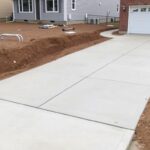
Plan joints carefully to control where the concrete cracks. Schedule joints at regular intervals—commonly at distances equal to 24 to 36 times the slab thickness in inches for contraction joints. Use a jointer to create control lines while the slab is plastic, or install saw-cut joints within 12 to 24 hours after finishing, depending on concrete set and weather.
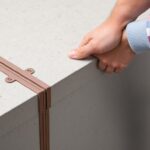
Consider isolation and expansion joints where the slab meets fixed structures, columns, or walls. These joints prevent stresses from adjacent components from forcing random cracks in the slab and allow for thermal expansion without spalling at edges.
mixing and pouring: getting the concrete right
If you’re using ready-mix, communicate precise slump and admixture requirements to the plant and time the delivery to match your crew’s readiness. For small pours, properly mixed bagged concrete can work, but keep batch consistency in mind. Overwatering is a common mistake—too much water weakens the mix and increases drying shrinkage.
Begin pouring near the lowest point of the form and work methodically toward the far side to avoid walking on uncured concrete. Use wheelbarrows, pumps, or chutes for placement depending on scale and accessibility. Consolidate the concrete with a shovel or tamping tool to expel air pockets and ensure full contact with reinforcement and forms.
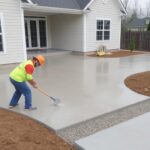
For large pours, organize your crew into stations: placement, screeding, floating, edging, jointing, and finishing. This assembly-line approach helps ensure each task occurs at the optimal time and reduces rushed or skipped steps. Communicate a clear timeline and designate a lead finisher who calls the timing for each stage.
screeding and leveling: striking off to grade
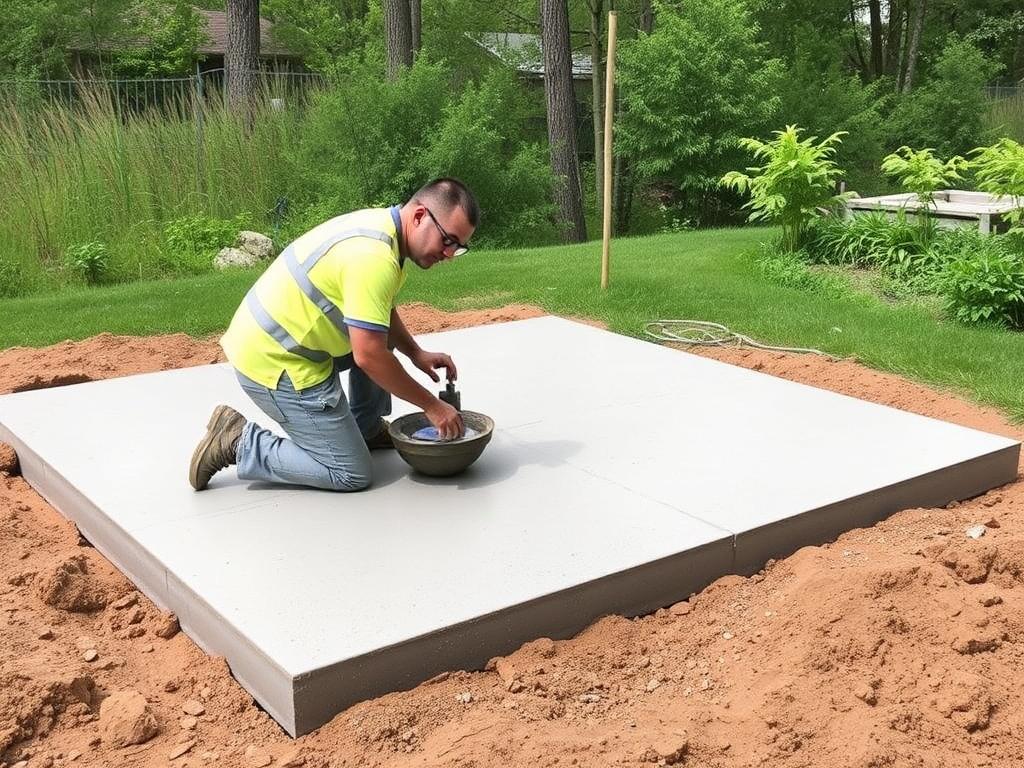
Screeding is the first major finishing operation and establishes the slab’s elevation and flatness. Use a straightedge or screed board to strike off the excess concrete, moving the board back and forth in a sawing motion while pulling it along the forms. Work quickly but smoothly, because the fresher the concrete, the easier it is to shape.
For longer slabs, use a screed rail or laser-guided screed to maintain consistent grade. After screeding, check for low spots and refill them before they set—fixes become much more difficult once the surface firms up. After the initial screed, allow bleed water to rise and for the paste to stiffen slightly before the next steps.
floating: consolidating and bringing paste to the surface
Floating follows screeding and consolidates the surface, embedding coarse aggregate and eliminating ridges. Use a bull float to smooth the surface and push down aggregate; operate the float with the handle at low angle so it doesn’t dig. For small slabs, hand-held magnesium floats work well to refine areas the bull float missed.
Timing is key for floating: perform it after bleed water has dissipated but while the surface is still workable. Overworking the surface too early can drag excess water and weaken the top layer, while waiting too long makes it difficult to achieve a smooth finish. Keep an eye on the surface and adapt to variables like temperature and mix consistency.
edging, jointing, and small details
Once the surface is floated, use an edging tool to round the slab perimeter and reduce chipping at the edges. Edging creates a durable border and gives finished concrete a clean look. Follow edging with the installation of control joints using a jointer or grooving tool to the proper depth, typically one-quarter to one-third of the slab thickness.
Chamfering the edges with a bullnose tool can mitigate chips and wear on high-traffic edges. For decorative slabs, you may embed accents, stones, or patterns at this stage; ensure any inserts are securely held in place and won’t move during later troweling. Clean tools often—concrete dries fast on metal and will affect tool performance if left to harden.
troweling and getting a hard, smooth finish
For a dense, smooth surface, trowel after the float stage. Hand troweling works on small slabs; power trowels speed the job on larger slabs and deliver a consistent finish. Troweling too soon can trap bleed water beneath the surface; wait until the concrete can support the weight of the trowel without leaving deep marks.
Apply multiple trowel passes, beginning with a light angle and progressing to a flatter blade as the slab hardens. Each pass refines the surface, compresses the paste, and brings finer cement particles to the top for sheen and durability. If you need a non-slip surface, finish with a light broom texture immediately after the final trowel pass.
surface textures and decorative finishes
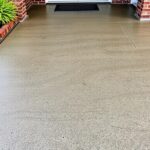
Surface texture depends on use: a polished look for interior workshops, a broom finish for exterior patios, or exposed aggregate for decorative driveways. Broom finishing uses a stiff-bristled broom pulled across the near-final surface to create consistent ridges that improve traction. Stamped or colored finishes require careful timing and release agents before imprinting patterns into the plastic concrete.
For exposed aggregate, remove the top paste layer after the concrete has set enough to hold the stones by using surface retarders or water washing combined with brushing. Polished concrete involves grinding and polishing after the slab has cured, using progressively finer diamond segments to achieve the desired sheen. Each decorative approach requires different timing and tools—plan those steps before the pour.
curing: locking in strength and reducing cracks
Curing is one of the most important steps and is often neglected. Proper curing keeps the concrete moist so the chemical hydration of cement continues, which directly impacts strength and durability. Common methods include covering with plastic sheeting, wet burlap, or applying a curing compound to form a moisture-retaining membrane on the surface.
Keep the slab continuously moist for at least seven days for typical mixes and longer for thicker or high-performance concrete. In hot, windy, or sunny conditions, start curing immediately to prevent plastic shrinkage cracks. Avoid rapid drying by shielding from direct sun and wind when possible, and remove protective coverings only after the recommended curing period.
sawing control joints: timing and technique
Saw-cutting joints properly controls random cracking by creating weakened planes where the slab can crack cleanly. The first saw cuts are typically made within 12 to 24 hours for conventional mixes, but timing depends on the concrete’s set and weather. Early sawing risks raveling; late sawing may allow cracks to form uncontrollably.
Use a wet saw with a diamond blade and cut to a depth equal to about one-quarter of the slab thickness. For large slabs that will be sawed later, mark joint locations in advance so you and the cutting crew can schedule appropriately. Keep blades sharp and the saw steady to avoid chipping the slab edges along the cut.
common mistakes and how to avoid them
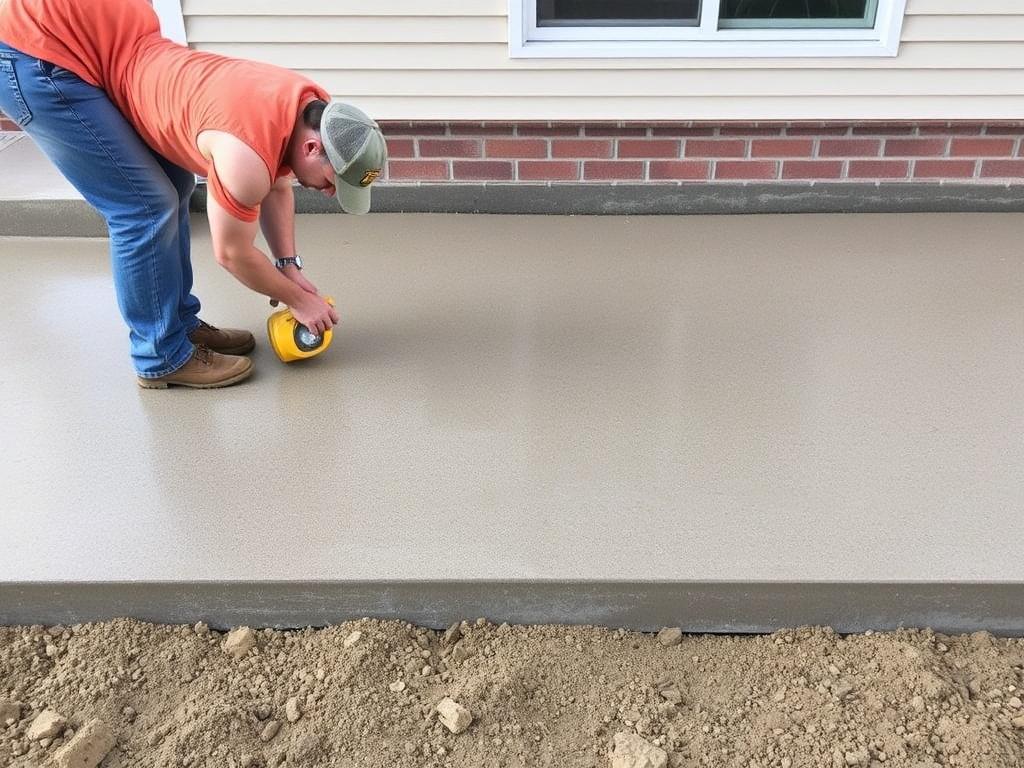
Overwatering the mix is a frequent error that weakens the final slab and increases shrinkage cracking. Maintain the specified slump and use admixtures rather than adding excess water to improve workability. If concrete appears too stiff when it arrives, communicate with the supplier about possible retarder admixtures rather than diluting on site.
Another common problem is improper joint placement or delayed sawing, which leads to random cracking. Plan joint locations before the pour and assign a saw crew to cut at the proper time. Poorly constructed forms and inadequate compaction of the base also cause settling and edge failures later; sturdy forms and a well-compacted base prevent these issues.
Rushing finishing steps is often visible in the final product: ridges, inconsistent texture, and weak surface strength. Stick to a staged approach and don’t skip steps because of excitement to finish. A measured pace yields a slab that looks good and performs well for years.
troubleshooting common problems
If you see early hairline cracks, they’re usually shrinkage cracks from moisture loss; ensure future pours are cured more aggressively. For deep, structural cracks or slab movement, assess subgrade support and consult an engineer—those issues can indicate settlement or frost action that require corrective work. Surface scaling often results from freeze-thaw cycles combined with de-icing salts; proper air entrainment and curing reduce this risk.
Spalling at edges may be caused by improper form removal or insufficient edge support. If edges chip off shortly after removing forms, use epoxy repairs or patching materials designed for concrete to restore integrity. For discoloration or mottled finishes, confirm that mixing consistency and finishing timing were uniform—temperature variations and inconsistent troweling often produce these visual problems.
maintenance and sealing for longevity
Regular maintenance keeps a slab performing well over time. Sweep and hose down surfaces to remove grit and chemicals that can abrade or penetrate the surface. For garage floors and patios exposed to vehicles and salt, apply a penetrating sealer or a topical acrylic sealer according to manufacturer recommendations and local climate considerations.
Periodic resealing—every one to five years depending on traffic and exposure—protects against staining and freeze-thaw damage. Address oil stains promptly using absorbent materials and appropriate cleaners; for deep stains, mechanical grinding or professional cleaning may be needed. For decorative surfaces, follow the specific maintenance guidelines tied to the chosen finish, as polished slabs have different needs than broom-finished ones.
safety and environmental considerations
Concrete work involves hazards—wet concrete is alkaline and can burn skin, and dust from cutting hardened concrete contains silica, which is hazardous when inhaled. Always wear gloves and eye protection when handling wet mixes, and use respirators and dust control methods (wet cutting or HEPA vacuums) when grinding or cutting hardened concrete. Protect kneecaps and joints; kneeling on fresh concrete without pads can cause injury and imperfect finishes.
Minimize environmental impact by using recycled aggregates where acceptable, select admixtures with lower environmental footprints, and avoid washing excess concrete down storm drains. Collect wash water and dispose of it according to local regulations to prevent cementitious runoff from harming waterways.
estimating time and cost for your project
Estimate quantities using slab area and thickness, then add a contingency for waste and over-excavation. Ready-mix suppliers typically sell by the cubic yard, so convert your measurements accordingly and include reinforcement, forms, and finishing tools in your budget. Labor can be a significant portion of cost, particularly for detailed finishes, so factor in crew size and hourly rates when planning.
Time estimates vary: a small residential slab can often be poured and finished in a single day, but curing takes days to weeks and decorative or polished finishes require additional passes and time. For complex jobs, break the timeline into stages—site prep, pour, finish, saw-cutting, and curing—so you and any hired teams know exactly when to show up.
real-world example: finishing my backyard workshop slab
I once led the pour for a 20-by-16-foot workshop slab and learned how quickly planning pays off. We prepared the base two days prior, pre-bent rebar for corners, and set forms to exact elevations; that prep saved time during the pour and reduced stress when the truck arrived. The day of the pour, our four-person crew moved through placement, screeding, floating, and troweling in a smooth sequence because every tool and worker had a defined role.
We chose a broom finish for traction and added a curing compound after two days of moist covering to protect the slab during the hot late-summer weather. The slab performed well over the years, demonstrating that modest investments in proper reinforcement, timely finishing, and diligent curing yield a long-lasting floor. That project reinforced a simple truth: good concrete finishing is mostly logistics and timing, not secret craft alone.
step-by-step checklist for a single-day residential pour
Below is a condensed checklist to help organize a typical residential slab pour. Use it as a reference to assign tasks and ensure you don’t miss crucial steps on the day of the job.
- Confirm permits, utilities located, and forms set to grade.
- Compact base and place reinforcement on chairs.
- Confirm ready-mix mix design and delivery time with supplier.
- Pour and consolidate concrete, keeping placement continuous.
- Screed to grade and bull float to embed aggregate.
- Edge and groove control joints; allow bleed water to evaporate.
- Final trowel passes or broom finish as appropriate.
- Apply curing compound or cover slab to retain moisture.
- Schedule saw-cutting for joint timing and arrange sealing at recommended interval.
when to call a pro: jobs beyond DIY
Some projects are better left to professionals: high-load industrial floors, structural slabs supporting heavy machinery, or slabs integrated with complex drainage and utility systems. Professionals bring experience with mix design, reinforcement detailing, and access to larger equipment like pumps and power trowels for consistent results. For decorative polished concrete finishes and architectural work, specialty contractors can provide craftsmanship and guarantees that are hard to match as a DIYer.
If you’re unsure about subgrade conditions, frost considerations, or reinforcement needs, a consultation with an engineer or structural professional is a prudent investment. The cost of fixing a failed slab far exceeds the extra expense of competent design and execution up front.
final practical tips and finishing touches
Keep tools clean and ready; hardened concrete on blades and floats ruins finishes. Work in a logical sequence and resist the urge to over-trowel; final sheen can be achieved with fewer passes if timing is correct. Monitor weather forecasts and be prepared to delay a pour if rain, extreme heat, or freezing temperatures threaten the timing of crucial finishing steps.
Finally, document your project with photos and notes: mix specs, batch times, ambient temperatures, and crew actions. These records help troubleshoot future maintenance issues and improve outcomes on subsequent pours. With good preparation and attention to timing, your slab will look and perform like a job done by an experienced crew—because you executed it with their discipline and care.