Stamped concrete transforms ordinary slabs into surfaces that mimic stone, wood, or tile with surprising realism. It combines placement technique, patterned molds, color application, and finishing touches to produce durable, decorative floors and pavements that elevate homes and public spaces alike.
In this article I’ll walk through the full process: the materials and tools, design choices for patterns and textures, color hardening strategies, installation workflow, and long-term care. Whether you’re a homeowner exploring options or a contractor refining technique, the goal is practical knowledge and creative inspiration.
What stamped concrete actually is
Stamped concrete is plain concrete that’s been textured and colored to resemble more expensive materials such as flagstone, brick, slate, or wood. After the concrete is poured and leveled, specialized molds are pressed into the fresh surface to imprint patterns, then release agents and colorants create depth and variation.
The appearance depends on a chain of decisions: mix design and slump, timing for stamping, the type of stamps, color method, and how the surface is finished. Every step affects the look and the long-term performance, so craftsmanship matters as much as design.
Brief history and evolution
The technique of embellishing concrete goes back decades, but modern concrete stamping took off in the 1970s when polyurethane and rubber stamps became widely available. These tools allowed crews to reproduce natural textures accurately and quickly, making decorative concrete far more affordable than real stone or wood.
Since then, new pigments, color hardeners, and release agents have improved realism and durability. Advances in sealer chemistry and curing techniques have widened the range of climates and uses where stamped concrete performs well.
Materials and tools: the foundation of quality results
Successful stamping starts with the right materials: a consistent concrete mix, appropriate aggregate size, properly selected colorants, and quality stamps. The concrete mix should be designed for the project’s load and exposure, balancing workability with strength and shrinkage control.
Essential tools include vibratory screeds, bull floats, edgers, hand trowels, and stamping tools (ranging from full-size mats to small hand stamps). A proper curing plan, often with curing compounds or wet-curing methods, protects the concrete during its most vulnerable early days.
Release agents prevent stamps from sticking and add secondary color depth. They come in powder, liquid, and paste forms, with each delivering a different visual effect. Choosing the right release agent and applying it correctly is a small step that makes a large visual difference.
Stamp types: rubber, polyurethane, and specialty molds
Rubber stamps are flexible and hold deep texture well, while polyurethane stamps are more dimensionally stable and can reproduce sharper detail. For large areas, interlocking mats speed installation and keep pattern alignment consistent; for tight curves or repairs, smaller hand stamps provide control.
Specialty molds capture wood grain, flagstone joints, or intricate cobbles. Matching stamp selection to the chosen pattern and the concrete’s workability is crucial—too stiff a mix and deep textures won’t form; too fluid and the detail can slump before it sets.
Release agents and color hardeners
Release agents serve two functions: they keep stamps from sticking and they impart a background or highlight color when split-applied. Powder releases are widely used for rustic, variegated effects, while liquid releases produce cleaner, more uniform separation and color tones.
Color hardeners are dense pigments broadcast into the surface just after screeding and before floating. They become part of the concrete surface, increasing abrasion resistance and offering richer colors than surface stains alone. Applied properly, they reduce wear and make the color longer lasting.
Color hardening methods and color systems
There are several ways to color stamped concrete, each with trade-offs. Integral color mixes pigment into the entire batch for uniform hue; color hardeners dust the surface for a deeper, abrasive-resistant finish; and topical stains or dyes are applied after finishing to add tone and highlight details.
Integral color is durable and resists fading because the pigment is throughout the slab, but it can look flat without additional surface treatments. Color hardeners provide the desirable combination of sheen, depth, and resistance to abrasion because the surface is concentrated with pigment and cementitious binders.
Surface-applied stains and dyes are excellent for subtle shading and achieving antiqued effects. They can be used to enhance stamp texture and highlight joints, but they sit on or slightly penetrate the surface, so a proper sealer is essential to protect them from wear and UV exposure.
Comparing color methods
A simple comparison helps clarify choice depending on the project goals, durability needs, and budget. Integral color offers consistency and low maintenance, color hardeners give strong surface wear resistance and richer visual depth, and stains enable custom toning and artistic finishes.
| Method | Strengths | Limitations |
|---|---|---|
| Integral color | Uniform color, mixes into concrete, low maintenance | Can appear uniform without surface treatment, limited texturing impact |
| Color hardener | Durable surface, rich appearance, resists abrasion | Requires broadcast technique and timing control |
| Stains/dyes | Custom shading, highlights textures, artistic flexibility | Less durable without protection, can fade with UV exposure |
Patterns and textures: designing the surface
Pattern selection sets the mood of an outdoor space or interior floor. Cobblestone and ashlar flagstone read as classical and rustic, brick lends a traditional or urban feel, while wood plank stamp patterns reproduce the warmth of decking or barn boards without the maintenance headaches.
Texture level matters as much as pattern. A deep, coarse texture will hide imperfections and provide traction; a fine texture looks refined but can show trowel marks or surface get-slicker if not sealed correctly. Consider how the area will be used and what visual effect you want to create.
Color layering pairs with texture to sell the illusion. A base color, then a split-applied secondary release color or acid stain wash, creates shadows and highlights that mimic joints, grout, and natural stone variations. Thoughtful color variation is the difference between a convincing finish and a flat one.
Popular patterns and their uses
Flagstone is versatile for patios and pool decks because it reads as natural and irregular, breaking up large expanses visually. Brick patterns work well for walkways and driveways where a structured appearance is desirable, and they coordinate with traditional architecture.
Wood plank textures are popular for porches and interior floors where water-resistance and reduced maintenance are priorities. Slate and tile patterns suit elegant courtyards and commercial plazas where a refined, upscale pattern is wanted without the cost of quarried stone.
Choosing the right pattern for the site
Scale and proportion are critical when selecting a pattern. Large stamps suit broad open areas; small, dense patterns become busy and overwhelming at a distance. Visual balance with surrounding architecture, landscape features, and furniture should guide the decision.
Climate and use also determine texture choice—rougher textures for icy or poolside areas to increase traction, smoother surfaces for interior spaces where wheeled movement is frequent. Always factor in maintenance needs and how the surface will age under local weather conditions.
Installation process: step-by-step workflow
Successful stamping follows a predictable workflow: site preparation, formwork and reinforcement, mix placement and consolidation, screeding and initial finishing, color and release application, stamping, curing, sealing, and final touch-ups. Each stage has timing that’s sensitive to ambient temperature and humidity.
Below is a compact sequence of major steps. These are generalized—projects will differ based on concrete mix, complexity, and local conditions, so use this as a high-level roadmap rather than a strict checklist.
- Excavation and base preparation
- Form setting and reinforcement placement
- Concrete placement and screeding
- Broadcast color hardener (if used)
- Floating and finishing
- Apply release agent
- Stamp concrete at the right set
- Edge, joint, and finish details
- Curing and initial sealing
Timing is often the make-or-break factor. Stamping too early can cause the concrete to deform or the pattern to be indistinct; stamping too late can result in incomplete imprints and excessive effort. Experienced crews judge set by feel and elapsed time and often use trial stamps to dial in timing decisions.
Mixing and pouring: considerations for stamp-ready concrete
Workability is tuned to allow consolidation without segregation and to accept stamp impressions without slumping. Many contractors amend mixes with plasticizers or adjust aggregate size to retain body while maintaining beneficial slump for consolidation and finishing.
Avoid overly wet mixes; they increase shrinkage and reduce pattern definition. Conversely, a mix that is too stiff will resist stamping and may trap air pockets under stamps which cause voids in the texture. Consistent batching and onsite slump checks are essential for uniform results.
Stamping technique: timing, pressure, and pattern alignment
Stamping requires rhythm and coordination. Start stamping at one end and work methodically, overlapping stamp edges and rotating stamps to avoid repetitive patterns that look artificial. Use two or more operators where possible—one places stamps while the other checks alignment and applies pressure for consistent impressions.
Pressure must be firm enough to capture texture but not so aggressive that the mix is displaced. Boots with non-marking soles are the stamp operator’s friend; they allow walking on wet concrete while installing and adjusting stamps without damaging the surface or imprint.
Pattern alignment is handled by using guide strings or reference lines and by planning the layout before pouring. Pay attention to natural stopping points like steps, columns, and doorways to avoid awkward pattern cuts and to create a pleasing rhythm across the surface.
Finishing and sealing: locking in beauty and durability
After stamping, edges are tooled, joints are cut or tooled into the slab to control cracking, and any surface inconsistencies are addressed. Concrete must cure at a controlled rate; rapid evaporation causes surface crazing and weakens the top layer, so curing compounds or wet coverings are often used.
Sealers protect color and add sheen, which enhances depth and visual complexity. Choose a sealer with the right sheen level for the project—matte for a natural stone look or gloss for dramatic contrast. Reapplication schedules vary with traffic, UV exposure, and climate but generally occur every 2–5 years.
Maintenance, repair, and longevity
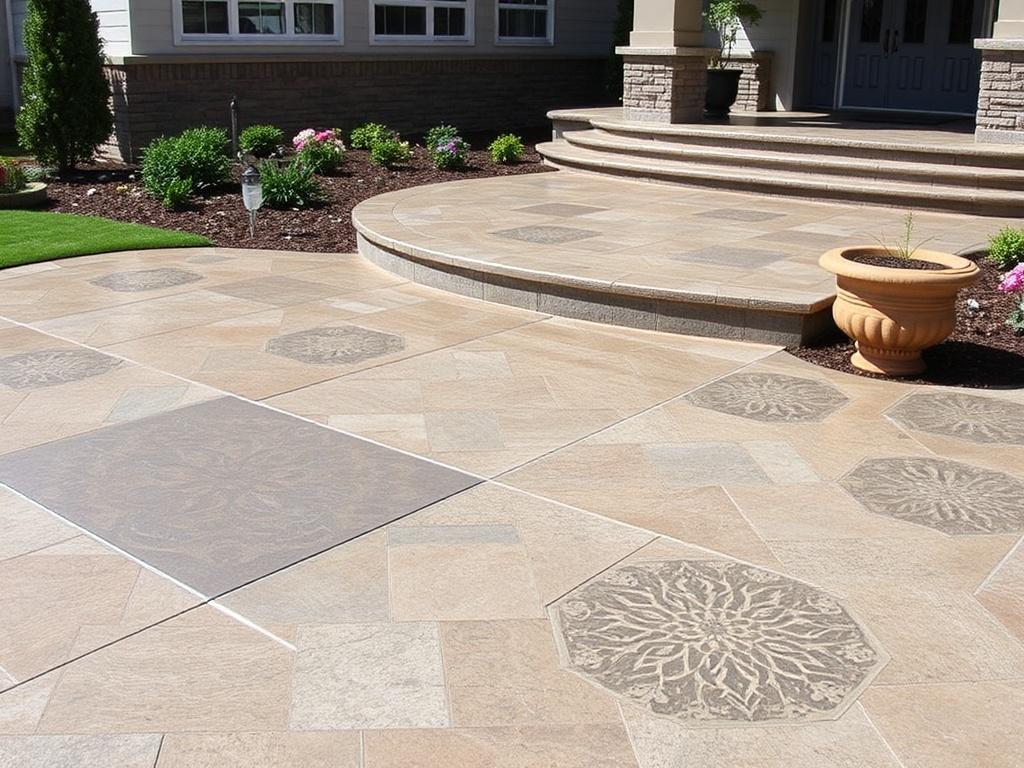
Maintenance is straightforward: keep the surface clean, reseal as recommended, and address stains promptly. For pool decks and high-traffic areas, periodic power washing with mild detergents keeps the surface attractive without damaging sealers if done with appropriate pressure and technique.
Cracks are inevitable in any concrete slab, but stamped surfaces can be repaired with color-matched patching compounds and hand tooling to blend texture. For larger or more visible areas, contractor-applied overlay or microtopping systems can renew the surface while preserving or changing the pattern.
Common problems and troubleshooting
Ghosting, where the texture of a stamp appears faintly after finishing due to improper timing or sealing, is one common issue. Prevent it by optimizing timing and ensuring the stamps are not pressed excessively late into a surface that’s starting to form a film from evaporation.
Blotchy color often results from uneven application of release agent or inconsistencies in color hardener broadcast. Uniform broadcasting, gentle brooming to distribute the powder, and test panels before full application reduce the risk of uneven tones across a large area.
Peeling sealers and delamination occur when sealers are applied too soon or when contaminants are present. Proper surface preparation and adherence to recommended cure times—usually 28 days for full cure of concrete before many topical sealers—help avoid these problems.
Design considerations and budgeting
Designing with stamped concrete means balancing vision and budget. Costs vary by pattern complexity, stamp type, color method, site access, and finish treatments. Expect mid-range projects to be more economical than natural stone but more expensive than plain broom-finished concrete.
| Project type | Typical cost range (per sq ft) | Notes |
|---|---|---|
| Basic stamped patio | $8–$12 | Simple pattern, integral color or basic hardener |
| Complex driveways or pool decks | $12–$20 | High-detail stamps, multiple colors, premium sealer |
| High-end commercial plazas | $20+ | Custom patterns, specialty textures, extensive prep |
Site prep and drainage considerations can significantly affect cost. A sloped or unstable subgrade requires additional excavation, drainage solutions, or reinforcement, and those are costs that pay off in slab longevity and reduced maintenance.
Sustainability and environmental considerations
Concrete has environmental impacts, notably embodied carbon from cement production. Mitigating strategies include using supplementary cementitious materials (fly ash, slag), optimized mix designs with reduced cement content, and sourcing local materials to reduce transportation emissions.
Permeable concrete systems and careful grading can manage stormwater better than impermeable surfaces, reducing runoff and improving site hydrology. Decorative concrete can also extend the life of an existing substrate through overlays, which reduces material waste compared with full tear-out and replacement.
Real-life examples and personal experience
On a backyard patio project I managed, we chose an irregular flagstone pattern with a warm chestnut color hardener and a darker powder release to accent joints. The clients wanted a tactile, natural look to match a mature garden, and the stamped concrete delivered the wood-and-stone feel with lower maintenance than reclaimed stone.
Timing was crucial on that job—after one early-morning rain the first pour had to be delayed, and rescheduling crews for the late afternoon pour produced much better stamping conditions. The final patio still looked convincingly natural two years later, and resealing schedules kept the color vibrant through winter freeze-thaw cycles.
In another commercial plaza I worked on, tighter tolerances and heavy pedestrian traffic required a high-strength mix and fiber reinforcement. We used a dense color hardener and a penetrating sealer to reduce slip while maintaining a subtle sheen that survived the abrasive foot traffic for years without major touch-ups.
Hiring a contractor versus DIY
DIY stamping is tempting for small patios, but it’s easy to underestimate the timing sensitivity and skill required to get uniform coloration and crisp patterns. Small projects can succeed with good planning, a trial panel, and help from friends, but larger or visible installations usually demand professional crews.
Contractors bring not only skill but equipment and process controls—consistent batching, vibration tools, and well-practiced stamping crews. When hiring, ask for portfolios, references, and a clear warranty. A reputable contractor will show sample panels, mock-ups, and explain color-matching practices for repairs.
- DIY pros: cost savings on labor, control over design choices, rewarding hands-on experience.
- DIY cons: high learning curve, risk of inconsistent results, limited warranty.
- Pro contractor pros: consistent quality, time efficiency, warranty and experience handling unexpected site issues.
- Pro contractor cons: higher upfront cost, need to vet for skill and honesty.
Licensing, codes, and safety
Large projects and certain jurisdictions require permits and licensed contractors, especially for structural components or when trenching and drainage are involved. Be familiar with local building codes and inspection requirements to avoid costly rework or legal headaches.
Safety on the job includes PPE for workers, safe handling of powdered color hardener and release agents, and careful use of equipment like concrete mixers and power trowels. Proper training reduces the risk of injury and prevents damage to the finished surface from misuse of tools.
Creative possibilities and hybrid approaches
Stamped concrete can be combined with other materials for dramatic effect—offset bands of exposed aggregate, inset real stone borders, or inlaid brick patterns give unique character. Where cost is a concern, stamping the main field and using natural stone at focal points creates a balanced, high-value look.
Overlay systems allow existing slabs to be refreshed with new patterns without full demolition. Microtoppings, thin-bonded overlays, and patterned stamps can convert tired surfaces into contemporary designs with lower waste and less disruption than full replacement.
Tips for long-lasting aesthetics
Plan for realistic maintenance from the outset—specify sealers suitable for expected traffic, choose color schemes that tolerate some fading, and include expansion joints that accommodate movement. Small preventive steps save time and expense later on.
Document the materials and colors used, and keep a scrap of the color hardener and release agent in case you need to match repairs in the future. A record of batch numbers and supplier names simplifies repairs and helps maintain a consistent look over time.
Stamped concrete is a craft that bridges artistry and engineering. Mastery comes from understanding materials, practicing timing and technique, and thoughtfully designing patterns and colors for the site. With good planning and execution, stamped concrete delivers durable, attractive surfaces that stand the test of time and use, blending form with function in ways that continue to surprise clients and creators alike.