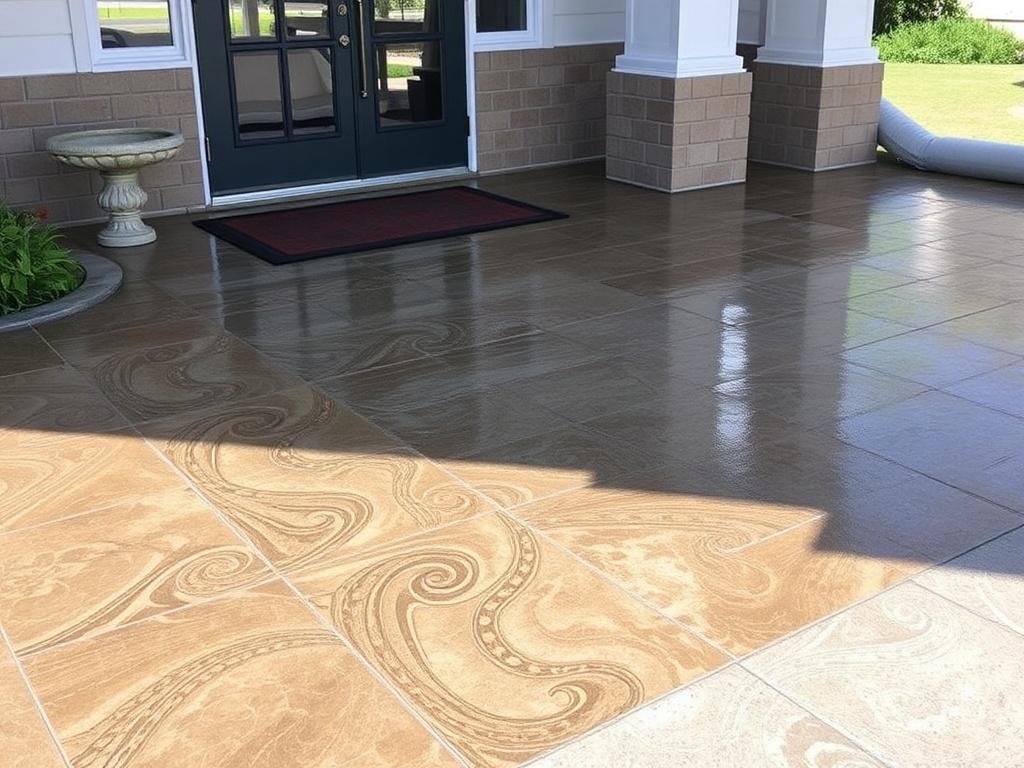
Concrete is often seen as functional and forgettable, but with the right techniques it becomes a design material in its own right. Whether you want a patio that mimics slate, a polished floor that gleams, or a stained interior slab that whispers warmth, decorative concrete offers many paths. This article walks through stamping, staining, and polishing in practical detail, sharing tools, steps, design tips, and pitfalls so you can plan a successful project.
Why decorative concrete is worth considering
Decorative concrete combines durability with aesthetic versatility in ways few other materials match. A properly finished concrete surface resists traffic, weather, and staining better than many natural materials while allowing patterns, colors, and textures that complement any architectural style.
Beyond durability, decorative concrete can be cost-effective over its lifespan. Initial installation and finishing choices influence longevity and maintenance costs, but when designed and executed well, decorative concrete often outperforms short-lived surface coverings.
Finally, these finishes let you tailor the look to your needs: high-gloss polished floors for retail, textured stamped patios for slip resistance, or richly variegated stained concrete for residential living areas. Each technique brings distinct advantages and trade-offs that are important to understand before you decide.
Overview of the three main techniques
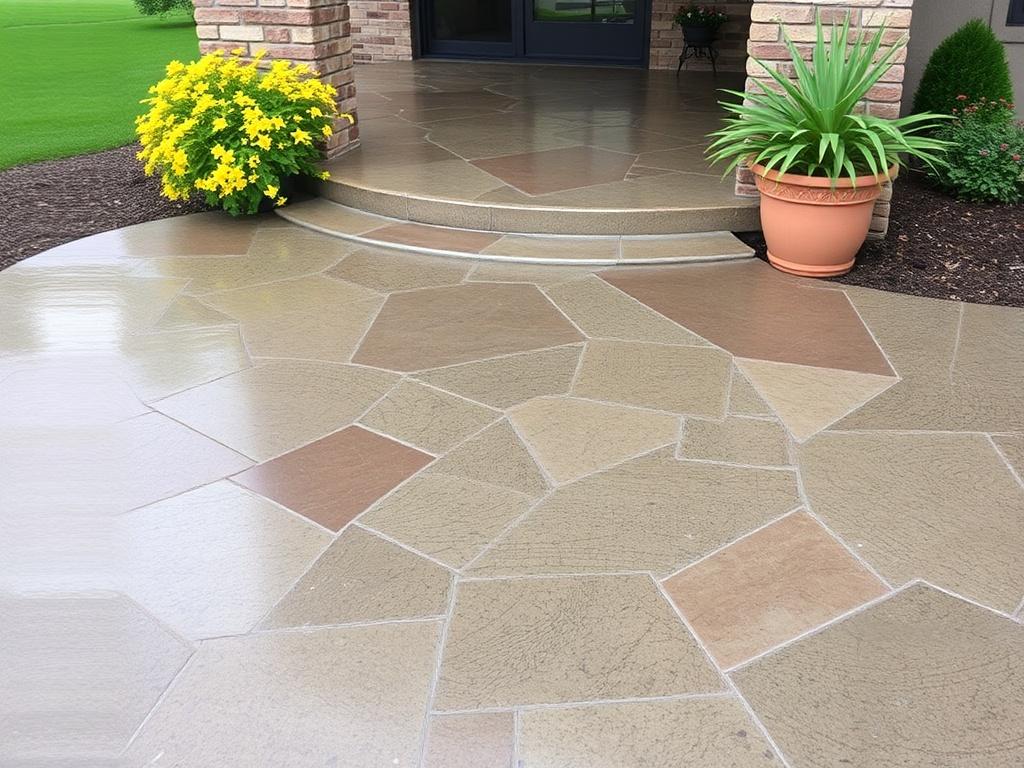
Stamping, staining, and polishing are the most widely used decorative concrete finishes; they can be applied alone or combined for layered effects. Stamping creates texture and pattern, staining imparts translucent color and depth, and polishing refines the surface to a smooth, reflective sheen.
Choosing the right technique depends on the substrate condition, the function of the surface, budget, and the visual effect you want. Some projects call for one approach, while others benefit from a hybrid: a stamped patio with a color stain or a polished slab topped with integral pigments.
Below you’ll find a detailed look at each method, including required materials and step-by-step processes, plus design guidance and real-world tips from my own projects.
Concrete stamping: what it accomplishes and where to use it
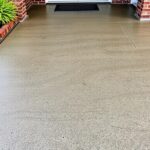
Stamped concrete reproduces the look of stone, brick, wood, or tile by impressing patterns into fresh concrete. It’s especially popular for patios, pool decks, driveways, and large public plazas where a repeated texture creates visual rhythm and hides joints.
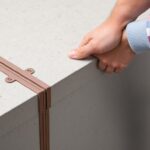
Besides mimicking other materials, stamping can add functional texture to reduce slipperiness and can be integrated with control joints to manage cracking. When done well, the result reads like a carefully laid surface rather than poured concrete.
Stamping works best when the concrete is poured and finished with consistent timing and temperature control; poor timing or incorrect additives will lead to weak impressions or surface tears. Planning the pour and having the right crew and tools on hand is critical to success.
Tools and materials for stamped concrete
A typical stamping setup includes full-size stamps or mats, texture tools, release agents, color hardeners, and standard finishing tools like screeds, bull floats, and edgers. Power trowels or hand trowels are used depending on slab size and the desired surface density.
Color can be introduced in two main ways: integral color mixed into the concrete and dry-shake color hardeners broadcast onto the surface before stamping. The hardener method is common because it improves surface wear resistance while delivering intense color.
Release agents are essential to prevent stamps from sticking and to add secondary color highlights between textures. These come in powder or liquid form and often contain pigments that create antique or variegated effects when combined with the base color.
The stamping process step-by-step
Start with proper subgrade preparation and reinforcement as you would for any slab pour. Poor compaction or inadequate reinforcement is the most frequent cause of cracking, which undermines decorative intent regardless of finish.
Once the concrete is poured and leveled, apply a color hardener if you’re using one. Wait until bleed water dissipates and the slab has stiffened to a workable plastic state before proceeding—too early and the pattern will slump, too late and the stamps won’t imprint properly.
Broadcast your release agent and place the stamps carefully, working from one end to the other to keep pattern flow consistent. Use flaggers—people to hold the stamps and tamp them evenly—so impressions are uniform. After stamping, cut control joints and perform any additional tooling while the concrete is still workable.
After curing, wash and neutralize the release agent, and consider applying a penetrating or film-forming sealer to protect color and reduce dusting. The finish may require a topcoat or sealer to bring out color and provide stain resistance, particularly on high-traffic areas or pool decks.
Design tips and color strategies for stamping
Choose patterns that suit the scale of the space; large-format stamp patterns on a small patio can feel oversized, while small brick stamps on a massive surface may look busy. Consider sight lines, furniture layout, and how light will play across textures when selecting a pattern.
Layer color for realism—combine a base integral color with a darker powdered release and lighter antiquing agents to emulate natural stone. Subtle contrast between joint lines and field color adds depth and reduces the “stamped” look in favor of a more natural aesthetic.
When designing borders or insets, plan the pour and stamping sequence so seams fall in sensible places. Using different stamps for borders can frame the space and break up repetition, giving a custom, paved look rather than a single repeated motif.
Common problems and how to fix them
Blowouts and surface tearing come from stamping when the slab is too plastic or has excessive bleed water. These defects often require cutting out the affected area and patching with a repair mortar matched in texture and color, which is time-consuming but necessary for a cohesive result.
Color non-uniformity often stems from inconsistent hardener application, inadequate mixing of integral color, or uneven release agent coverage. Correct this by documenting and standardizing material and application rates for each pour and performing mockups before full-scale work.
Cracking is primarily a structural issue rather than a decorative one. Proper reinforcement, control joint spacing, and curing practices will mitigate most cracking problems; cosmetic repairs can hide hairline cracks but won’t substitute for a structurally sound slab.
Cost and project timeline for stamped concrete
Stamped concrete typically costs more than plain broom-finished concrete because of added labor, tools, color, and release agents. National averages vary widely, but expect stamped surfaces to be 20–50% more expensive than a standard finish on a per-square-foot basis.
Timelines depend on weather and slab size; a small patio might be completed in a day or two for the pour and stamping, but curing and sealing extend the timeline to a week or more. Larger, complex jobs with borders, saw cuts, or integrated drainage can take longer.
Allow time for mockups and client approval of color and pattern—these small trials save time and money later. Since color appears different in person than in photographs or chips, a half-slab mockup under local lighting is invaluable.
Concrete staining: adding depth and richness with color
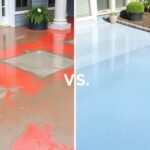
Staining modifies the surface color of cured concrete through chemical or water-based dyes that react with the material or penetrate it. The approach yields translucent, variegated colors that move with the texture and tone of the slab, creating depth that opaque coatings can’t mimic.
Staining is popular for interior floors, countertops, and exterior features where a subtle, natural look is desired. It’s also well-suited to existing slabs because it doesn’t require tearing out and repouring—stains can rejuvenate worn concrete economically.
Two main classes of stains are acid stains and water-based penetrating stains; each produces distinct visual results and has its own handling and safety considerations. We’ll compare both and walk through the application steps and finishing options.
Acid stains versus water-based stains
Acid stains are a reactive chemistry that produces permanent, mineral-like colors by reacting with calcium compounds in the concrete. The results are often mottled and variegated, with colors that appear integrated into the slab rather than sitting on top.
Water-based stains are pigment or dye-driven and penetrate to produce more predictable and often more vibrant colors. They offer a broader color palette and better consistency, which many designers prefer when a uniform tone is required.
Choose acid stains for a natural, aged look and water-based stains when you need color fastness, a wider range, and easier indoor application since acid stains require neutralization and fume control.
Preparing the slab and applying stain
Surface preparation is the single most important step in staining. Floors must be clean, free of sealers, wax, grease, and previous coatings that block penetration. Mechanical grinding or shot blasting is commonly used to remove barriers and open the concrete’s pores.
Test the slab with small sample patches before committing to a full application to see how the concrete responds—color varies with cement type, aggregate, and previous treatments. Mark sample locations and document the mix so you can reproduce the look if needed later.
Apply stains with sprayers, rollers, or brushes depending on the product and desired effect. Acid stains are sprayed and allowed to react for a period before neutralizing and rinsing, while water-based stains are applied and typically blotted or worked into the surface for even penetration.
Creating layered and variegated effects
To achieve depth, use multiple stain colors in layers: start with a base tone and then apply accent colors strategically. Sponging, ragging, or stippling can help blend edges and create natural-looking variations similar to stone or leather.
Masking and resist techniques allow you to create patterns or protect areas from subsequent staining steps; for example, stencils can create faux tile layouts or inlaid shapes. Always remove masking before sealer application to prevent trapped edges or uneven adhesion.
Remember that stain dries lighter or darker depending on sealer and topcoat choice. Test combinations to ensure the final sheen and color richness meet expectations before proceeding on large areas.
Sealing stained concrete and long-term performance
Stained concrete should be sealed to protect color and ease maintenance. Penetrating sealers preserve a natural look and retain breathability, while film-forming sealers like acrylics, polyurethanes, or epoxies add gloss and greater surface protection.
Choose a sealer based on use: interior residential floors may benefit from low-VOC polyurethane for durability and clarity, while exterior applications need UV-stable acrylics or penetrating sealers to reduce chalking and color loss. Regular reapplication schedules vary from 1–5 years depending on wear.
Maintenance is straightforward: keep the surface free of grit and clean spills promptly. Avoid harsh chemicals that break down sealers; instead, use pH-neutral cleaners designed for concrete. With proper care, stained concrete retains its character for many years.
Concrete polishing: turning slabs into luminous surfaces
Polishing grinds and densifies a concrete surface to achieve a smooth, reflective finish that ranges from satin to high-gloss. The process removes surface imperfections and exposes aggregate when desired, producing a durable, low-maintenance floor popular in commercial and contemporary residential spaces.
Polished concrete performs well in high-traffic environments because the densified surface resists abrasion and dusting. Its reflectivity also improves interior light distribution, which can reduce lighting costs in large spaces.
The polish is achieved through progressively finer diamond abrasives and the application of chemical densifiers that harden the surface. The final sheen depends on the grit sequence, densifier choice, and whether topical coatings are applied.
Equipment and materials for polishing
Polishing requires specialized tools: planetary or walk-behind grinders with diamond tooling that progresses from coarse to fine grits. Densifiers, typically sodium or lithium silicate products, react with concrete to reduce porosity and increase surface hardness.
For aggregate exposure, start with heavy grinding to remove the cementitious paste and reveal coarse particles, then move through finer grits to refine the look. For a microtopping-style finish, a light grind followed by fine polishing suffices.
Polishing can be performed dry or wet; dry polishing is common indoors because it avoids slurry disposal, but it requires dust control and vacuum systems. Wet polishing keeps dust down but generates slurry that must be collected and disposed of properly.
The polishing process and sheen choices
Begin with a coarse diamond, typically 30–50 grit, to flatten and remove surface imperfections. Follow a systematic grit progression—50, 100, 200, 400, 800, 1500, 3000—until the desired gloss is achieved, stopping sooner for a matte or satin finish.
Apply densifier after the initial grinding stages when the surface is porous enough to accept treatment. Allow the densifier to react and cure according to product instructions before continuing to finer grits; this step is essential to achieve long-term hardness and sheen.
Topical guard coats such as penetrating sealers or thin film coatings can be applied after polishing for additional stain resistance and to fine-tune the gloss level. Some clients prefer the raw, concrete look; others ask for a high-gloss mirror effect—both are achievable with proper technique.
Maintenance and longevity of polished floors
Polished concrete is low maintenance: routine dust mopping and periodic wet cleaning with a pH-neutral cleaner keep it looking fresh. High-traffic areas may require periodic buffing with a diamond-impregnated pad to restore gloss.
Because the surface is densified, it resists wear and rarely needs full refinishing. If damage occurs, targeted grinding and repolishing can restore the finish without replacing the floor, which is a strong economic advantage over many coverings.
Be mindful of moisture vapor emission from slabs—excess vapor can lead to delamination of topical coatings over polished concrete. For ground floors, perform a vapor drive test before specifying sealers or coatings to avoid long-term failures.
Combining techniques for richer effects
Decorative concrete often shines when techniques are combined: a stamped slab can be stained to add depth, or a polished floor can receive an integral pigment and accent stains for contrast. Combining methods requires sequencing and compatibility planning.
For example, if you plan to stamp and then stain, it’s best to use penetrating stains that won’t be blocked by release agents or heavy film sealers. Alternatively, polish after staining if the process won’t dull the desired color effect, keeping in mind that grinding may remove surface-applied pigments.
In mixed-use commercial projects, designers sometimes install stained borders around polished centers or use saw-cut patterns filled with contrasting epoxy to create inlays. These hybrid approaches amplify visual interest while preserving functional benefits of each technique.
Sequencing and compatibility rules
When combining methods, always sequence from most invasive to least: structural work and grinding first, then color treatments, stamping or overlays, and finally sealers or topcoats. Deviating from this order risks having one process undo the work of the previous step.
Pay attention to chemical compatibility: some sealers and stains interfere with each other, and certain densifiers prevent subsequent bonding of topical overlays. Always consult product data sheets and perform mockups where compatibility is uncertain.
Document the process for future maintenance and repairs. Knowing which products and sequences were used saves time and prevents mistakes when owners or contractors handle repairs or expansions years later.
Design considerations for patterns, color, and texture
Scale, repeat, and proportion are design fundamentals that apply to decorative concrete as much as to tile or wood. Select stamp sizes, aggregate exposure, and color intensity appropriate to the room or exterior area to avoid visual dissonance.
Take lighting into account: glossy polished floors emphasize reflections and reveal imperfections, while textured stamped surfaces create shadow and hide wear. Color appearance shifts with sunlight and artificial light; test samples in the space at different times of day.
Consider functional needs: pool decks need slip resistance and UV-stable colors, kitchens want stain resistance and easy cleaning, and offices may favor neutral, reflective surfaces to maximize daylight. Match the finish choice to both aesthetics and use-case.
DIY versus hiring professionals: pros and cons
Some homeowners can achieve excellent results with staining or light polishing when they have patience and time, but stamped concrete and large-scale polishing require specialized equipment and experience. The difference shows in consistency, durability, and overall appearance.
DIY saves money on labor but brings risk: mistakes in timing, application, or curing can be costly to fix. For example, incorrect stamping timing can ruin a slab the day it’s poured, forcing costly repairs or replacement.
Professionals bring calibrated equipment, product knowledge, and efficiency. They also provide warranties and typically know how to avoid common pitfalls. For complex patterns, large areas, or very high-end finishes, hiring a pro is often the prudent choice.
What to expect when hiring a contractor
Get multiple bids and look for portfolios of similar work. Ask for references and inspect completed jobs in person if possible to assess color consistency, joint placement, and detail work around edges and transitions.
Clarify scope in writing: who provides materials, how will weather delays be handled, what mockups will be done, and what warranties are offered? Clear contracts reduce surprises and protect both parties if changes arise.
Discuss maintenance expectations up front. A contractor should provide care instructions tailored to the finish chosen so you can preserve the investment and avoid voiding any warranty through improper cleaning agents or abuse.
Maintenance strategies to preserve beauty and performance
Routine maintenance differs by finish: polished floors require dust mopping and neutral cleaners, stamped and stained concrete typically need periodic resealing, and all surfaces benefit from timely spill cleanup. A simple maintenance plan extends life and keeps color vibrant.
For sealed surfaces, watch for sealer wear in traffic areas and plan reseal intervals—commonly every 1–5 years depending on use and product. Keep furniture fitted with pads and use rugs in entryways to limit grit abrasion that dulls surfaces.
For outdoor finishes, pay attention to freeze-thaw cycles, deicing chemicals, and vegetation that can stain or lift sealers. Choose sealers rated for exterior conditions and schedule inspections after harsh winters or storms to catch issues early.
Budgeting and cost comparison
Cost varies by region, slab condition, and the finish chosen. To give a rough sense, plain broom-finish concrete is the baseline, stamped concrete often runs 20–50% higher, staining is generally less expensive than stamping, and polishing costs vary widely based on grit level and aggregate exposure.
Below is a simple comparative table to help estimate relative costs; these are approximate and intended for planning only. Always obtain local contractor quotes for accurate budgeting based on your project specifics.
| Finish | Relative cost (per sq ft) | Typical lifespan (with maintenance) |
|---|---|---|
| Plain broom finish | Low | 10–20 years |
| Stamped concrete | Medium–High | 15–30 years |
| Stained concrete | Low–Medium | 10–25 years |
| Polished concrete | Medium–High | 20+ years |
Remember that longevity depends on substrate quality, usage, climate exposure, and maintenance. Investing more up front in proper preparation often saves money over the life of the surface.
Safety, environmental, and regulatory considerations
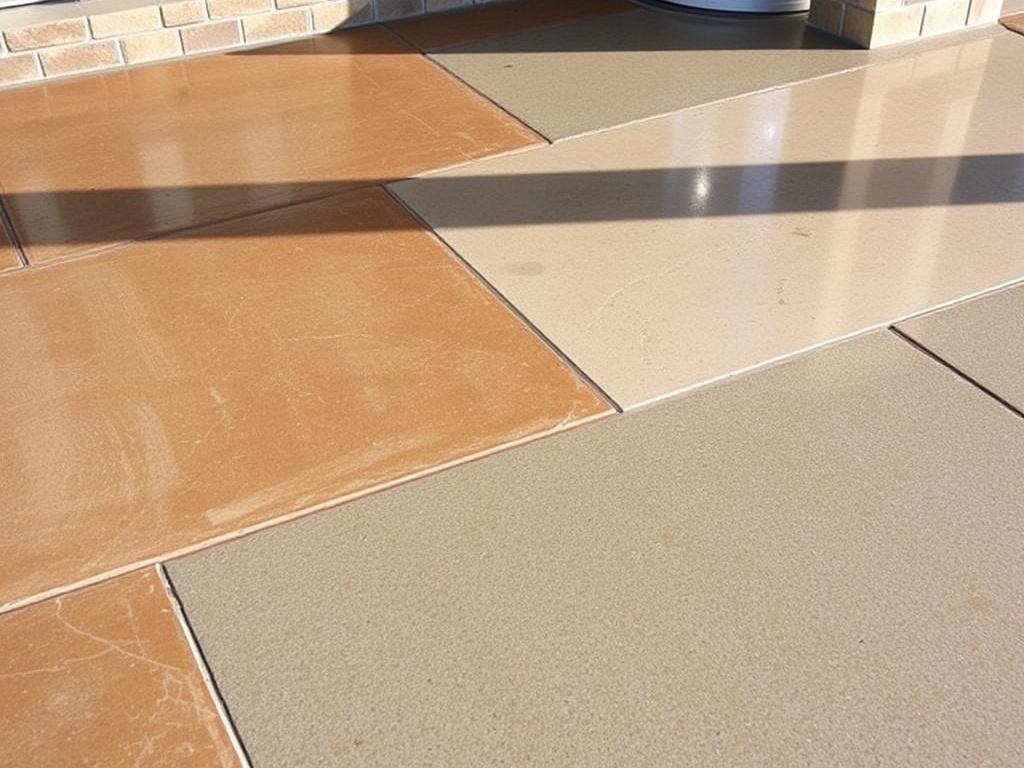
Some products used in decorative concrete—especially solvent-based sealers and acid stains—have significant VOCs or hazardous handling requirements. Prioritize low-VOC options for indoor work and provide adequate ventilation during application.
Acid stains require safe handling: acid-resistant gloves, eye protection, and respiratory protection depending on ventilation. Neutralization and proper disposal of rinse water are required to meet local environmental rules—check regulations before you start.
Waste management matters: slurry from wet polishing and residues from grinding can contain heavy metals or fine particulates and must be disposed of according to local codes. Contractors should provide documentation of proper disposal for compliance and peace of mind.
Real-life examples and lessons from the field
On one residential kitchen renovation I managed, the client wanted a warm, mottled floor that would hide pet scratches and look natural. We chose a water-based stain over a shot-blasted slab, then sealed with a low-VOC polyurethane. The result held up beautifully and required only periodic buffing after three years.
For a municipal plaza project, the contractor used integral color and multi-pattern stamping with contrasting borders. Early coordination with the architect allowed us to stagger pours so pattern seams fell along natural breaks, avoiding awkward alignment and producing a cohesive public space.
From my experience, mockups are indispensable. On a commercial job where the owner insisted on a high-gloss polished look, a small mockup saved weeks of rework after we discovered that the chosen aggregate produced a blotchy look when ground too deep. Adjusting the grind depth on the mockup solved the issue before full-scale work began.
Troubleshooting common project issues
Uneven color is the most common complaint with staining and stamping. The cure is standardized application rates, surface cleaning, and pretesting. If it appears after sealing, sometimes a thin sanding and recoat can even out differences without full refinishing.
Delamination of coatings can result from trapped moisture or improper slab preparation. Vapor testing and following manufacturer instructions for surface profile and cleanliness are preventive steps that save time and money. When delamination occurs, remove failed areas and address moisture sources before reapplying.
Blotchy polished floors often trace to inconsistent grinding or insufficient densifier penetration. Systematically documenting grit sequence, pass counts, and densifier application across the slab helps achieve an even sheen and avoid surprises.
Checklist for planning your project
Use a checklist to ensure nothing is overlooked: evaluate slab condition, choose technique(s), perform sample mockups, verify materials and compatibility, check weather windows for exterior work, and obtain necessary permits. Clear planning reduces on-site decision fatigue and errors.
- Inspect and test existing slab condition and moisture levels.
- Select finish type(s) and create a mockup area.
- Confirm product compatibility and safety requirements.
- Schedule work around weather and occupancy needs.
- Document maintenance requirements and handover instructions.
Having a written plan also helps when communicating with contractors and suppliers. It establishes expectations for quality, schedule, and cost and becomes the reference if disputes arise.
Next steps and resources to continue learning
If you’re considering a project, start with a small, controlled mockup that represents the slab and exposure conditions. Mockups aren’t just samples—they’re trials that reveal how materials interact with your specific concrete and how color and texture behave under real lighting.
Attend local trade shows or supplier demonstrations to see finishes in person and ask technical questions about products. Many manufacturers offer training or spec support that helps designers and owners choose appropriate systems and avoid costly mistakes.
Finally, document the process and products used during installation. That record becomes invaluable for maintenance, warranty claims, and future renovations, and it lets you preserve the look you’ve invested in for years to come.
Wrapping up your design journey
Decorative concrete rewards careful planning, honest mockups, and respect for the material’s limitations. Whether you lean toward stamping, staining, or polishing—or combine them—the key is aligning aesthetic goals with functional realities and choosing products suited to the environment.
I’ve seen modest budgets transformed into distinctive spaces by thoughtful finishes and seen high-budget jobs stumble from overlooked details. The difference often comes down to preparation, communication, and the willingness to test before committing.
If you’re ready to move forward, outline your priorities—appearance, slip resistance, maintenance budget—and use that framework to select the method and team that will deliver a surface you’ll enjoy for years. Creating decorative concrete finishes: stamping, staining, and polishing can seem technical, but with the right approach it becomes a creative, durable, and satisfying way to elevate ordinary slabs into design statements.