Concrete and masonry will crack and move — that is a fact of life. The skill lies in directing that movement where you want it and protecting structures where you don’t. This guide walks through the planning, tools, materials, and hands-on steps for installing joints that control cracking, accommodate movement, and extend service life.
Why joints matter in concrete and masonry
Concrete hardens but does not remain static. Moisture loss, temperature swings, shrinkage, and load cycles all produce forces that cause cracking, displacement, or delamination. Joints are the intentional weak points that manage those forces.
Without properly placed and executed joints, random cracking can appear across slabs, sidewalks, and walls. That uncontrolled cracking not only looks bad but can lead to trip hazards, water intrusion, and premature failure of finishes.
Two broad strategies exist: control (or contraction) joints, which encourage cracks to form in predetermined lines, and expansion joints, which provide space for the structure to grow or move without stressing adjacent elements. The correct combination protects both function and appearance.
Types of joints and when to use them
Understanding terminology helps choose the right solution. Control joints, isolation joints, construction joints, and expansion joints all serve different roles even though casual conversation sometimes mixes them up.
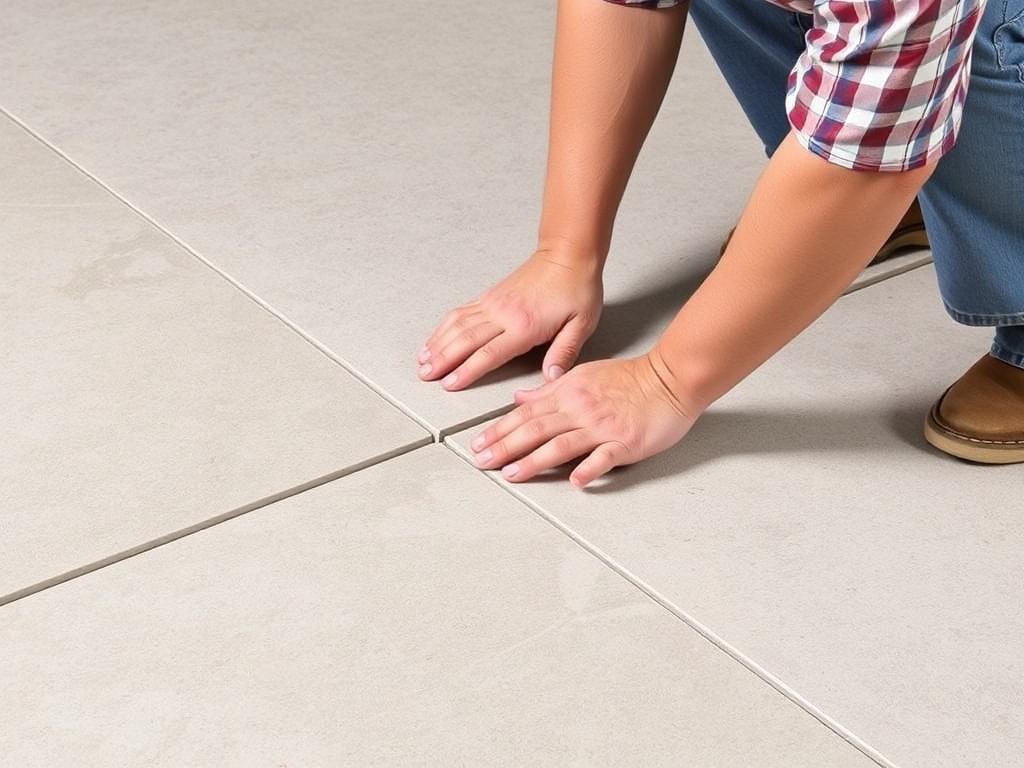
Control joints (also called contraction joints) are grooves, saw cuts, or plates placed in a concrete plane to create a weakened path so shrinkage cracks occur in a controlled location. Use them in slabs-on-grade, sidewalks, patios, and large floor areas.
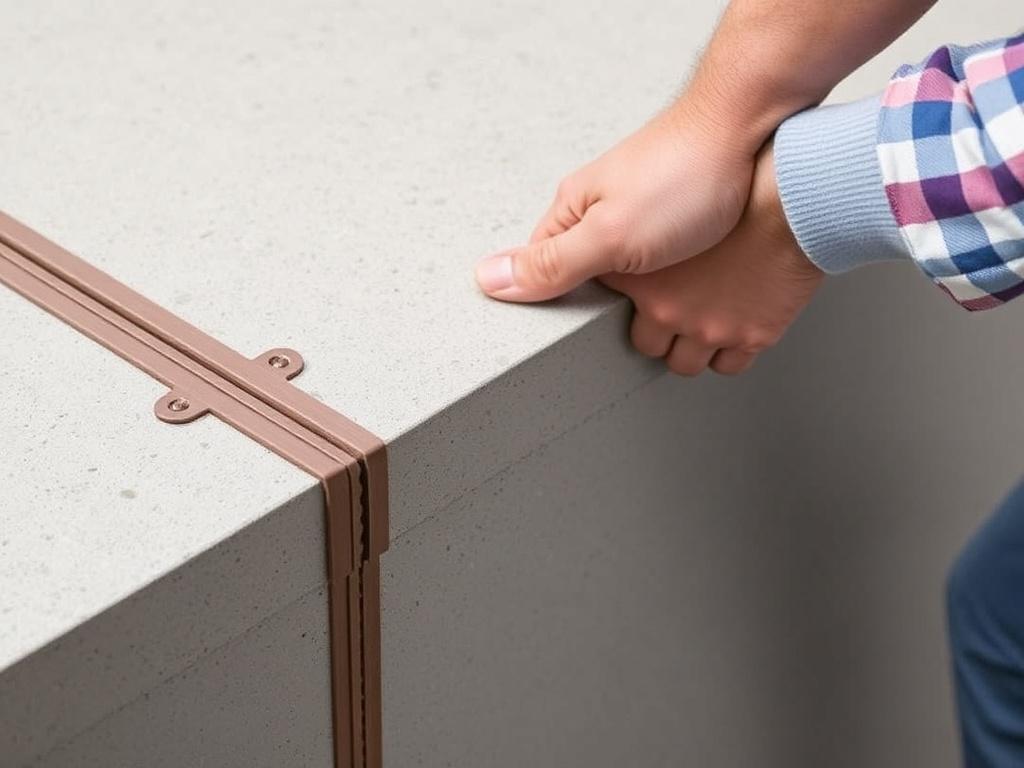
Expansion joints are compressible gaps between concrete elements designed to allow movement from thermal expansion, seismic activity, or differential settlement. They are common where concrete meets restrained elements such as walls, columns, curbs, or other slabs.
Isolation joints separate slabs from vertical elements like foundations, columns, stairs, or utility pedestals so movement in one element won’t transfer stresses into the slab. Construction joints are simply the termination of one concrete pour and the beginning of another; they may require dowels or shear keys depending on structural needs.
Control (contraction) joints
Best for managing shrinkage cracking in slabs, control joints are placed regularly across the slab area. They can be formed by saw cutting, grooving with a tool while the slab is plastic, or using preformed inserts in the formwork.
Timing and depth are the keys to effectiveness. Saw-cut too early and you ravel the edge; too late and a crack may already have formed outside the cut. A typical target depth is one-quarter to one-third of slab thickness, and spacing follows straightforward rules tied to thickness.
Expansion joints
Expansion joints use compressible filler material and sometimes sealing systems to give elements a designed gap that can close or widen as movement occurs. They are essential where slabs abut structures or where long runs of concrete could expand with temperature changes.
Materials include preformed compressible boards, extrusion profiles with neoprene or PVC, and metal bellows in specialized applications. Selection depends on expected movement, load transfer needs, and exposure conditions such as pedestrian or vehicle traffic.
Isolation and construction joints
Isolation joints create a complete separation between a slab and a vertical element, including a compressible filler and often a bond breaker to avoid load transfer. Construction joints occur where concreting stops and resumes and can be detailed to transfer shear and load with dowels or keys.
When planning a slab, consider where these joints should be to allow proper phasing, future expansion, and prevention of corner pop or delamination near fixed elements.
Planning and design considerations
Joints are part of the early design process, not an afterthought. Effective layout starts with sketches showing joint locations relative to doorways, columns, seams, and load paths.
Key factors are slab thickness, reinforcement, anticipated loads, the environment, and the presence of embedded elements. Reinforcement controls crack width but does not eliminate the need for joints in many cases.
Spacing and depth rules of thumb
Use simple, proven rules to set spacing: a common rule is 2 to 3 times the slab thickness in inches equals the spacing in feet. For example, a 4-inch slab often uses joints spaced 8 to 12 feet apart. This is a starting point and should be adjusted for heavy loads or exterior exposure.
Joint depth for control joints should be at least one-quarter of the slab thickness and commonly up to one-third. For a 4-inch slab this means 1 to 1.33 inches deep. For saw cuts, maintain a minimum depth of 1.5 inches where practical for durability.
Slab thickness
Typical control joint spacing
Recommended joint depth
3 in (75 mm)
6–9 ft (1.8–2.7 m)
3/4–1 in (20–25 mm)
4 in (100 mm)
8–12 ft (2.4–3.6 m)
1–1 1/3 in (25–34 mm)
6 in (150 mm)
12–18 ft (3.6–5.5 m)
1 1/2–2 in (38–50 mm)
Environmental factors change spacing. Exterior slabs exposed to sun and wind will dry and shrink faster; you may need closer spacing. Heavy wheel loads require smaller panels to reduce stress between joints.
Also account for decorative treatments or joint alignment with control patterns in adjacent slabs. Misaligned joints can create stress concentrations and visually jarring layouts.
Tools, materials, and safety
Installations require a mix of carpentry, concrete finishing, and sealant tools. Prepare the right equipment before pouring or cutting to avoid rushed, low-quality work.
Essential tools include saws (handheld or walk-behind), grooving tools, jointing trowels, backer rod, caulking guns, utility knives, and a straightedge for layout. For cutting hardened concrete, use diamond blades and proper power equipment with dust control.
Saw with appropriate blade (early-entry or wet saw for hardened cuts)
Backer rod and polyurethane, polysulfide, or silicone sealants
Formwork materials for formed joints and bond breaker tape
Personal protective equipment: eye protection, hearing protection, respirator, gloves
On safety: cutting concrete generates silica dust. Use wet cutting or HEPA vacuum systems and wear an N95 or respirator when necessary. Gloves and safety glasses are mandatory when handling materials and tools.
For traffic-bearing expansion joints use traffic-rated profiles and follow load-transfer manufacturer instructions. Incorrect product selection is a common cause of early failure.
Step-by-step: placing control joints in new slabs
Control joints can be created three ways: tooling/grooving in fresh concrete, sawing after initial set, or placing preformed inserts during forming. Each method has strengths and timing requirements.
The following step-by-step applies to a typical slab-on-grade project where you control shrinkage cracking and define panels for load and movement.
Step 1 — layout and preparation
Mark joint locations on the subgrade or formwork before placing concrete. Use stringlines or chalk to ensure straightness and alignment with architectural features.
Consider drainage, slope, and transitions to adjacent slabs. Avoid running joints across door thresholds or where different finishes meet unless designed to align and function together.
Step 2 — formwork and inserts (if using formed joints)
If using preformed inserts or bond-breaker strips, secure them in the forms so they remain at the correct elevation. Inserts should be continuous and seated without folds or gaps that could trap concrete.
Ensure the insert depth achieves the desired weakened plane. For formed control joints, the insert typically projects up through the slab to the finished surface and is removed to leave a slot.
Step 3 — finishing and grooving in fresh concrete
If you will groove, do so after striking off and bullfloating, but while the concrete is still plastic. A hand groover or mechanical groover will create the groove to the specified depth and width.
Work rapidly and consistently. Grooves need clean edges and a uniform depth of at least one-quarter the slab thickness to be effective. Avoid overworking the surface around grooves which can weaken the edge.
Step 4 — timing and saw cutting
Saw cutting is the most common method on large slabs. The ideal timing is after the concrete has set enough to support the saw without raveling but before uncontrolled cracking occurs. That window can be narrow and varies with weather.
Use early-entry saw blades for softer cuts when you need to cut sooner, or wait several hours for a standard wet saw. Cut to a depth of 1/4 to 1/3 the slab thickness and maintain a straight path guided by the layout lines.
Step 5 — finishing edges and protecting cuts
After cutting or grooving, protect the joint edges from traffic and rapid drying. Use curing compounds, wet covers, or coverings as appropriate. Early drying can increase shrinkage stresses and compromise joint performance.
If construction continues over the slab, mark joints clearly for trades to avoid accidental damage. Keep equipment off panels except where necessary and use plywood ramps to protect newly cut edges from chipping.
Step-by-step: installing expansion and isolation joints
Expansion and isolation joints require compressible filler and often a sealant to keep out water and debris. Their detailing depends on the expected movement range and the exposure conditions.
Below are general steps for typical slab-to-structure isolation joints and for dividing long slab runs with expansion joints.
Step 1 — choosing the filler and profile
Select a filler material rated for the expected compression and recovery. Common choices include cork, bituminous fiberboard, closed-cell foam, neoprene, or preformed elastomeric profiles with load plates.
For exterior applications with vehicular traffic, use a robust profile with a metal or polymer bearing surface. For interior slabs, closed-cell foam with a suitable sealant is often sufficient.
Step 2 — installing compressible filler
Place the compressible filler against the vertical element at the correct elevation before placing concrete. The filler should extend full slab depth and be tight against the form to prevent concrete infiltration.
For isolation joints around columns or footings, ensure the filler wraps the required perimeter to avoid any continuous concrete connection that could transfer stress into the slab.
Step 3 — installing backer rod and sealant
Once movement gaps are exposed or completed, install a backer rod to set the sealant depth and provide the proper joint geometry. The backer rod creates a bond-breaker so the sealant adheres only to the sides, not the bottom.
Typically the sealant width-to-depth ratio should be about 2:1 (twice as wide as deep). Use a primer if recommended by the sealant manufacturer, then apply the sealant neatly and tool it to a smooth finish.
Step 4 — traffic frames and protection
In high-traffic areas, install steel or aluminum covers or mortar-tight frames designed for load transfer. These systems are often bolted or embedded into the adjacent concrete, so follow manufacturer instructions closely.
Protect exposed edges during construction. Temporary covers help prevent debris accumulation in the joint, which can impede movement and damage the sealant when the joint begins to operate.
Sealing joints: materials and techniques
Sealants keep water, dirt, oil, and deicers out of joints and accommodate movement. Choosing the right chemistry and application method determines longevity and performance.
Polyurethane sealants offer excellent adhesion and movement capability for many uses. Polysulfide performs well in submerged conditions and in fuel-contaminated environments. Silicone has excellent weathering but poor adhesion to concrete without primers in many cases.
Selecting the right sealant
Match the sealant to the expected joint movement and exposure. For joints with ±25% movement or greater, choose a sealant rated for high movement. For static isolation joints, simpler sealants or bituminous fillers may suffice.
Confirm compatibility with any coating or flooring systems that pass over the joint. Some sealants can interact poorly with epoxies or thin-set mortars.
Application best practices
Clean the joint thoroughly before applying sealant. Remove dust, loose particles, and standing water. Use compressed air, brush, or vacuum to achieve a sound surface.
Install backer rod slightly below the substrate level to set the sealant depth, then gun the sealant evenly. Tool the surface within the working time to shape the fillet and improve adhesion to the joint sides.
Common mistakes and how to avoid them
Many issues with joints come from timing errors, incorrect depth, or poor product selection. Anticipating these pitfalls stops small mistakes from becoming expensive repairs.
Saw cutting too late is a frequent problem; a random crack will already be in place and the saw can’t retroactively control it. Plan for early cutting and monitor slab curing closely.
Another common error is underestimating movement. Using a sealant or filler with insufficient elasticity leads to tearing and failure. Verify movement percentages and choose materials rated for the full expected range.
Poor edge support around joints — such as weak concrete at saw cuts or grooved edges — creates raveling and chips under traffic. Protect edges and follow recommended depths and reinforcement strategies to maintain durability.
Maintenance, inspection, and repair
Joints are not set-and-forget elements. Regular inspection extends service life and avoids costly replacements. Check joints seasonally and after major temperature swings or events such as earthquakes.
Look for sealant cracking, joint filler compression beyond expected limits, debris accumulation, and water infiltration. Small problems can be fixed by resealing or replacing the backer rod before bigger damage appears.
Repair techniques
For failed sealant, cut out the old material, clean the joint, reinstall backer rod, prime if needed, and re-seal. If the filler has crushed or is missing, remove it and replace with the appropriate compressible board or foam.
When a saw cut has raveled, chisel back the damaged concrete to sound material and re-form the joint if practical, or install a surface-routing repair followed by a flexible sealant capable of accommodating movement.
Special situations: floors with coatings, heated slabs, and decorative finishes
When a slab receives a floor coating, tile, or polished finish, joint detailing becomes more critical. Coatings may bridge joints and transfer stress into the wear surface, leading to cracking or delamination.
Isolate coatings from the joint using sacrificial strips, properly-sized movement joints, or flexible membranes. Adhesive compatibility testing is essential; some epoxy or polyurethane coatings require specific primers or joint profiles.
Heated slabs expand and contract significantly; joint spacing may need to be reduced and expansion joints enhanced with robust bridging systems. Consult HVAC or mechanical drawings to understand the heating profile before finalizing joint layout.
Real-world example from the field
On a warehouse floor I worked on, the initial drawings called for 12-foot spacing in a 4-inch slab. During layout review the team noted heavy forklift traffic and a high nighttime cooling rate because the building lacked insulation.
We reduced spacing to 8 feet in the main aisles and upgraded to a deeper saw cut of 1.5 inches. For expansion joints at the perimeter, we used a closed-cell foam with a polymeric seal and traffic-rated aluminum profile at the dock area.
The result: far fewer edge chips and no random cracking in the two-year follow-up. The owner also appreciated the cleaner appearance and reduced maintenance calls — a small upfront change saved significant repair costs later.
Checklist: planning and executing successful joints
Before pouring or cutting, run through this practical checklist to reduce rework and mistakes. Keep a printed list on site to guide crews and inspectors.
Confirm slab thickness, reinforcement, and load requirements.
Mark joint layout and align with architectural features.
Choose joint types and materials based on movement and exposure.
Secure formwork and pre-set any inserts or bond-breakers.
Plan saw cut timing and have equipment staged for prompt cutting.
Use recommended sealant width-to-depth ratios and primers as needed.
Protect new joints from traffic and rapid drying; cure properly.
Document joint placement for future maintenance and repairs.
Troubleshooting common field scenarios
If you see random cracking near a corner or restraint, check whether an isolation joint was omitted or not continuous. Fixing this often requires creating a saw cut and adding compressible filler and sealant to isolate the slab from the restraint.
When joint sealant pulls away or tears within a season, reassess the product choice and application method. Perhaps the movement exceeded the sealant rating or the substrate was contaminated at installation. A corrective reseal with proper cleaning and priming is usually the solution.
Useful specifications and standards to reference
Industry standards such as ACI (American Concrete Institute) guides, ASTM standards for sealants and compressible fillers, and local building codes provide essential details for performance, testing, and acceptance.
Refer to ACI 224 for cracking guidance and ACI 302 for slab construction techniques. Use ASTM C920 for sealant performance properties and ASTM D1056 for material classifications of flexible cellular materials when selecting fillers.
Final tips and good practices
Plan joints early and treat them as a coordinated system linking design, materials, and construction phasing. Communication among architects, structural engineers, contractors, and finishers avoids conflicts and improves outcomes.
Document joint locations and materials in as-built drawings and maintenance manuals. This information saves time when repairs or reseals are needed and helps facility managers anticipate periodic maintenance.
When in doubt, reduce spacing and increase joint depth slightly rather than risk uncontrolled cracking. It’s cheaper to add a few extra joints up front than to repair a patchwork of random cracks later.
Skilled execution — appropriate timing for saw cuts, correct sealant selection, clean application — makes the difference between a joint that works for decades and one that requires frequent attention.
By combining careful planning, the right materials, and disciplined workmanship, you can control where concrete cracks, allow for unavoidable movement, and keep structures functional and attractive for years to come. If you need a quick reference while on a job, save the checklist and table provided here — they’re the practical touchstones for getting joints right the first time.