Concrete is practical, durable, and everywhere — but it cracks. Some cracks are cosmetic while others hint at deeper trouble, and knowing which is which saves money and headache.
This article walks through why cracks form, how to prevent them during design and construction, and the repair methods that work best for different situations. I’ll share practical steps, material choices, and a few real-world fixes I’ve used on patios, driveways, and commercial slabs.
Why concrete cracks: the basic mechanics
Concrete behaves like a brittle rock and shrinks as it cures; that shrinkage creates tensile stresses the material cannot resist. When stress exceeds the concrete’s tensile strength, a crack appears to relieve the strain.
Beyond simple shrinkage, temperature swings, settlement, loading, chemical reactions, and moisture movement all change stress patterns in a slab or wall. Understanding the source of stress is the first step toward a durable repair or an effective prevention strategy.
Cracking is often predictable if you look at the environment around the concrete: poor drainage, weak subgrade, or interrupted curing are recurring culprits. Fixing those root causes is usually more effective than patching crack lines repeatedly.
Shrinkage and plastic shrinkage
Shrinkage cracks occur as concrete loses water during curing and hardening. Early-age or “plastic” shrinkage happens while the mix is still plastic and surface drying causes the top to contract faster than the body.
Plastic shrinkage typically shows as fine, random networks on the surface — often within the first few hours after placement on hot, windy, or dry days. Controlling evaporation and proper curing will prevent most of these issues.
Thermal movement and temperature stresses
Concrete expands when hot and contracts when cool; large temperature differences cause repeated movement. If a slab is restrained (by adjacent structures, foundation walls, or stiff reinforcements), thermal cycling produces tensile stresses and ultimately cracking.
Where temperature swings are significant, design solutions include joints, expansion devices, and selecting materials with compatible thermal coefficients. Without those features, cracks follow predictable lines of restraint.
Settlement and subgrade failure
When the soil beneath a slab compacts unevenly or washes away, portions of the slab lose support and bend under load, producing wide cracks or sharp step cracks. This is settlement-related cracking and often indicates a geotechnical issue.
Settlement cracks are serious because the problem lives below the slab; simply filling the crack won’t restore support. Proper subgrade preparation and, when needed, underpinning or foam injection are the durable fixes.
Overload and structural problems
Concrete is strong in compression but weak in tension, so insufficient reinforcement or unexpected loads can lead to structural cracking. Beam-column connections, cantilevers, and thin slabs under heavy equipment are common trouble spots.
Structural cracks usually appear as vertical or diagonal splits at stress concentrations and may widen over time. They demand a structural assessment and a repair approach that restores load transfer — not just cosmetic sealing.
Freeze-thaw and deicing damage
In cold climates, water inside concrete pores freezes and expands, causing internal microcracking that becomes visible over cycles. Repeated freeze-thaw exposure also strips surface paste, leading to scaling and flaking.
Using air-entrained concrete and good drainage reduces this risk; for existing damage, removing delaminated material and applying breathable, sacrificial patch systems is usually necessary. Deicing salts exacerbate the problem by promoting corrosion of embedded steel and accelerating deterioration.
Chemical reactions and ASR
Alkali-silica reaction (ASR) occurs when reactive silica in aggregates reacts with alkalis in cement, creating an expansive gel that cracks concrete from within. The pattern is often map-cracking with a gel exudate in severe cases.
Mitigating ASR at the design stage involves low-alkali cement, supplementary cementitious materials, or non-reactive aggregates. Once ASR is underway, options are limited: control moisture, apply overlays, or, in extreme cases, replace affected elements.
Recognizing crack types and assessing severity
Not all cracks are equal; visual clues help prioritize repairs. Width, orientation, pattern, and change over time tell a story about the underlying cause and urgency.
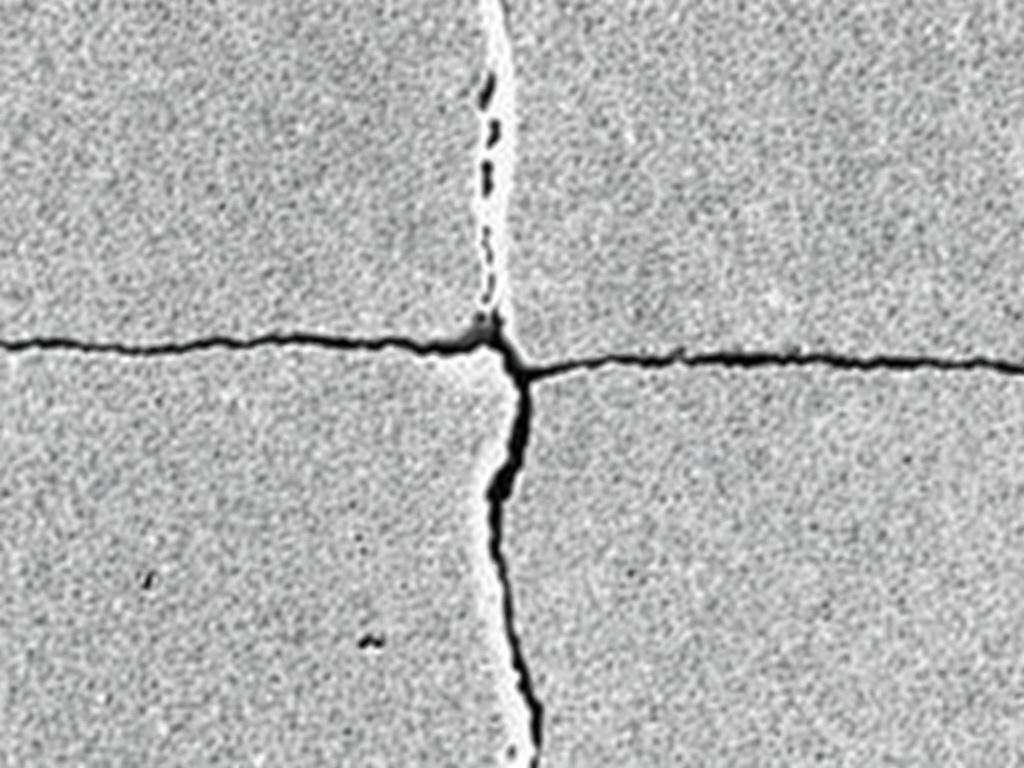
Measure cracks and monitor them for movement using simple markers or crack monitors. A 0.02-inch hairline that doesn’t change is cosmetic, while a crack that widens quickly or measures over 0.125 inch in a structural member needs prompt attention.
Quick reference table: common crack types
| Crack type | Typical width | Common cause | Priority |
|---|---|---|---|
| Hairline/crazing | < 0.02 in | Plastic shrinkage or surface curing issues | Low |
| Shrinkage control crack | 0.02–0.08 in | Drying shrinkage or inadequate joints | Medium |
| Structural/settlement | > 0.08–0.12 in | Subgrade failure, overload, reinforcement issues | High |
| Map cracking/ASR | Variable | Chemical reaction | Medium–High |
This table is a starting point; use it to triage repairs and decide when to involve an engineer. Measurement, context, and change over time are as important as absolute width.
Preventive design: the best defense
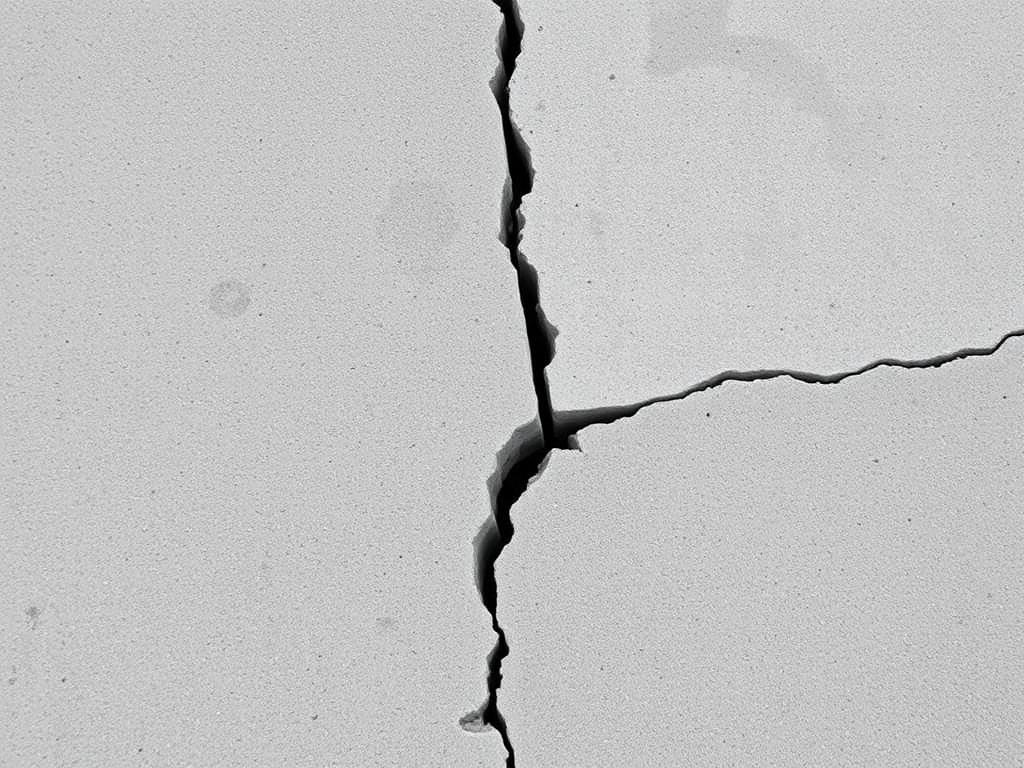
Good design reduces future repairs. Start with a realistic assessment of loads, expected movement, and environmental exposure to choose the right slab thickness, reinforcement, and joint layout.
Slabs on grade benefit from a well-compacted subgrade, uniform support, and adequate drainage. Weak or variable soils should be addressed with engineered fills, stable subbase layers, or geotextiles before concrete is placed.
Mix design and materials choices
Selecting the right mix minimizes shrinkage and improves durability. Lower water-cement ratios, proper grading of aggregates, and supplementary cementitious materials (fly ash, slag) reduce permeability and shrinkage.
Air entrainment is essential in freeze-thaw environments, and appropriate admixtures can control setting time and reduce plastic shrinkage. Fibers (synthetic or steel) help control microcracking and can improve post-crack behavior in many applications.
Joint design and placement
Control and expansion joints are intentional weak planes that direct cracking to predictable locations. They should be spaced, sawed, or formed based on slab thickness and expected movement patterns rather than left to chance.
Joints need proper depth, filler, and sealant to work. Misplaced or inadequate joints often lead to random cracks that are harder to repair than predictable, joint-controlled lines.
Reinforcement and load considerations
Reinforcement (rebar, welded wire, fibers) helps control crack width and maintain load-carrying capacity after cracking. Design reinforcement to match expected loading and consider continuous reinforcement across joints in structural slabs.
Over-reinforcing can create restraint that increases cracking if not coupled with proper joints; the balance is an engineering matter that pays off in long-term performance.
Curing practices
Proper curing maintains moisture for adequate hydration and reduces early-age shrinkage significantly. Simple measures—covering with wet burlap, using curing compounds, or applying plastic sheeting—prevent many surface cracks.
Curing is most critical in the first 24–72 hours. Skipping it to save time is a false economy; I’ve seen thin slab overlays fail within a year after rushed, inadequate curing on a hot summer job.
Construction best practices to avoid future problems
On-site execution often determines whether a well-designed piece of concrete performs as intended. Quality control during placement, consolidation, and finishing matters as much as the mix design.
Avoid overworking the surface, which can bring excessive fines to the top and increase shrinkage and scaling. Use proper finishing tools and techniques that balance flatness with maintaining the surface’s structural integrity.
Subgrade preparation and drainage
Uniform support under slabs reduces bending stresses and prevents settlement cracks; that starts with compaction and proper granular fill. Poor drainage that channels water under a slab creates voids and soft spots that encourage cracking.
I recommend a minimum compacted subbase for exterior slabs and a moisture barrier where appropriate, especially on clayey soils. In a residential project where I supervised the slab, improving drainage and compacting the base cut long-term cracking in half compared to neighboring properties.
Temperature control and sequencing
Pouring concrete during extreme heat, cold, or windy conditions requires special measures—cold weather accelerates setting differently from heat, and rapid cooling creates thermal gradients. Plan pours for favorable weather or use enclosures and heaters when necessary.
Sequence pours to avoid differential shrinkage across large pours, and pour continuously where possible to prevent cold joints in critical areas. These operational details save future repairs.
Routine inspection and early intervention
Regular inspections catch small problems before they become structural headaches. A simple quarterly or yearly check for new or changing cracks is cheap insurance for slabs and walls.
Document each crack with photos and a small tape measure scale; check marked points over time or use inexpensive crack monitors to quantify movement. Early detection often allows minimal intervention like sealing or re-leveling instead of expensive reconstruction.
Signs that a crack is progressing
Widening, displacement (one side higher than the other), water penetration, and rust stains near cracks imply active deterioration. Movement after heavy rains or during freeze-thaw cycles is another red flag.
Also watch for secondary symptoms: doors and windows that bind, uneven floors, or new vertical cracks in nearby foundation walls. Those indicate the problem may be affecting structural elements and needs rapid evaluation.
Repair techniques by crack type
Choosing the correct repair method depends on the crack’s cause, location, width, and whether it moves. Repairs range from simple sealing and filling to structural stitch repair or slab stabilization.
Below are common techniques with guidance on when each is appropriate and the basic steps involved.
Hairline and surface cracks: sealing and surface treatments
For hairline crazing and non-moving surface cracks, breathable sealers or thin overlays can improve appearance and reduce ingress of dirt and moisture. Polymeric sealers maintain flexibility and tolerate small movements.
Cleaning the surface, removing unsound material, and using a compatible sealer are critical. These fixes are cosmetic but valuable for patios, driveways, and concrete countertops where appearance matters.
Shrinkage cracks and control-joint repairs
Shrinkage cracks that are non-structural can be routed and sealed with an elastomeric sealant or filled with polyurethane to resist moisture and movement. Routing the crack widens and deepens it to increase bond with the sealant.
Proper backing material (backer rod) under the sealant ensures a good profile and allows the seal to stretch without peeling. This method works well for control joint-like cracks that don’t carry structural loads.
Structural cracks: epoxy injection and stitching
When cracks affect load-bearing capacity or appear in structural members, epoxy injection is a common repair that restores monolithic behavior. The crack is cleaned, sealed at the surface with an epoxy paste, and then injected with low-viscosity epoxy to bond the faces.
Stitching — drilling and grouting steel staples across the crack — can prevent further opening while allowing epoxy to re-bond the fracture. For major issues, combine injections with reinforcement and possibly underpinnings for long-term stability.
Settlement and void-related cracks: lifting and underpinning
When slabs have lost support, pressure-injected expanding polyurethane foam can fill voids and lift settled slabs with minimal disruption. This method is fast and effective for driveways, sidewalks, and slabs where the movement is localized.
For deeper geotechnical problems or widespread settlement, underpinning the foundation, replacing unsuitable soils, or reconfiguring drainage may be necessary. These are engineering-level fixes and typically require an experienced contractor or structural engineer.
Spalling and delamination: patching and overlays
Spalled areas need removal of unsound concrete, cleaning of exposed aggregates and steel, and applying compatible repair mortars. Use polymer-modified patch materials for better bond and reduced shrinkage.
Large areas of surface damage may benefit from overlays or thin-bonded toppings with proper priming rather than piecemeal patches. Overlays restore appearance and protect the substrate when applied correctly.
Materials, tools, and step-by-step methods
Having the right materials and a clear procedure makes repairs last. Below is a concise tool and materials list for common repairs, followed by steps for two frequently used methods.
- Tools: angle grinder, chisel, wire brush, caulking gun, mixing paddle, injection pump, trowels, broom, saw (for joints)
- Materials: epoxy injection resin, polyurethane crack sealant, backer rod, polymer-modified mortar, bonding agent, curing compound
For routing and sealing a non-structural shrinkage crack: clean the crack, grind or saw to a consistent width, vacuum debris, insert backer rod if deep, apply polyurethane or silicone sealant and tool to a smooth finish. Allow manufacturer-recommended cure time before traffic.
For epoxy injection of a structural crack: clean and dry the crack, seal the surface with epoxy paste leaving injection ports, inject low-viscosity epoxy from the lowest port until it appears at the next port and close sequentially. After curing, grind off excess and restore surface as needed.
Choosing materials: compatibility and flexibility
Select repair materials compatible with the existing concrete’s stiffness and movement potential. Epoxies harden to a rigid bond and are suitable for structural repairs, while polyurethanes remain flexible and are better for active cracks with moisture present.
Consider vapor transmission, UV exposure, and chemical contact when selecting sealants and patch materials. A flexible sealant on a rigid structural crack will simply fail if movement is greater than the material can tolerate.
Price range and planning repairs
Repair costs vary widely with method, accessibility, and severity. Small crack sealing often runs tens to a few hundred dollars for homeowners, while structural injections and underpinning can cost thousands or tens of thousands depending on scale.
Get multiple estimates and verify that contractors use materials meeting industry standards. For structural issues, insist on a written assessment from a licensed engineer to define scope and acceptable outcomes.
When to call a professional
Call an engineer or experienced concrete contractor if cracks are widening, show vertical displacement, occur in retaining or load-bearing walls, or allow significant water infiltration. These are signs the problem may be structural or related to the foundation system.
Professionals can offer monitoring, structural reinforcement, underpinning, and methods like grout injection or complete slab replacement when appropriate. For cosmetic work and routine sealing, a competent general contractor often suffices.
What a professional evaluation will include
An evaluation typically documents crack pattern, measures widths and displacements, assesses subgrade conditions, and may include test pits or core samples. The engineer will recommend options with pros, cons, costs, and expected life spans.
For critical structures, you may see instrumented monitoring, load tests, or geotechnical investigations to pinpoint cause before prescribing a remedy. This upfront thoroughness prevents misdirected repairs later.
Maintenance schedule and long-term care
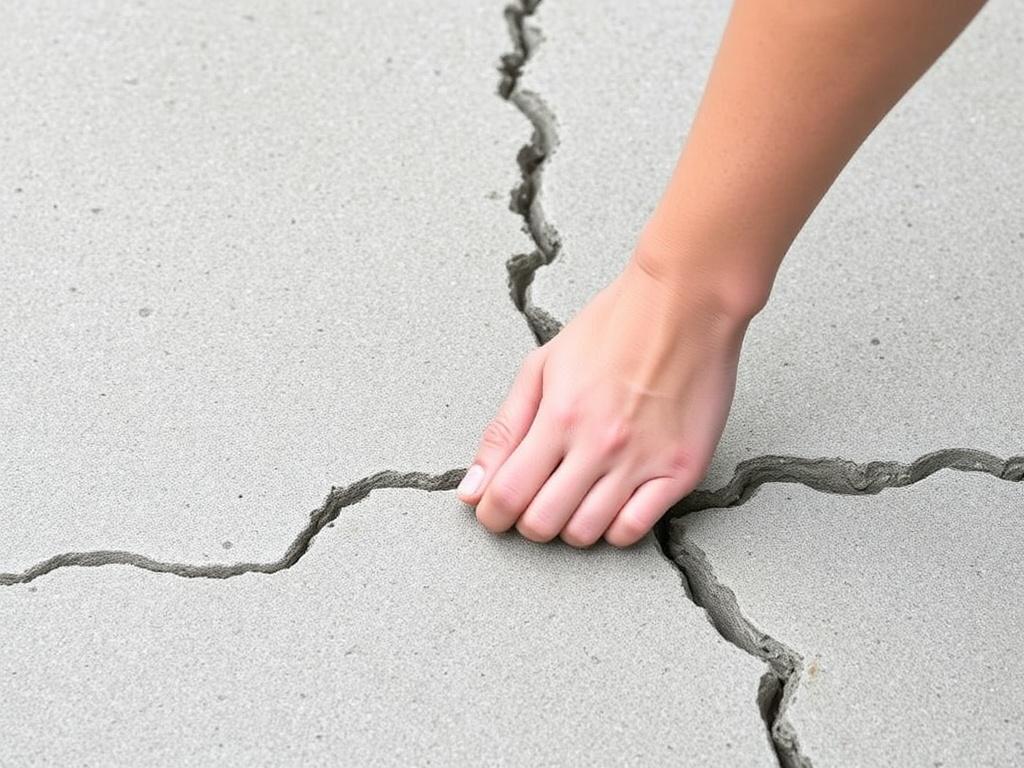
A simple maintenance plan extends life: inspect semi-annually, seal small cracks promptly, keep joints filled and in good condition, and manage water away from slabs. Preventive maintenance outperforms reactive patching over decades.
Replace failing sealants every few years, reapply protective coatings as needed, and clean surfaces to prevent deicing salts and oils from accelerating deterioration. Small investments in upkeep reduce the frequency of major repairs.
Case studies: repairs that worked
A neighbor’s cracked garage slab looked dramatic but was mainly due to a soft spot from poor compaction. We injected polyurethane under the slab, lifted it 1.5 inches, and sealed the crack; the repair held and the garage door track returned to level within a day.
On a small commercial patio with widespread plastic shrinkage, the contractor applied a thin polymer-modified overlay and instituted a summer curing plan for future pours. The patio has resisted further surface cracking for three seasons so far.
In another instance, an apartment building showed diagonal foundation cracks. An engineer found differential settlement from a leaking drain. Replacing the drain, underpinning the affected area, and epoxy-injecting the cracks stopped movement and restored occupant confidence.
Common mistakes to avoid
Don’t seal active, structural cracks with a purely cosmetic sealant and expect a durable result. Cosmetic fixes over moving or unsupported slabs fail quickly and mask deeper problems that worsen over time.
A second mistake is neglecting proper surface preparation; dirt, oil, and loose material prevent adhesives and epoxies from bonding. Time spent cleaning and preparing is the key determinant of repair longevity.
DIY tips and limitations
Homeowners can handle many small repairs: sealing hairline cracks, basic patching, and applying surface treatments. Follow manufacturer instructions on surface prep, temperature limits, and cure times to get lasting results.
For wide cracks, active movement, or anything affecting structural elements, hire professionals. I once attempted a deep patch on a retaining wall that returned worse because the underlying drainage issue was missed — know when a job exceeds your comfort and call an expert.
Sustainability and material choices
Using supplementary cementitious materials reduces embodied CO2 and often improves durability. Recycled aggregates are common in non-structural applications and can be part of a sustainable repair strategy.
Choose long-life materials and avoid short-lived patches that lead to repeated churn. A well-planned repair extends service life and reduces waste over decades.
Summary of practical steps to minimize cracking
Start with a thoughtful design that anticipates movement and incorporates joints, adequate reinforcement, and a well-prepared subgrade. Use appropriate mix designs with low water-cement ratios and air entrainment in cold climates.
During construction, prioritize curing, avoid over-finishing, and protect fresh concrete from rapid drying or thermal shock. After construction, inspect regularly, seal small cracks promptly, and address drainage issues that threaten subgrade support.
Concrete will crack; that is reality. But with the right design, materials, construction practices, and timely repairs, cracks become manageably predictable features rather than a cascade of expensive failures.