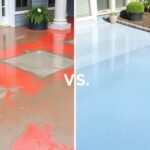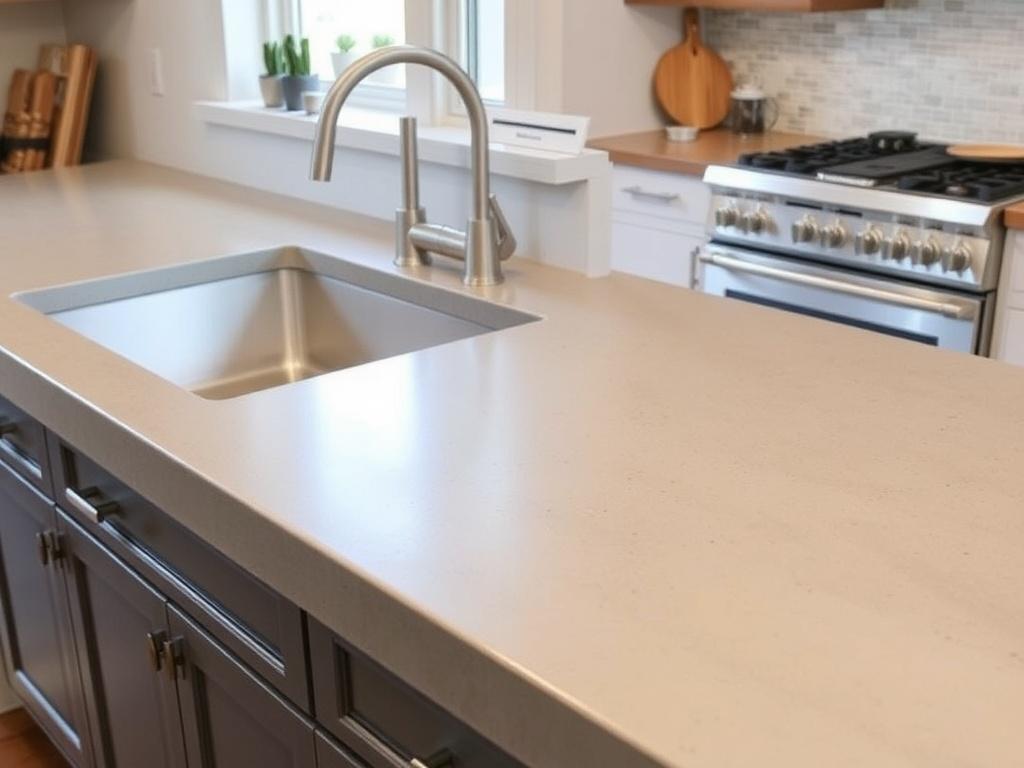
Concrete countertops are tactile, resilient, and endlessly customizable, but getting a finish that feels silky and resists chips and stains takes more than simply pouring a mix into a mold. This article walks through materials, methods, and subtle techniques that turn raw cement into a long-lived surface you’ll enjoy using every day.
Some readers want the broad strokes; others will appreciate the nitty-gritty. I’ll give both: clear steps you can follow, plus tips I learned the hard way on shop projects and client installs. If you’re serious about a countertop that looks and performs like high-end stone, these are the practices that matter.
Why choose concrete for countertops?
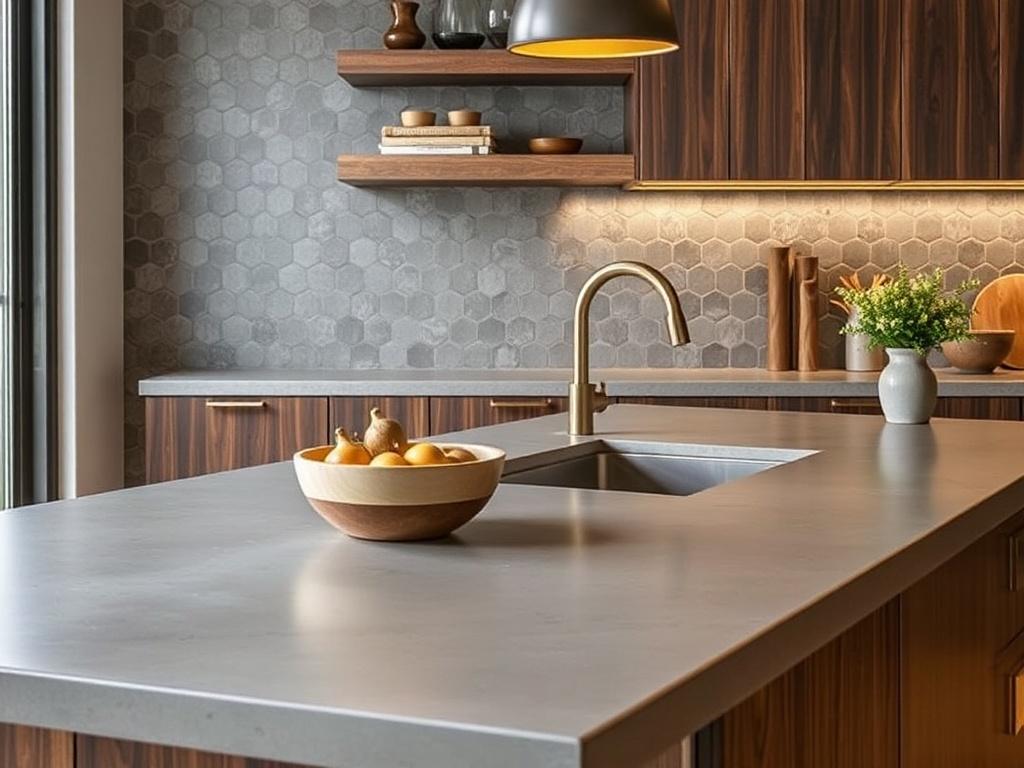
Concrete blends the feel of natural stone with infinite design freedom. You can embed decorative aggregates, dyes, or metal inlays; shape integrated sinks and backsplashes; and achieve a thickness and edge profile that suits your kitchen. Durability, when done correctly, rivals granite and quartz.
It’s also a surface that ages well. Small hairline cracks can be minimized with good reinforcement and mix control, and even if repairs are needed years down the road, they are straightforward for a skilled craftsperson. For many homeowners, the material’s versatility is the main draw.
Overview of the process
From design through use the main stages are design and measurement, building a form, reinforcing, mixing and pouring, vibrating and consolidating, troweling and finishing, curing, and sealing. Each stage influences the final look and structural integrity, so rushing any step will show up on the surface.
Throughout this guide I’ll refer to both DIY-scale and pro-scale strategies. If you’re attempting a full kitchen run as a first project, consider a small test slab first. That slab is the best teacher: it shows you how your materials behave and how your finishing technique affects sheen and porosity.
Design and planning: start with the end in mind
Decide edge profiles, integrated elements (like sinks or drains), color, and aggregate exposure before building forms. Edge shape affects reinforcement and form construction; sharp thin edges are elegant but fragile, while thicker, rounded edges are more forgiving and structurally robust.
Sketch elevations and plan for appliances, undermount sinks, and seams. Concrete is heavy—calculate slab thickness and support structure to prevent sagging. Most residential counters are 1.5″–2″ thick with additional substrate or overhang support where needed.
Tools and materials checklist
Getting the right tools ahead of time saves frustration. Here’s a compact list of essentials I’ve relied on in workshops and site jobs: mixing drill with paddle, wheelbarrow or mortar mixer, trowels, magnesium floats, vibrating table or poker vibrator, forms and release agents, concrete sealer, and protective gear.
- Portland cement (Type I/II) or a countertop-specific cement blend
- High-quality fine aggregates and optional decorative aggregates
- Polypropylene or chopped fiber reinforcement, or stainless steel wire mesh
- Form materials: melamine, plywood, silicone caulk for seams
- Sealers and topical densifiers (penetrating sealers, acrylics, or polyurethanes)
I keep a printed checklist on the wall for big jobs; it avoids mid-pour runs to the store and keeps the workflow smooth. For first runs include extra gloves and release agent.
Choosing the right mix
The mix recipe defines strength, workability, and finishability. For smooth countertops you want a lower coarse aggregate ratio and well-graded sand to keep the surface dense. Typical mixes for countertops use a 1:2:2 ratio by volume of cement: sand: aggregate or even less coarse aggregate when a smooth surface is desired.
Use microsilica, plasticizers, and controlled water content to maintain workability without slackening strength. High water content makes finishing easier at first but increases shrinkage and porosity. A superplasticizer is your friend when you need flow without extra water.
Mix proportions and a simple table
Below is a practical set of mix proportions for a range of countertop goals—smooth polished surfaces, exposed aggregate, and lightweight panels. These are starting points; local materials and chosen cement brand can change behavior, so test and adjust slightly.
| Type | Cement | Sand | Coarse aggregate | Admixtures |
|---|---|---|---|---|
| Smooth/polished | 1.0 | 2.0 | 0.25–0.5 | Plasticizer, silica fume |
| Exposed aggregate | 1.0 | 1.5 | 0.75–1.0 | Plasticizer |
| Lightweight panel | 1.0 | 1.5 | Lightweight aggregate 0.5 | Fiber reinforcement |
Weighing ingredients by mass is more accurate than volume. I use a digital scale for small batches; the difference between a confident batch and a disappointing one often comes down to precise proportions.
Reinforcement: prevent cracks without bulky steel
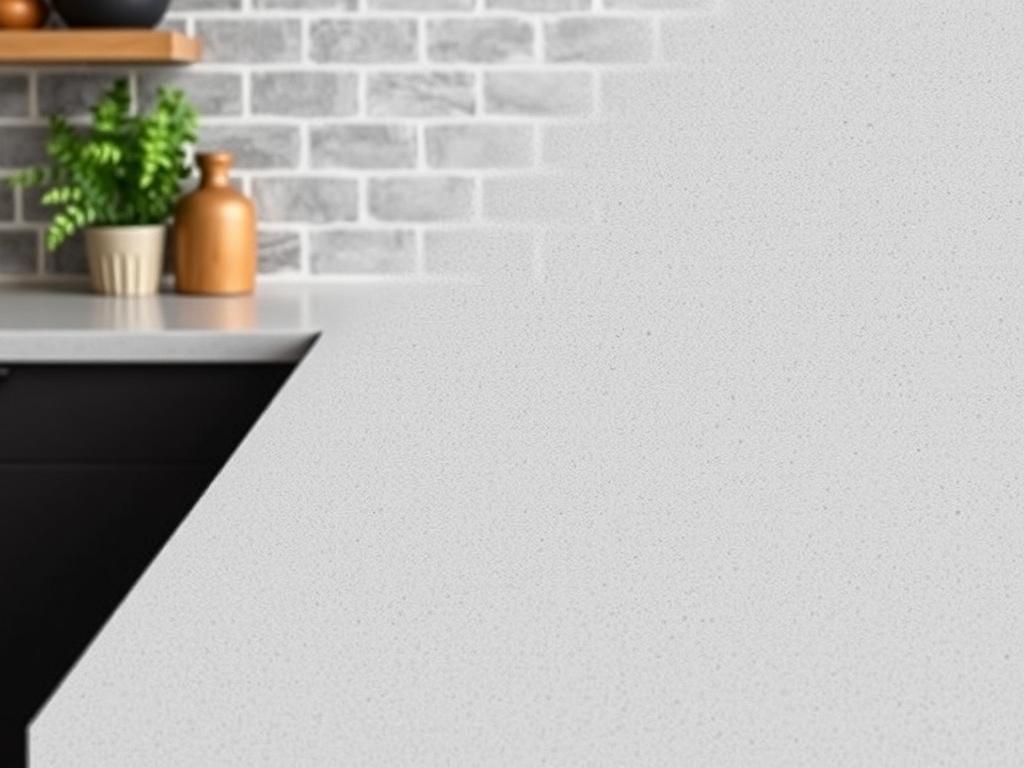
Concrete shrinks as it cures. Reinforcement controls cracking and improves impact resistance. For thin counters I prefer polypropylene microfibers or alkali-resistant glass fiber; they add tensile strength without the rust risk of ordinary steel near the surface.
For added structural assurance, stainless steel wire mesh or rebar placed deeper in the slab can support heavy spans. Keep steel at least 3/8″–1/2″ from the finished face to reduce the chance of corrosion stains appearing on the surface.
Formwork: precision + release
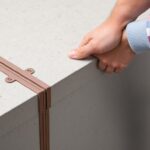
Solid, square forms are the backbone of a clean edge and flat surface. Use melamine-faced plywood or finished extrusion forms; smooth surfaces translate to fewer imperfections on the concrete. Tape and silicone the seams carefully to prevent leaks and blowouts.
Apply a proper form release agent so the cured slab separates cleanly. I once skipped release on a rush job and spent hours sanding an edge that tore away with the form—measure twice, apply release, and check corners before the pour.
Coloring and pigments
Integral pigments are mixed into the concrete for base color. Liquid iron oxides are stable and predictable, while powdered pigments require careful dispersion. Small sample batches reveal how the pigment interacts with your cement and aggregate—never guess at color on the day of the pour.
Surface stains and topical dyes add depth but can vary in durability. For best long-term performance, combine integral color with a color enhancer or stain in limited areas for contrast; then protect with a penetrating sealer suitable for food-contact areas.
Preparing the mold and inserts
If you plan integrated sinks, drains, or thin edges, build these into the mold with sacrificial foam or reusable templates. Secure inserts so they won’t float or shift during the pour; weight them or tie them to the form’s structure if necessary. A shifted sink during consolidation is a costly mistake.
Consider slight negative angles (undercuts) on sink edges or overhang rebates that make later attachment of fixtures easier. Label everything—the last thing you want is a misaligned cutout after the slab cures and you realize appliances don’t line up.
Mixing and pouring: timing is everything
Mix for a consistent, workable batch. For larger runs use a mortar mixer and mix several smaller batches rather than one giant one to maintain a consistent slump. Overmixing can entrain air; undermixing leaves pockets of dry material—both ruin surface quality.
Pour near the point of use and move quickly to consolidating. Slow pours allow the heavier aggregates to settle and can create segregation—fine for some exposed aggregate looks but disastrous for a uniform, smooth finish.
Consolidation: remove air and voids
Vibrating or tapping the forms compacts the mix, removes entrapped air, and brings fines to the surface. For counters, I use a hand-held poker vibrator or a dedicated vibrating table for prefabricated panels. Move the vibrator steadily—don’t linger in one spot or you’ll create aggregate ripples.
For confined areas and edges, manual tapping and corner consolidation with a rubber mallet or a backing rod can help. Proper consolidation prevents pitting in the final finish and reduces the need for aggressive grinding later.
Troweling and achieving a dense surface
The finishing stage defines smoothness. Start with a magnesium float to knock down peaks and bring paste to the surface, then progress to a steel trowel as the slab approaches initial set. Each pass tightens the surface—too many steel trowel passes too soon can create a weak, flakey layer.
For a consistently dense surface, allow bleed water to evaporate slightly and then apply a light touch with a damp sponge float to refine the texture. Practice the sequence on test slabs to time your steps for your specific mix and ambient conditions.
Polishing or exposing aggregate for character
Polishing transforms a dense finish into a satin or high-gloss countertop. Wet-grinding with diamond pads removes surface micro-roughness and exposes aggregates when desired. Use a sequence from coarse to fine grits—skipping grits leaves scratches that show up after sealing.
If you prefer exposed aggregate, use a light acid wash or abrasive to reveal the stones after initial cure, then polish to smooth the aggregate faces. Exposed aggregate offers more visual texture and can be more forgiving of scratches over time.
Curing: the silent strength builder
Curing is as important as mixing. Proper moisture retention allows the cement to hydrate fully and achieve planned strength. Cover slabs with plastic or use a curing compound; I’ve had one project where wind dried the surface overnight and resulted in a crazed finish—timely curing prevents that.
Keep temperatures in mind. In hot weather fog the surface and shade the slab; in cold weather insulated blankets can maintain a favorable cure. Allow at least seven days before light handling and 28 days for near full strength before heavy use or cutting openings.
Sealing: stain resistance and sheen control
Sealers protect against oils, acids, and water and can change a finish from matte to glossy. Penetrating sealers like silanes and siloxanes protect internally without creating a film, while topical finishes like polyurethane create a surface barrier that’s easier to maintain but may require periodic reapplication.
Test sealers on scrap pieces because color shift and final sheen vary by product. For kitchen counters I often recommend a penetrating sealer plus a thin coat of a durable, food-safe topcoat in high-use areas. Reapplication frequency depends on use—light kitchens may need reseal every 1–3 years.
Edge detailing and joint work
Edges take the most wear. Opt for slightly rounded profiles or laminated edges where a thin cantilever overhang would otherwise be brittle. If your layout requires seams, keep them neat and reinforced, and use color-matched epoxy to create a strong, discreet joint.
When sealing seams, overfill slightly and sand flush after cure to maintain a continuous feel. I’ve used blended epoxy seams that become almost invisible when polished correctly; tight tolerances during formwork make that much easier.
Installing the countertop safely
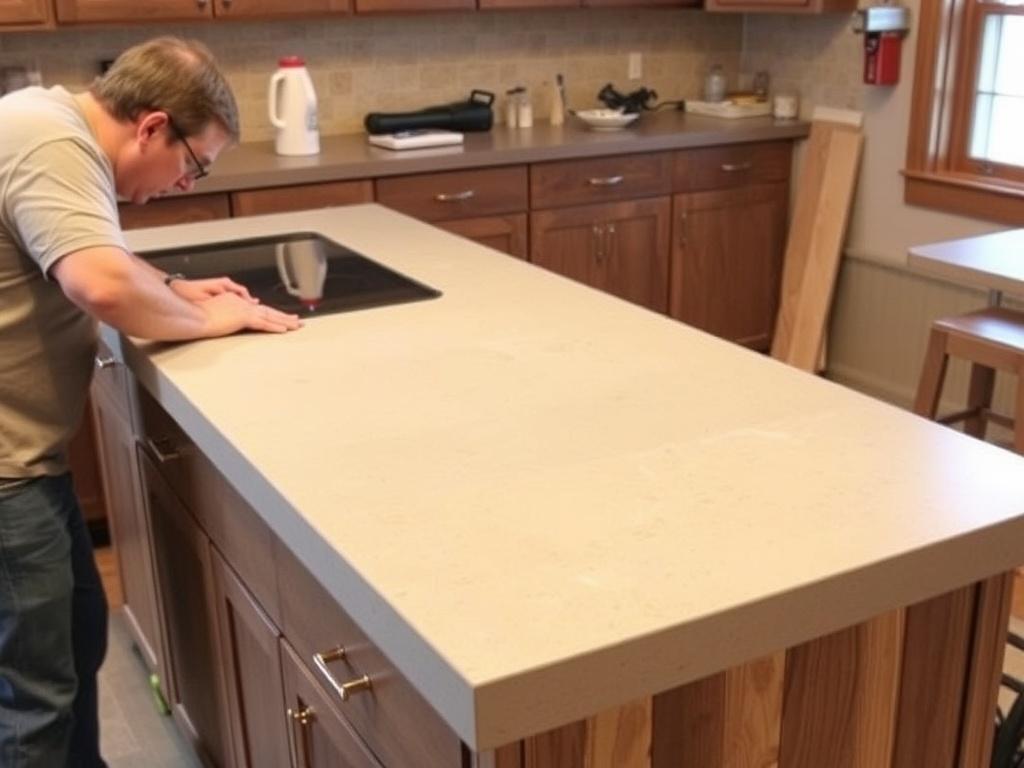
Concrete is heavy. Bring in enough helpers or use suction lifts when moving full-size slabs. Protect cabinets and finished surfaces during installation to avoid accidental chips. Make final cutouts once the slab is mounted to ensure perfect alignment with sinks and cooktops.
Shim and fasten with an eye for even load distribution. A few stainless steel mounting clips and adhesive go a long way toward keeping the slab flat and secure while allowing for seasonal movement in cabinetry and substrates.
Common problems and fixes
Pitting, microcracking, and delamination are the usual suspects. Small pits can be filled with tinted epoxy and sanded; hairline cracks sometimes accept a color-matched resin repair. Delamination often stems from poor consolidation or too-early troweling, and the fix is surface grinding back to sound material and reapplying a bonded overlay.
Prevent problems by testing mixes, using proper vibration, and following curing protocols. When in doubt, create a small mockup that replicates your edge, finish, and color goals; a failed mockup is cheap compared to repairing an installed kitchen countertop.
Maintenance: everyday care and longevity
Routine care keeps a concrete countertop looking fresh. Wipe up spills quickly, use trivets for hot pans, and don’t cut directly on the surface. For sealed countertops, a mild pH-neutral cleaner and soft cloth are usually all you need for daily cleaning.
Reapply sealer as recommended by the product manufacturer. If the surface becomes dull or scratched, light polishing and a fresh topcoat can restore the look without replacing the slab. I had a rental unit where tenants abused the counter; a weekend of touch-ups brought the surface back to near-original condition.
Environmental and safety considerations
Work with dust control in mind—grinding and sanding cement creates silica-rich dust that’s hazardous when inhaled. Use wet methods for grinding and proper respirators. Dispose of wastewater responsibly; many local codes restrict disposal of acidic or pigmented wash water into drains.
Consider sourcing low-embodied-carbon cements or recycled aggregates to reduce environmental impact. Stamped or colored concrete can also be made with recycled glass or crushed porcelain aggregates for a sustainable and attractive finish.
Cost, time, and realistic expectations
A handcrafted concrete countertop isn’t the cheapest option compared to laminate or some prefab surfaces, but it sits competitively with stone, especially when custom features are included. Expect materials and shop time to reflect the labor intensity: form building, finishing, and curing dominate the timeline.
Small projects can be tackled in a weekend with careful planning; complete kitchen installations are typically multi-day jobs with curing times that stretch total completion over several weeks. Get realistic estimates from pros if you’re not comfortable with the demanding steps like formmaking and polishing.
Step-by-step project timeline (example)
Here’s a condensed, realistic timeline for a standard 8–10 day workflow on a single kitchen run: Day 1–2 design, templating, and form building; Day 3 material staging and pre-mix tests; Day 4 pour and consolidation; Day 5–7 initial cure and trimming; Day 8–9 polishing and sealing; Day 10 final install and touch-ups.
Weather, complexity, and additional features like integrated sinks add time. I always build buffer days into client schedules because delays in curing or shipping materials are common and frustrating if a hard deadline is imminent.
Real-life example: a renovation story
On one suburban remodel I worked on, the clients wanted a dark, near-black counter with light aggregate specs. We did three mock slabs to dial in pigment dosage and sealing strategy. The first slab looked too blue, the second lacked depth, and the third hit the mark after we switched silicate-based densifier and used a slightly glossier topcoat.
The key takeaway from that job was the value of iteration. The final installed run resisted stains from wine and citrus surprisingly well, and the light aggregates provided a lively contrast that hid inevitable small scratches from heavy use. The homeowners still tell visitors it’s the “best surface” in the house.
Finishing touches and personalization
Small details make big impressions: routed inlays of wood or metal, hand-polished edges, and custom sink integration elevate a concrete countertop from functional to signature. Plan these during the design phase so they’re constructed into the form rather than retrofitted later.
Personalization can also be subtle: sandblasted patterns, inlaid seams, or slightly varied polish levels that catch light differently. These are the creative choices that make a countertop feel bespoke rather than off-the-shelf.
When to hire a pro
If you lack experience with formwork, polishing, or working at scale, hiring a professional saves time and reduces the chance of expensive mistakes. Pros bring equipment like big diamond grinders and industrial sealers that achieve a level of finish and durability difficult to replicate in a garage.
Consider a hybrid approach: hire a fabricator for the pour and finish and do template, install, and sealing yourself if you want to learn. That way you benefit from professional-level polishing and still get hands-on satisfaction from the install or maintenance.
Final notes and encouragement
Concrete countertops reward careful work and patience. They require more planning and a finer hand than many other surfaces, but the payoff is a living surface that blends strength with character. Follow the steps above and use mockups liberally—you’ll save time and get a result you’ll enjoy for years.
One last piece of practical advice: document your mix, pigment, and sealer choices in a small notebook. When guests ask what the material is or you need to repair a nick in five years, that record will be worth its weight in gold.