Concrete looks forgiving: mix, pour, smooth, and wait. But a few small missteps can turn a weekend project into a season of repairs, wasted materials, and frustration. This guide walks through the most common mistakes DIYers make with concrete and how to avoid them, with practical steps, real-world examples, and a prep checklist you can use before you pick up a trowel.
Start with a plan: why preparation matters
Rushing into a pour without a clear plan is the single biggest mistake I see on homeowner projects. Know the purpose of the slab, expected loads, drainage needs, and the sequence of operations before you buy materials or set forms. Investing time up front prevents last-minute compromises that almost always show up as cracks, drainage problems, or failure to meet local codes.
Planning includes simple measurements and a materials estimate, but it also requires thinking about access for mixers and wheelbarrows, storage for tools, and where waste will go. I learned this the hard way on my first backyard patio when I blocked a narrow gate with leftover bags of cement and had to scramble for a wheelbarrow path. That delay made the first pour arrive hotter and drier than planned, affecting the finish.
Know your site: soil, slope, and drainage
Concrete is only as good as the base beneath it. Many DIYers pour directly over compacted dirt and wonder why slabs settle or crack. Proper subgrade preparation—removing organic material, compacting, and adding a granular base—is essential for performance and longevity.
Slope and drainage are often overlooked. Concrete should not become a pond for rainwater; designing a slight slope away from structures prevents water pooling and foundation problems. If your site naturally directs water toward the house, correct grading or a drainage channel is worth the effort before pouring concrete.
Choosing the right mix and not guessing with water
Buying pre-mixed bags simplifies life, but using the wrong mix or adding too much water remains a frequent error. Excess water weakens the cured concrete, reduces durability, and increases shrinkage and cracking. Measure water carefully and aim for workability, not soupy consistency.
Different projects require different mixes: high-strength mixes for load-bearing slabs, air-entrained mixes for freeze-thaw climates, and fiber-reinforced mixes for some thin overlays. Read the bag, ask at the supplier, and don’t assume one mix fits all. When in doubt, consult a technical sheet or a local concrete supplier for a recommendation based on your climate and use.
Timing is everything: ordering, mixing, and pouring
Concrete hates surprises. Ordering too little or too much, or starting a pour without the crew lined up, causes cold joints, uneven finish, and wasted material. Calculate quantities precisely and time deliveries during a window you can handle from start to finish. It’s better to pause and pour the next day than to make a rushed connection.
On-site mixing introduces variables like bucket size, mixing time, and operator technique. If you mix by hand or with a small mixer, keep batch sizes consistent and use the same water measurement each time. Two different people making batches with slightly different water will create visible seams in the finished slab.
Forms and bracing: don’t skimp on support
Sturdy forms define the slab and hold the concrete’s shape until it cures. Flexible or improperly braced forms bow outward during the pour and result in wavy edges and lost dimensions. Use straight, rigid lumber and brace forms every few feet to prevent movement under pressure.
Check form elevation with a level or string line and consider stakes or spreader blocks for heavier pours. For vertical edges, use metal forms or thicker lumber, and add diagonal bracing to resist hydrostatic pressure. A little extra bracing costs little but saves time and materials later.
Reinforcement: not always optional
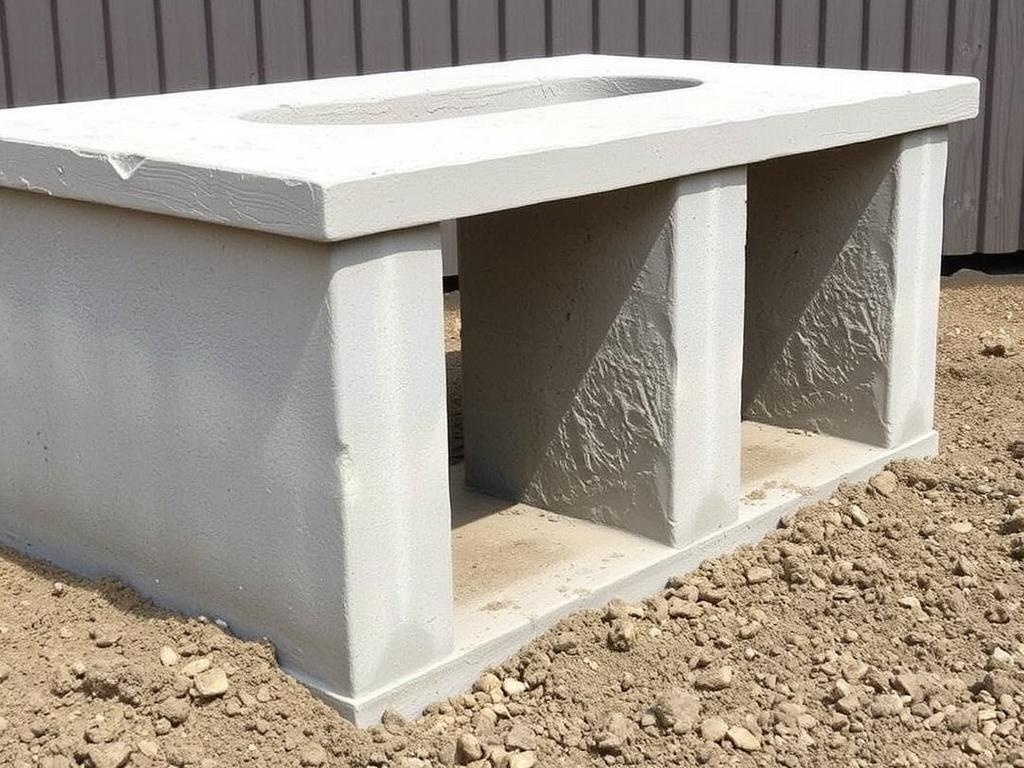
Skipping reinforcement or installing it incorrectly is a common mistake that shortens a slab’s life. Wire mesh and rebar control crack width and improve load-carrying ability, but placing reinforcement on the wrong plane makes it ineffective. Reinforcement should sit within the slab where tensile stresses occur, typically in the middle to upper third thickness for surface loads.
Use rebar chairs or concrete bricks to maintain elevation during the pour and avoid letting mesh ride at the bottom. For small DIY slabs, consider fiber reinforcement as a supplement to mesh; it helps with early plastic shrinkage cracking. For structural or heavily loaded slabs, follow engineered specifications or consult a professional.
Controlling joints: planning for movement
Cracking is not always a failure—it’s often concrete doing what it must as it shrinks. The goal is to control crack locations with joints rather than let cracks appear randomly. Saw-cut control joints placed at the right spacing and depth greatly reduce random cracking.
Rule of thumb: spacing in feet is roughly two to three times the slab thickness in inches. For example, a 4-inch slab should have joints every 8–12 feet, cut to at least one-quarter of the slab thickness. For decorative concrete, joint placement should also consider visual patterns and traffic flow to hide or minimize their appearance.
Finishing mistakes: overworking, poor timing, and wrong tools
Finishing starts when the concrete is ready—not when you decide. Starting too early (when bleed water is still present) or too late (after the mix stiffens) causes weak surfaces and incomplete consolidation. Watch the surface and test with your hand; when water sheen dissipates and the mix holds an impression, finishing can begin.
Overworking the surface with a trowel produces a paste-rich top layer that can peel or dust over time. For flatwork like driveways, keep power troweling to a minimum, and finish with a broom for traction if needed. Match the finishing technique to the use: smoother finishes for interiors and textured ones for exterior walkways to reduce slipperiness.
Curing: the often-ignored phase that defines durability
Curing is more important than the actual finishing for long-term performance. Many DIYers let newly poured concrete dry out instead of curing, which causes surface weakness, crazing, and reduced strength. Proper curing retains moisture, allowing hydration to continue and the concrete to reach its design strength.
Common curing methods include plastic sheeting, wet burlap, and curing compounds. In hot or windy weather, start curing immediately and maintain moisture for at least seven days for most mixes, longer for high-strength mixes or cold weather pours. I once saw a decorative slab develop hairline cracks after being left exposed to sun and wind for two days; a day of consistent curing could have prevented it.
Weather-related errors: pouring in extremes without planning
Weather turns simple jobs into tricky ones. Pouring in cold weather without precautions allows freezing of fresh concrete, which ruins the microstructure. Conversely, pouring in hot, dry conditions speeds evaporation and increases shrinkage and cracking risks.
Cold weather precautions include using heated water, insulating forms, and temporary enclosures with heaters. In hot weather, schedule pours for early morning or late afternoon, use cool mixing water, and employ windbreaks and misting to control evaporation. Always follow the concrete supplier’s guidance for temperature-specific admixtures and curing times.
Surface contamination and bonding failures
Pouring new concrete over contaminated surfaces—loose material, oil, or curing residue—creates poor bonding and can lead to delamination. Cleaning and repairing the substrate before pouring ensures adhesion and uniform strength. Never assume a surface is sound without inspecting and, if necessary, removing weak layers.
For overlays or patches, proper profiling of the existing concrete is essential; a power washer, acid etch, or mechanical scarifying may be needed. For vertical or patch repairs, apply a bonding agent per manufacturer instructions and make sure the patch mix is compatible with the base material.
Tool and equipment mistakes that waste time
Using the wrong tools or poorly maintained equipment slows progress and degrades quality. A dull saw blade, damaged trowel, or inconsistent mixer can create inferior finishes and uneven mixing. Invest in the right tools and keep them clean and sharp for consistent results.
Clean tools immediately after use. Concrete residue hardens quickly and ruins trowels, floats, and mixer drums. I learned this on a job where a neglected mixer drum shortened its life significantly; regular cleaning would have preserved its performance for many more projects.
Ignoring local codes and inspections
DIYers sometimes skip permits or ignore local requirements, thinking their small project won’t attract attention. Building codes and inspections exist to ensure safety and to prevent problems that can affect neighboring properties. Check local zoning and permit rules early to avoid stopping work mid-project for a required inspection.
Some municipalities require specific reinforcement, thickness, or drainage plans for slabs near property lines or structures. Failing to follow these rules can lead to fines, mandated repairs, or trouble when selling the property. A quick call to the local building department can save time and ensure that your work meets minimum safety standards.
Estimating quantities: how to avoid running out or wasting mix
Underestimating needed concrete leads to unnecessary joints and color variations; overestimating wastes money and storage space. Use simple volume math—length × width × thickness—to calculate cubic yards and then add a contingency for spillage and variations. Suppliers can help calculate quantities based on slab geometry and rebar placement.
Order a bit extra for safety, but not so much that you must store heavy bags in the sun. For smaller projects, pre-mixed bags may be more economical and manageable. For larger slabs, order delivered ready-mix to ensure consistent batching and water content.
Color and finish consistency: planning for aesthetics
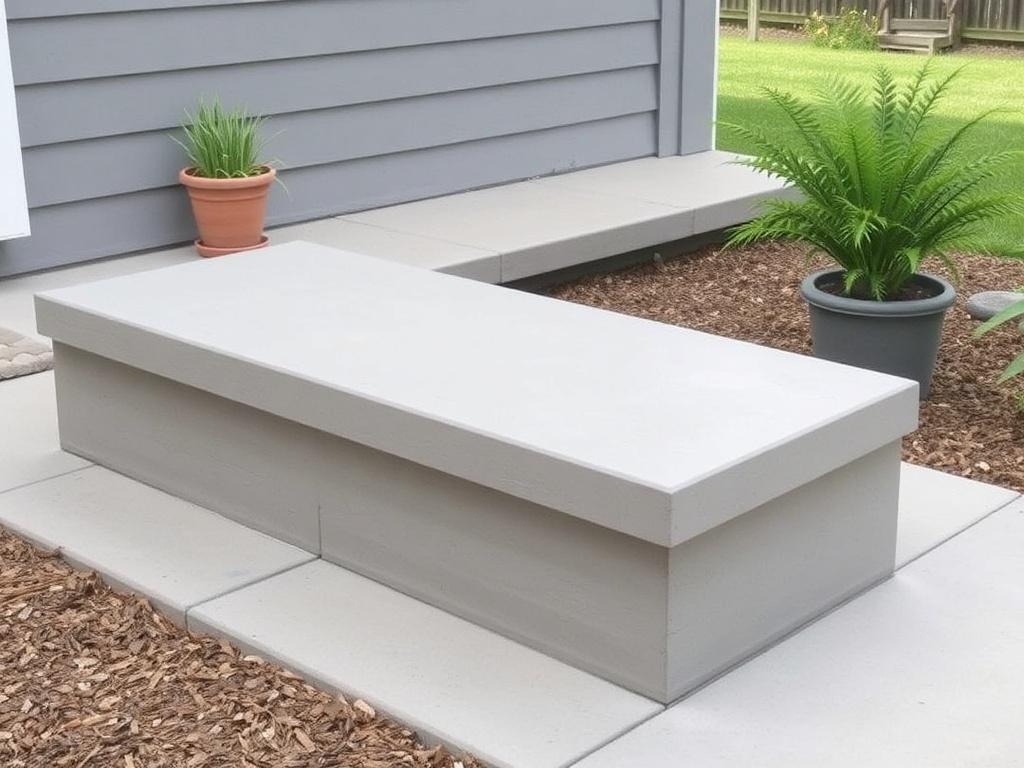
Color variations are common in DIY concrete projects when batches differ or the surface is finished inconsistently. Consistent batching, moisture control, and curing practices are essential for uniform color. If using integral color, order all the bags from the same lot number whenever possible.
When applying stains or sealers, test a small area to check absorption and final color, and apply products under similar temperature and humidity conditions. For decorative finishes like stamped concrete, practice patterns on a mock-up to ensure uniform impression depth and release agent application.
Common defects, their causes, and quick fixes
Cracking, scaling, dusting, and spalling are symptoms of different root causes and require appropriate fixes. Quick answers like “add more cement” or “just resurface” often mask underlying issues. Identifying whether a problem stems from mix design, curing, surface contamination, or structural movement is the first step toward a durable repair.
Minor surface defects can often be repaired with topical overlays or patching compounds, but larger structural problems may demand removing and replacing the slab or adding proper reinforcement. For recurring problems, seek a professional assessment to diagnose foundation or drainage issues that simple patching won’t solve.
Problem table: common issues, likely cause, and preventive measures
| Problem | Likely cause | Preventive measure |
|---|---|---|
| Random cracking | Improper joint spacing or excessive shrinkage | Install control joints at correct intervals and control water content |
| Spalling | Poor finishing or freeze-thaw damage | Use proper curing and air-entrained mix where needed |
| Delamination | Excessive bleeding topped with overworking | Wait for bleed water to dissipate before finishing |
| Scaling | Deicer salt + freeze-thaw on weak surface | Use air-entrained mix and proper curing |
Common mistakes when repairing concrete
Repairing concrete requires different techniques from pouring new slabs, yet DIYers often treat it the same. Selecting the wrong repair material, poor surface preparation, and failing to match expansion behavior lead to repeat failures. Take time to identify the type of deterioration and use a repair product designed for that problem.
For hairline cracks, epoxy or polyurethane injections can restore structural integrity; for spalls and surface defects, polymer-modified mortars bond better than plain cement. Always follow manufacturer instructions for bonding agents and surface prep; skipping that step leads to patches that pop out within months.
Safety mistakes: protecting yourself and others
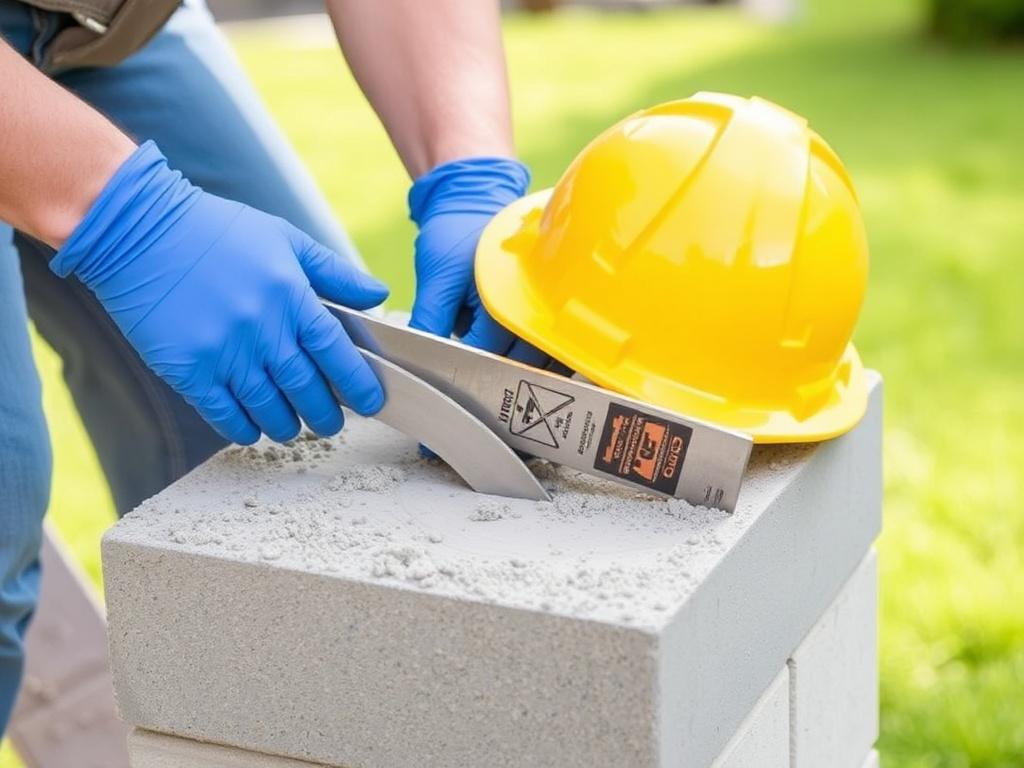
Concrete work carries hazards that are easy to overlook: burns from wet concrete, silica dust during cutting, musculoskeletal strain from heavy lifting, and hazards from power tools. Wear appropriate PPE—gloves, eye protection, long sleeves, breathable dust masks, and steel-toed boots. Safety is non-negotiable and saves time in the long run.
Use wet cutting methods or a vacuum attachment to control dust when sawing or grinding. Plan for safe material handling—use wheelbarrows, get help for heavy loads, and avoid lifting beyond your capacity. I once underestimated the strain of moving a stack of rebar and spent a week nursing a pulled back muscle; a simple dolly or an extra pair of hands would have been wiser.
When to use admixtures and additives
Admixtures (plasticizers, accelerators, retarders, and air-entrainers) solve many site-related problems but must be used correctly. Adding them without understanding their effects can undermine strength, finish, or long-term performance. Use admixtures to improve workability, control set times, or enhance freeze-thaw durability when conditions warrant it.
Consult your supplier for dosages and compatibility with other mix components. Never double-dip with random additives from consumer stores; make sure they are formulated for concrete and that the mix design accounts for their presence. When using colored or decorative additives, test on a small patch to ensure expected results.
Learning from mistakes: documenting and testing
Every project is a learning opportunity; document what you did, the conditions, the mix, and the timing. Keeping notes helps you repeat successes and avoid repeating errors. Simple photos and a purchase log can make a big difference for your next project or if you need to explain the job to a pro.
For larger projects, run a small mock-up with the same mix and finish to verify appearance and performance before committing to the whole area. A mock-up reveals issues with color, texture, and joint placement and saves expensive rework on the primary surface.
Tools and a short checklist before you pour
Having the right tools on hand reduces mistakes and prevents last-minute runs to the store. Here’s a concise checklist of essential tools and consumables to have ready before your pour.
- Forms and bracing materials (straight lumber, stakes, screws)
- Concrete mixer or arrangement for ready-mix delivery
- Vibrating screed or straightedge, bull float, finishing trowel
- Rebar, wire mesh, chairs, and tie wire
- Broom or texture tools, saw for control joints
- Curing materials: plastic sheeting, wet burlap, or curing compound
- Personal protective equipment and cleanup materials
Troubleshooting: diagnosing issues after the pour
When problems arise, isolate symptoms and trace them to causes before attempting repairs. Quick fixes like surface overlays might mask deeper issues if you don’t address drainage or subgrade problems first. Use a process of elimination: check drainage, inspect reinforcement exposure, and review curing conditions.
For hairline cracks in non-structural areas, sealing or filling may suffice. However, large cracks with displacement or ongoing movement suggest subgrade settlement or load issues that require more extensive repair or replacement. For persistent or unclear problems, get a structural or concrete specialist to provide a diagnosis.
Cost-effective tips: saving money without cutting corners
Being budget-conscious is smart, but cutting corners on key aspects of concrete work is false economy. Save by planning efficiently, using pre-measured bags for small jobs, or sharing a rental mixer with a neighbor. Buy reinforcement and tools from reputable suppliers rather than the cheapest options that fail under job stress.
Another smart saving move: group small repairs and projects to order one larger batch of ready-mix or to reuse materials and labor more effectively. Proper planning reduces wastage, repeat work, and the emotional cost of dealing with avoidable failures.
When to call a professional
Many projects are well within a competent DIYer’s reach, but certain conditions warrant hiring a pro. If your slab will support heavy structural loads, if you face significant drainage or soil instability, or if local codes require engineered designs, get professional help. A contractor brings experience, equipment, and warranty coverage that can be worth the expense for critical applications.
Also consider calling a professional when a repair fails repeatedly or when you need a color and finish match for an existing decorative installation. Professionals can provide diagnostics, engineered solutions, and guarantee their work—peace of mind that often outweighs the extra cost.
A practical checklist to avoid the most common errors
Use this short checklist immediately before you pour to catch the common pitfalls. Walk the site and confirm each item to make sure you’re setting yourself up for success rather than trouble. A few minutes of inspection saves hours and dollars down the road.
- Verify subgrade is compacted, clean, and graded for drainage.
- Confirm form alignment, bracing, and elevation with a level or string.
- Check reinforcement placement and support chairs for proper elevation.
- Confirm mix type, delivery time, and water measurement protocol.
- Ensure finishing crew and tools are ready before starting the pour.
- Plan and stage curing materials—don’t wait until the slab is exposed.
Final thoughts and next steps for confident DIY concrete work
Taking on concrete projects can be deeply satisfying when you avoid the common pitfalls that snare many DIYers. Preparation, proper mix control, reinforcement placement, finishing at the right time, and consistent curing are the pillars of long-lasting concrete. Each step requires intention—there are no true shortcuts.
If you’re preparing for a project, use the checklist here, consult your supplier about mixes and admixtures, and run a small mock-up if appearance matters. When in doubt on structural matters, get expert advice; a small consultation early can prevent a large, costly headache later. With patience and attention to the crucial details, you’ll increase the chance your concrete project stands the test of time and weather.