Hot days reward fast work but punish sloppy planning—especially when you’re pouring concrete. This article walks through practical, field-tested techniques for managing temperature, mix design, placement, finishing, and curing so your concrete arrives at strength and looks the way you intended.
Why hot weather matters for concrete
Concrete is a chemical system, not an inert mass. Heat speeds the hydration reaction between cement and water, which shortens working time and changes how the paste and aggregate interact during placement and finishing.
Faster hydration can mean earlier strength gain, but it also raises the risk of plastic shrinkage, thermal cracking, reduced long-term strength, and poor surface quality. In hot weather, the balance between placement speed and proper curing becomes the controlling factor for success.
Beyond chemistry, environmental factors—surface temperature, air temperature, humidity, and wind—combine to increase evaporation from the plastic concrete surface. If you ignore those variables, you can create a slab that cracks or develops a weak, dusty surface.
Plan the pour: scheduling and logistics
Schedule pours for the coolest part of the day whenever possible. Early morning placements usually give you the longest workable period before temperatures peak, and evening pours avoid the afternoon heat if lighting and safety allow.
Work backward from placement to ensure deliveries, pumping, and crew availability align. On hot days you have less float: delays cost you workable time, so confirm trucks, pumpers, tools, and labor the night before.
Break large pours into manageable pours or pours with expansion joints to avoid long transport and long-duration finishing. If continuous long runs are unavoidable, plan for extra people at critical stations—placing, consolidating, and finishing must keep pace with the mix.
Control materials temperature before mixing
Lowering the temperature of ingredients is one of the most effective ways to keep the concrete cool without changing the mix. Use chilled water, ice chips, or cooled aggregates to reduce batch temperature at the plant or on-site.
When using ice, account for the melt water as part of the batch water. Tell the ready-mix plant how much ice you want and that ice will count toward total water. Large quantities of ice require careful communication to avoid exceeding specified water-cement ratios.
Store aggregates under shade or cover to prevent them from heating in direct sun. If you can cool stockpiles overnight with water application or by covering them, do so; cooler aggregates reduce the heat load during mixing and placement.
Adjust mix design and admixtures for hot-weather performance
Admixtures are your best single tool for controlling set time and workability in hot conditions. Retarders slow down hydration and buy you time; water-reducing admixtures preserve slump without extra water; plasticizers improve workability at lower water contents.
Specify mid-range water reducers or superplasticizers if you need longer slump retention and better finishing characteristics. Talk with your ready-mix supplier about options that match the project schedule and ambient temperatures.
Air-entraining admixtures remain important in freeze-thaw regions but also slightly affect workability and finishing. Use them as required for durability, and monitor air content in the field because temperature and mixing affect entrained air.
Practical admixture tips from the field
On a summer bridge deck years ago, we used a combination of a mid-range water reducer and a retarder to maintain pumpability through a long line and to avoid cold joints between pours. The combo allowed a steady pace without excess water that would have weakened the mix.
Always trial mixes when changing admixtures or when temperatures move into an extreme range. Small trials on-site or at the plant reveal unintended interactions—like staggering set times or loss of entrained air—that a specifications sheet won’t show.
Set temperature targets and monitor them
Establish a maximum allowable concrete temperature at placement and insist that batches arriving above that temperature are rejected or modified. Many practitioners aim to keep delivery temperatures below about 85–90°F (29–32°C), though exact targets depend on the project specification.
Use a calibrated thermometer to record batch temperature at the truck and again at placement when practical. Keep a log for quality control and to help diagnose any later performance issues.
Monitor ambient conditions—air temperature, wind speed, and humidity—throughout the pour. Conditions can change quickly, and what was acceptable at kickoff may demand different tactics an hour later.
Site preparation that reduces thermal stress
Shade work areas and staging zones to keep formwork, tools, and aggregates cooler. Temporary shade structures, sun-blocking tarps, or even tree cover can reduce surface temperatures dramatically and delay evaporation from the plastic concrete.
Reduce reflected heat from adjacent surfaces by covering hot asphalt or concrete with reflective insulation or water-wetted burlap. Hot formwork raises the temperature of the placed concrete and accelerates set in the contact zone.
Wind breaks are particularly useful near open sides. Erecting temporary barriers reduces wind-driven evaporation and can save hours of workable time on windy, low-humidity days.
Placement techniques that preserve quality
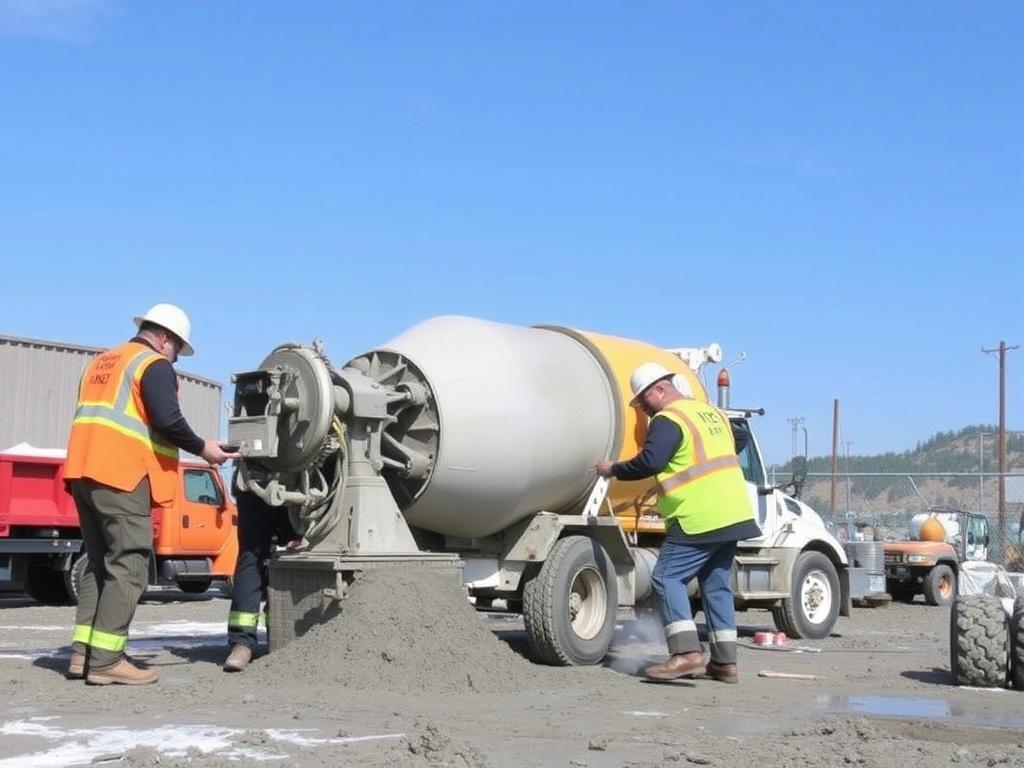
Move concrete quickly from truck to forms and avoid unnecessary rehandling. The longer the concrete sits in the sun or in the truck, the higher its temperature and the shorter its working time.
Place concrete in layers that allow adequate consolidation without overworking the surface. Excessive troweling or re-tempering to regain slump will dilute the paste and increase surface microcracking.
If pumping, ensure the line is kept full and that pump pressures are steady; surges can increase segregation and cause retempering attempts that harm final strength. Plan logistics so the pump crew and finishers work in sync.
Tips to avoid cold joints and delays
When long pours are unavoidable, create pour sequences or relief joints so fresh concrete meets fresh concrete. If a delay will create a cold joint, use bonding agents and mechanical keyways per spec to preserve structural continuity.
Keep an eye on set indicators—if a batch stiffens before you finish, stop adding water to bring back workability. Adding water on-site undermines the specified water-cement ratio and lowers long-term strength and durability.
Finishing without harming the surface
Finishers instinctively fight a sticky, fast-setting surface by overworking it. In hot weather that temptation is expensive: overworking removes paste, creates laitance, and increases the chance of surface scaling and dusting.
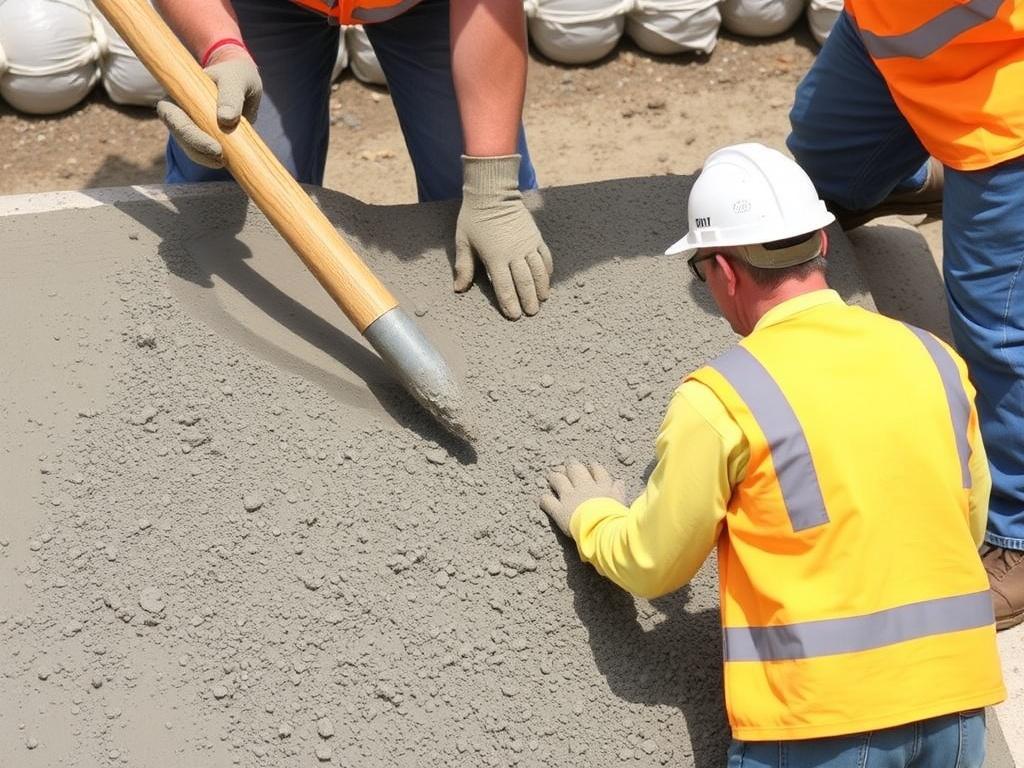
Use bull floats and darbies to consolidate and eliminate high spots early, then let the bleed water rise before starting final troweling. If bleed water evaporates too quickly, delay final finishing until the surface is ready or use protective measures to retain moisture.
Consider power floats and finishing blades that can operate at a slightly higher cutting angle to minimize reworking. Keep blades sharp and use the minimum number of passes necessary to achieve the desired finish.
Evaporation control and surface protection
When the risk of rapid evaporation is high, use evaporation retardant sprays on the plastic surface immediately after strike-off. These products form a thin film that slows moisture loss and reduces plastic shrinkage cracking.
Apply retardants per manufacturer instructions, being mindful that they may affect finish timing and aesthetics. Test the product on a sample panel before widespread use to confirm compatibility with your finishing regime.
Shading, wind breaks, misting, and temporary covers (tarps, polyethylene sheets) are all effective non-chemical options. Combine methods for the best protection, adjusting tactics as ambient conditions change.
Curing strategies for hot environments
Curing is the single most important activity after placement in hot weather. Maintain moisture and appropriate temperature to allow cement hydration to proceed at a controlled rate and to develop strength and durability.
Wet curing—using continuous water spray, ponding, or wet burlap—is highly effective when you can maintain it. If continuous wet curing isn’t practical, use a curing compound that forms a moisture-retaining membrane over the surface.
Start curing as soon as the surface can withstand the application without being damaged by foot traffic or wind. Delays of a few hours can nullify the benefits of a well-designed mix and careful placement.
Choosing a curing compound and application tips
Solvent-based clear or white curing compounds are common and convenient, particularly for large slabs where wet curing would be difficult. White compounds reflect heat and are often chosen for hot, sunny locations to reduce surface temperature during the critical early period.
Apply curing compounds uniformly at the specified coverage rate; gaps in the membrane allow localized drying and cracking. Use roll or spray equipment calibrated for even application and re-check for missed patches after wind or surface irregularities.
Quality control tests to run during hot pours
Conduct frequent slump and air content tests for each set of deliveries, and test concrete temperature at the time of placement. These readings are your best early indicators that the mix is performing as intended under the day’s conditions.
Take compressive strength cylinders and note the time of casting and curing method. Accelerated strength gain is common in heat, and early age results can help you adjust support removal times and traffic-loading schedules.
Documenting time, temperature, mix proportions, and admixture dosages gives you a traceable record for troubleshooting if problems appear later. Field notes and temperature logs can be invaluable evidence in warranty or performance discussions.
Labor safety and productivity during hot pours
Heat affects people as much as concrete. Implement a heat illness prevention program: shaded rest areas, frequent water breaks, electrolyte drinks, and enforced maximum continuous work periods during the hottest hours.
Rotate labor so no one spends extended time in direct sun. Supervisors should watch for signs of heat exhaustion and have emergency protocols in place, including rapid cooling and access to medical services if needed.
Provide lightweight, breathable PPE and encourage light-colored clothing to reduce heat absorption. Remember that safe, hydrated crews are more productive and make fewer errors during fast-paced, hot-weather operations.
Troubleshooting common hot-weather problems
Plastic shrinkage cracks appear within hours of placement and look like closely spaced, shallow cracks at or near the surface. They result from very rapid moisture loss and are preventable with evaporation control and timely curing.
Cold joints appear when there is no mechanical or chemical continuity between successive placements. They can be minimized by planning pour sequences, speeding up placement, or using bonding methods when delays are unavoidable.
Surface dusting, scaling, or weak finishes often trace back to overworking, excessive water addition, or insufficient curing. If you see these problems, review finishing practices and curing coverage quickly and consider protective treatments or overlays where necessary.
Real-life examples and lessons learned
On a midsummer retail pad project, we made the mistake of letting trucks queue in full sun with extended wait times. The result was variable batch temperatures, inconsistent slump, and several surface blemishes that required rework. The fix was simple: establish a shaded holding area and require a recheck if a truck waited more than 20 minutes.
Another time, a combination of wind and low humidity produced fine, spiderweb-like cracks across a newly poured sidewalk despite proper mix design. After that job we always specified an evaporation retardant for similar conditions and added temporary wind screens, and the cracking issue disappeared on subsequent projects.
These field examples underline that many solutions are low-tech—shade, timing, communication, and modest admixture changes—yet their impact on final quality is large. Experience helps you prioritize which controls to deploy first.
Tools and equipment that help in hot conditions
Keep calibrated thermometers, slump cones, air meters, and admixture dispensers on site. Good measurements are the foundation of decision-making when time and temperatures are working against you.
Portable misting systems, wind screens, sun shades, and curing compound sprayers make it easier to apply protections quickly and consistently across the slab. Investing in these items pays off on hot-weather projects.
Consider using insulated tarpaulins or curing blankets for concrete that must be protected overnight from large temperature swings. These tools help maintain a stable thermal environment during the early-age development of strength.
Communication and coordination with the ready-mix supplier
Talk to your ready-mix supplier early about hot-weather plans: desired delivery temperatures, admixture schedules, and contingency actions. A proactive supplier can dispatch chilled-water trucks, adjust mixes, or prioritize your loads to match the pour sequence.
Agree on acceptance criteria for batch temperature and time limits for delivery after mixing. Clear contractual language avoids surprises and ensures the supplier and contractor share responsibility for quality control.
Request plant-side trials if you propose significant mix changes or unusual admixture combinations. A short trial run saves hours in the field and helps everyone understand expected behavior during the actual pour.
When to postpone or reschedule a pour
Reschedule if environmental conditions combine to create an unreasonable risk: extremely high temperatures, strong winds, and very low humidity all at once raise the probability of plastic shrinkage and poor final quality. Sometimes the best decision is to wait for a cooler window.
If you lack the crew, equipment, or materials to implement the protective steps described here, don’t proceed. A poor placement often costs far more in repair and reputation than waiting a day and doing it right.
Document the decision to postpone and record environmental measurements; that record protects you and helps explain the choice to owners or inspectors who may question schedule impacts.
Checklist for a hot-weather concrete pour
Use this checklist to prepare your crew and site: confirm shaded staging, chilled water or ice availability, admixture types and dosages, truck staging plan, wind screens, evaporation retardant, curing materials, and safety measures for workers. A check at 0600 on pour day prevents last-minute surprises.
Confirm delivery temperature limits with the ready-mix plant.
Prepare shade and wind protection for the placement area.
Arrange chilled water or ice and cooler aggregate storage.
Stock evaporation retardants and curing compounds.
Schedule crews to work the coolest hours and plan rotations.
Cross-check roles so everyone knows who monitors temperature, who applies curing, and who records QC data. Clear responsibilities keep actions timely when the clock is ticking.
Short table: actions by observed problem
Observed problem
Immediate action
Preventive measure
Rapid slump loss
Use retarder or approved admixture; avoid adding water
Chill mix ingredients; use mid-range water reducers
Plastic shrinkage cracking
Apply evaporation retardant; mist surface; cover
Wind breaks, early curing, schedule cooler hours
Surface dusting/weak finish
Stop finishing; cover and begin curing
Minimize water on surface; proper finishing sequence
Cost considerations and value engineering
Protective measures—admixtures, curing compounds, shade structures—add upfront costs, but they prevent far more expensive repairs, replacements, and schedule disruptions. Treat hot-weather strategies as risk management rather than optional extras.
Value engineering here means choosing the right combination of tactics for the site: sometimes shade and cool water are enough; other times you need more sophisticated admixtures and tight QC. Evaluate costs against realistic outcomes and warranty obligations.
Keeping a running log of what works on your projects builds a practical cost-benefit history. That accumulated knowledge makes the next hot-weather pour both cheaper and more reliable.
Documentation and handover to the owner or maintenance team
Document curing regimes, environmental conditions, and special measures taken during the pour for the owner or maintenance team. These records clarify why the specified methods were chosen and guide future maintenance or inspections.
Include recommendations for when the slab can accept traffic, saw-cut schedules for joints, and any necessary protective measures in the first weeks. Owners appreciate clear, actionable guidance that protects their investment.
Digital photos tied to time stamps and temperature logs are persuasive evidence of quality practices and are useful if questions arise months later about slab performance.
Final practical reminders from experience
Respect the clock. In hot weather the amount of workable time you get is shorter and less flexible; build your plan around that reality rather than hoping conditions will improve mid-pour.
Conserve water in the mix. Never add water on-site to chase slump—use approved admixtures instead. Short-term convenience becomes long-term warranty issues when the water-cement ratio is increased after mixing.
Prioritize curing. Good curing can rescue many otherwise problematic hot-weather placements. If you must trim costs somewhere, don’t short-change curing and evaporation protection.
Pouring concrete in hot weather is a test of planning, materials knowledge, and on-the-ground coordination. With the right mix adjustments, temperature control, protective measures, and a safety-aware crew, you can turn a potentially tricky day into a predictable, high-quality result. Take the time to prepare, and your slab will thank you for it.