Getting rebar right matters in ways you feel decades later. A few inches of misaligned reinforcement, a sloppy tie, or a missing chair can translate into hairline cracks, reduced life, or expensive repairs. This article walks through the practical, field-tested procedures that make reinforced concrete act the way engineers intend it to: durable, resilient, predictable.
I’ll combine clear, hands-on instruction with trade-tested tips I’ve learned on jobsites, from poured-in-place slabs to heavily reinforced footings. Expect discussions of layout, tools, tie techniques, support strategies, safety, and quality control so your crews spend less time fixing mistakes and more time building solid work.
The phrase Best Practices for Placing and Tying Rebar appears here to orient the topic; after that we’ll use plain language and practical examples to keep the instructions alive and usable on the job.
Why proper placement and tying matters
Reinforcing steel is not decorative—it’s structural insurance. Concrete resists compression but not tension; the rebar carries tensile forces and distributes stress. When reinforcement is poorly placed, those tensile forces concentrate in the wrong spots and the concrete can crack, deflect excessively, or fail prematurely.
Beyond immediate structural function, correct placement affects durability. Cover—the distance from the concrete surface to the nearest steel—protects rebar from moisture, chloride ingress, and freeze-thaw cycles. If cover is compromised, corrosion starts sooner and reduces both bond and cross-sectional area over time.
Tying itself matters because ties keep the bars in their designed positions during placement and vibration. A well-executed tie pattern resists displacement under concrete flow, prevents congestion during pouring, and helps maintain the designed load paths. In short, careful placement and tying save money and extend service life.
Reading plans, bar schedules, and planning layout
Start on paper. Rebar placement begins with the drawings: structural plans, detail sheets, and the bar schedule. The bar schedule lists bar sizes, lengths, bends, and counts—use it as the master checklist. Confirm plan revisions and RFI responses before cutting or bending steel.
Verify scales, elevations, and clearances against the actual site conditions. Field dimensions often differ from plan due to form tolerances, buried utilities, or slab thickness changes. Walk the site with the foreman and a tape measure and mark reference lines before fabrication.
Lay out laps, splices, and anchorage zones in advance. For continuous runs, stagger splices where drawings allow and respect lap length requirements or mechanical splice locations. Identify areas of congestion—columns, pile caps, and openings—so you can plan access and lifting sequences.
Communicate expectations to the rebar crew. Share a simple placement map with color codes for top/bottom mats, chairs, and critical tolerances. Visual cues reduce mistakes when the clock speeds up on pour day.
Common plan-reading traps to avoid
Don’t assume identical sections are identical on the ground. Mirror images, different elevations, or changes in cover can be easy to miss. One common error is reading a detail for a typical slab and missing a separate detail for the slab at columns or walls.
Check the bar schedule for bent bars and special hooks. Many schedules use shorthand—confirm the bend angles and lengths. If a detail calls for a 90-degree hook but the schedule shows a straight length, ask the engineer before proceeding.
Essential tools, materials, and tie wire options
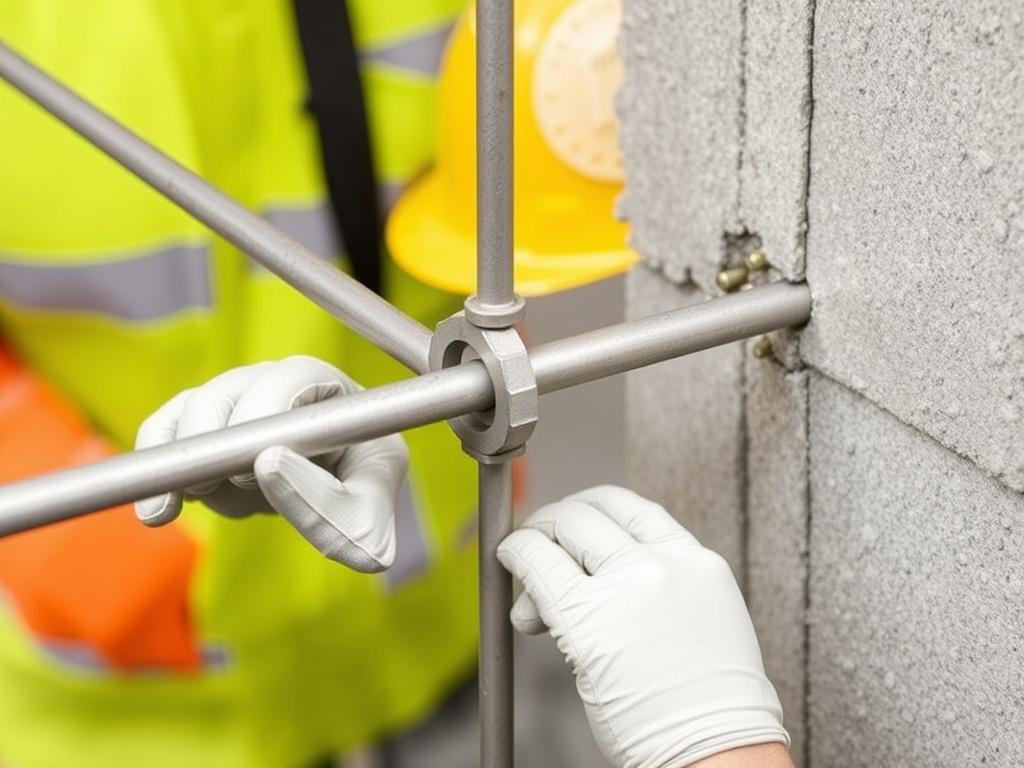
Equip the crew with the right tools; a handful of reliable tools multiplies productivity. Basic hand tools include bolt cutters, rebar cutters, benders, pliers, and chalk lines. Add a powered rebar tier for larger pours to speed tying, and keep spare batteries and tie wire accessible.
Wire options matter. Standard black annealed tie wire is common and inexpensive. For marine or aggressive environments, consider galvanized or stainless tie wire. Mechanical ties and specialized clips can also be used, but follow the manufacturer’s installation instructions and the project’s acceptance criteria.
Rebar chairs, spacers, and bolsters form the invisible scaffolding that holds the mat at the correct cover. Polymeric chairs resist rust staining of the concrete and are lighter to handle, while steel chairs are often used where loads are higher. Choose chair type to match site conditions and code requirements.
Quality materials save time. Reject bent or kinked bars, watch for excessive mill scale when bonding is critical, and ensure bars meet grade and marking requirements from the supplier. Deliveries should include mill test reports when the project specifies them.
Suggested on-site tool list
- Rebar cutters and hand benders
- Rebar tier (battery-powered) and pliers
- Tie wire (black annealed, galvanized, or stainless as required)
- Chairs, spacers, and bolsters of appropriate types
- Chalk line, tape measure, permanent markers
- PPE: gloves, eye protection, hard hat, steel-toe boots
Placing rebar: sequencing and positioning
Place rebar in a controlled sequence that respects the pour schedule. Start with bottom mats or lower courses, install chairs and supports, and then place top mats. Stacking bars horizontally reduces the chance of misalignment when placing the next layer.
Maintain correct spacing. Use the bar schedule and plan details to set center-to-center distances, clear of interference from embedded items. When placing multiple layers, ensure the vertical separation between layers meets the drawing’s clear distance and does not rely solely on tied intersections.
Avoid dragging bars across fresh forms or adjacent mats. Dragging displaces chairs and leads to variable cover. Lift and set bars, using man-power or mechanical aids for larger diameters and long lengths.
When working in congested regions, pre-fabricate cages or subassemblies on a flat area and install them as a unit. Prefabrication reduces onsite tying time and improves quality, especially for complex footings and column cages.
Handling laps and splices
Splices must follow the engineer’s specification—lap length, mechanical coupling, or welded splice. Where lapping is allowed, stagger splices between adjacent bars and avoid locating multiple splices in the same cross-section where possible. Mechanical couplers are useful when space or alignment prevents proper laps.
Keep clear records of splice locations. During inspection, easily identifiable splice tags or markings speed the process and prevent missed or insufficient splices from being buried under concrete.
Tying techniques and knot types
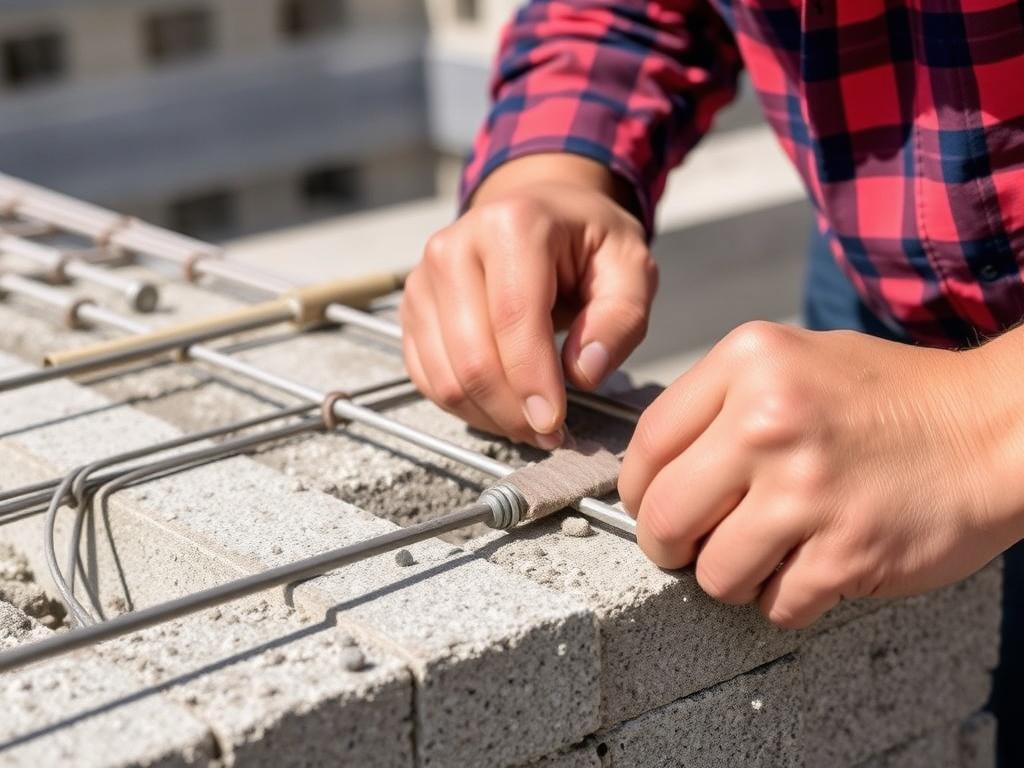
Tying rebar is a craft that blends speed and security. A proper tie holds two or more bars firmly without bending or crushing the bar, and it must resist the forces of concrete placement and vibration. The goal is a consistent, compact knot placed at the intersection, not a loose loop.
Common tie knots include the square wrap, saddle tie, figure-eight, and the wrap-and-twist. Each has advantages: saddle ties are quick and efficient for crossing bars, while figure-eights grip multiple bars in a congested intersection. Mechanical tie heads provide uniform tension and speed but require power and maintenance.
Use the right length of wire and don’t over-twist. Over-twisting can cut wire and create sharp ends; under-twisting yields weak ties. Aim for a consistent number of turns and a firm finish so ties lay flat and won’t snag clothing during subsequent work.
Step-by-step: making a reliable hand tie
- Cut a 10–12 inch length of tie wire (adjust length by tie location and operator preference).
- Wrap the wire around the intersection once or twice, depending on cross-section, with even tension.
- Cross the two ends over and wrap one end around the other, finishing with two to three twists with pliers for a neat knot.
- Snip the excess wire close to the knot and tuck any sharp ends away from the concrete surface or place them downward to avoid poking workers.
Using powered tying tools and mechanical ties
Battery-powered rebar tiers dramatically increase productivity on larger pours. They deliver consistent tie counts and can tie hundreds of intersections per battery charge. Train operators and keep a charged spare battery to avoid delays.
Mechanical ties and clips are useful where specified or where conditions make hand tying impractical. They provide consistent tensile strength and are often faster for heavy congestion. Follow manufacturer torque or application guidelines and ensure compatibility with rebar coatings such as epoxy.
Mechanical solutions are not a substitute for good layout. Even with a powered tool, poor bar positioning, inadequate chairs, or wrong splice locations won’t be corrected by tying hardware.
Supports, chairs, and ensuring correct cover
Chairs and spacers are small but crucial elements that set the concrete cover and preserve the rebar’s alignment. Use chairs where the load is light and bolsters for heavier mats. Wherever possible, place chairs directly under intersections for greater stability.
Plastic chairs resist rust staining and can be rated for specific loads; however, in some structural elements steel or concrete block supports are specified. Match the support capacity to the bar diameter and the concrete slump you anticipate.
Measure cover frequently during placement. Use a simple gauge or template to check distances from the top and sides. Inconsistent cover is a frequent failing at inspection and is easily avoided with routine checks during placement.
Comparison of common chair types
| Type | Best for | Pros | Cons |
|---|---|---|---|
| Polymer (plastic) | General slabs and walkways | Lightweight, rust-free, economical | Lower compressive capacity in point-loaded spots |
| Steel | Heavy mats, industrial slabs | High load capacity, durable | Can rust and stain if exposed |
| Concrete/brick bolsters | Large cast-in-place footings | Stable, predictable cover | Labor-intensive to place |
Safety and handling of rebar
Rebar is heavy and often oddly shaped, so physical safety must be a daily priority. Wear gloves to reduce cuts and abrasions; use eye protection when cutting or twisting wire. Ensure everyone has boots with puncture-resistant soles and that long bars are handled with two or more people or mechanical aids.
Secure long offcuts and free ends. Loose rebar on a walk path is a tripping hazard and can puncture tires or feet. Stack bars neatly by size and length, with timber separators to prevent rolling and to make handling easier.
Cutting and bending produce flying debris and noise; provide hearing protection and ensure guards on grinders and saws are in place. Keep a first-aid kit and a plan for dealing with puncture injuries because rebar can deliver deep, contaminated wounds if someone slips.
Concrete placement and protecting rebar during pour
Coordinate with the concrete crew before the pour. Confirm the timing, concrete slump, and method of placement. High slump or pumping can move light bars and chairs; plan to add temporary bracing or use heavier chairs where displacement is likely.
Consider the pour sequence to minimize disturbance. Place concrete against forms or previously poured areas in a way that reduces flow over unsupported spans of rebar. Use chutes and tremie methods to control flow in deep elements or around congested cages.
During vibration, watch for bar lift. Proper tying spacing and occasional spot-ties or cross-bracing prevent mats from floating upward. If bars begin to move, stop placement and re-secure the affected area before continuing.
Common mistakes and how to avoid them
One of the most frequent errors is inadequate cover. This often happens when chairs are skipped to save time or when ties cut through small plastic chairs. Avoid this by insisting on chair placement verification and by using chairs appropriate to the load.
Another common issue is overcrowding at intersections, which makes concrete consolidation difficult. Where congestion is unavoidable, coordinate with the design team for alternative detailing, or consider slab adjustments and added construction joints.
Improperly placed splices are also prevalent. Splices placed at high-stress sections like column faces without mechanical coupling can be a serious oversight. Mark splice locations on the forms and have an inspector confirm them before pour.
Inspection, documentation, and quality control
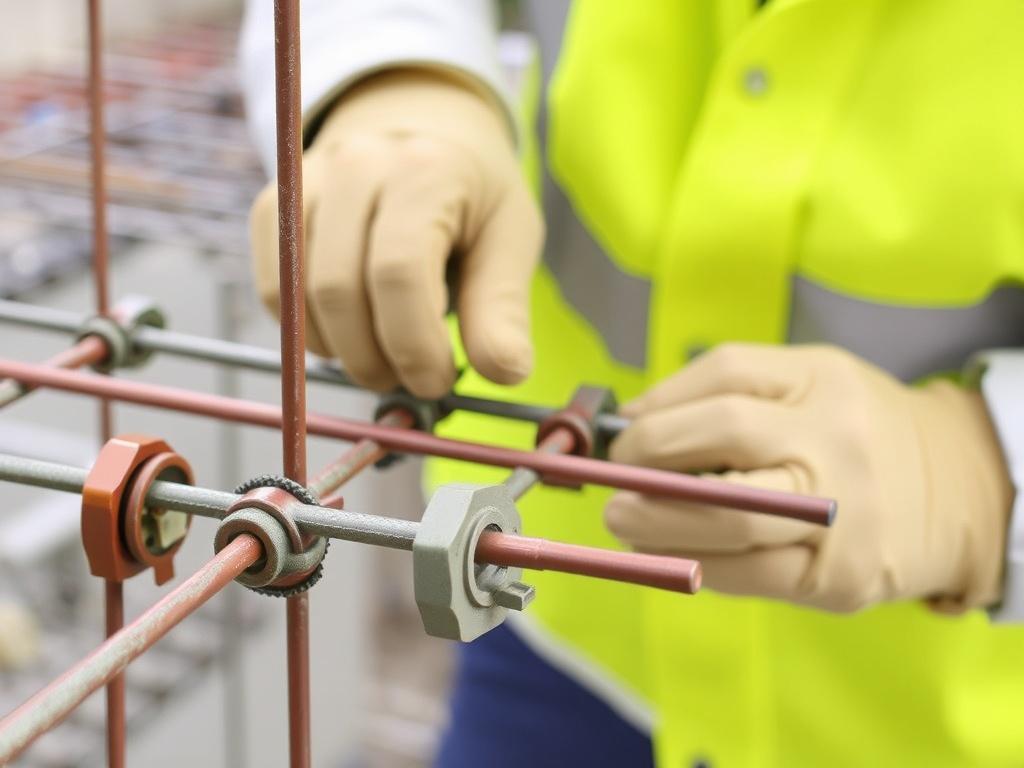
Inspection shouldn’t be an afterthought. Schedule formal inspections for critical milestones: post-placement of bottom mats, post-tying of top mats, and immediately before pouring. Use checklists to avoid skipping items and maintain photographic records for the project file.
Document deviations and corrective actions. If a bar must be relocated for site reasons, record the change and have the engineer approve the modification in writing. Documentation protects you and keeps the structural intent intact.
Train crews on tolerances and acceptance criteria. Simple things—bar spacing tolerance, cover tolerances, allowable misalignment—should be posted in the trailer and reviewed at the start of each shift. Consistency reduces rework and keeps inspection cycles moving smoothly.
Inspection checklist (sample)
- Verify bar sizes and quantities against the bar schedule
- Confirm correct cover using a gauge
- Check laps/splices and mechanical coupler installations
- Ensure chairs are placed per plan and are not crushed
- Review tie types and consistency of ties at intersections
- Document any deviations, photos and engineer approvals
Corrosion protection and special coatings
Concrete cover isn’t the only corrosion defense. In aggressive environments use epoxy-coated rebar, galvanization, or stainless steel where specified. Each option has tradeoffs: epoxy resists corrosion but can be damaged during handling; stainless is durable but expensive.
When using epoxy-coated bars, avoid tying directly with bare steel wire where the wire could create a corrosion cell through contact points. Use compatible tie materials or insulating spacers to prevent galvanic action. Follow manufacturer recommendations for handling to prevent coating damage during bending and cutting.
For retrofits or repairs, consider cathodic protection or corrosion inhibitors to extend life. Consult the structural engineer and a materials specialist to choose the most cost-effective strategy for the exposure conditions you expect.
Working in congested and complex areas
Columns, pile caps, and heavily reinforced beams are the places where patience and planning pay off. In those zones, pre-assemble cages in a clean area and lift them into place. Use pre-welded or shop-fabricated cages when the schedule and drawings permit.
Consider temporary bracing and spacers during handling and placement. Larger cages are prone to tilting and shifting; bracing ensures they remain square and within required tolerances as they are set on chairs or bolsters.
When field-fabrication is the only option, bring in an extra helper to manage long bars and to hold alignment while the second worker ties. Congested ties take longer per intersection—plan man-hours accordingly and don’t short the crew on time.
Prefabrication and off-site assembly
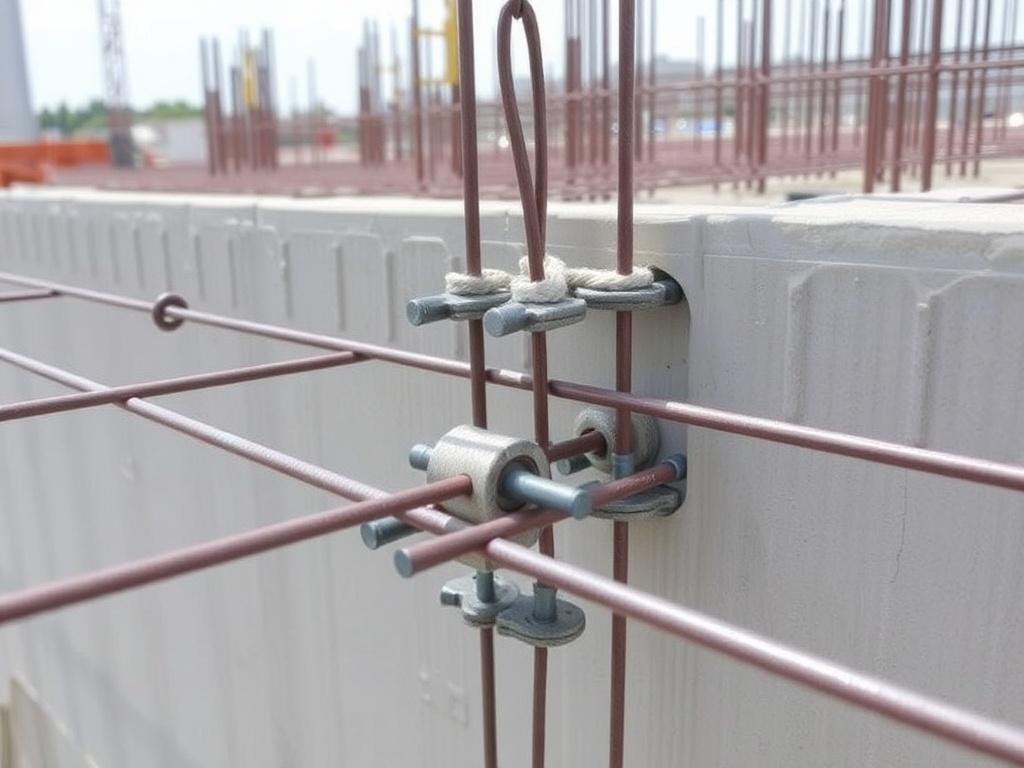
Prefabrication of rebar cages in a yard offers higher quality control and faster onsite installation. Cages can be welded or tied in controlled conditions, inspected, and lifted into place quickly. This approach reduces time spent working at heights or in confined trenches.
Transport and handling of prefabricated cages require planning for crane capacity, rigging points, and site access. Verify that cages will fit through access gates and that cranes have reach and lift capacity for both weight and geometry.
When using prefabricated elements, make sure splice and connection details are clearly labeled and that as-built records match the design. A mis-labeled cage can force field rework that negates the time saved in fabrication.
Advanced considerations: seismic and high-load detailing
Structures in seismic zones demand special attention to stirrup spacing, hooks, confinement reinforcement, and continuity. Codes and design details often call for closer spacing of transverse reinforcement and specific hook configurations to ensure ductile behavior during events.
For heavy loading or unusual geometries, consult the structural drawings closely and check for special requirements like headed bars, mechanical splices, or larger clearances. Don’t improvise on critical sections—get an engineer’s approval before deviating from the plan.
In many modern projects the detailing is complex; invest time in pre-pour reviews with the design team. A quick mark-up session on-site with the engineer can resolve ambiguous details and prevent costly corrections after pour.
Real-life examples and lessons from the field
On one small commercial project I worked on, a hurried crew skipped a layer of chairs to save time. The top mat floated during the pour, reducing cover by nearly an inch in several places. That job required a partial removal and repair, costing more than the time saved in skipping the chairs.
Another memorable lesson came from a congested beam-column intersection where we prefabricated a cage in sections. Lifting three sub-assemblies into place and welding final ties brought the job back on schedule and improved final alignment. Prefabrication turned a chaotic day into a predictable sequence.
Those experiences underline a simple truth: small investments in proper supports, prefabrication, and inspection almost always pay dividends in time saved and longevity gained.
Practical time-saving tips without compromising quality
Use color-coded flagging or tags to identify bar sizes and splice locations. Visual management reduces the time spent counting and verifying. It also helps inspectors quickly confirm that bars are where they should be before concrete arrives.
Train at least two crew members in reading schedules and interpreting details so decisions can be made on site without waiting for the foreman. Cross-training improves flexibility and reduces downtime when questions arise during a pour.
Keep a small set of spare chairs, couplers, and tie tools on site. Waiting for a delivery of missing chairs or a damaged battery pack kills momentum. A well-stocked trailer keeps the job moving and avoids short-term shortcuts that become long-term problems.
Final thoughts on consistent practice and craftsmanship
Placing and tying rebar is a skilled trade that rewards attention to detail. A steady routine—inspect, measure, tie, verify—creates predictable results. When the basics are habit, crews can focus on the tricky parts instead of repeatedly correcting avoidable errors.
Encourage a culture where questions are asked before work proceeds. It costs nothing to confirm a splice or an elevation and everything to fix a buried mistake later. Good communication between the form crew, rebar crew, concrete contractor, and inspector is the backbone of a successful pour.
Keep records, use checklists, train consistently, and choose materials and methods suited to the job’s environment. With these practices in place, the reinforcement you place and tie will serve the structure effectively for the life it was designed to have.
Follow these steps and habits and you’ll notice fewer delays, smoother inspections, and concrete that behaves the way it should. In the end, careful placement and secure tying are more than craft—they’re stewardship of the built environment, one secure intersection at a time.