Pouring concrete footings and foundations: a contractor’s guide is meant to be a practical companion for the contractor who wants fewer surprises and better outcomes. This article walks through the full sequence—from site evaluation and design basics to pouring, curing, and handing over a job—without stopping at theory. Expect actionable checklists, real-world tips from the field, and the common mistakes that eat time and margin.
planning and site evaluation
Successful foundations start long before the concrete truck arrives. Walk the site with a clear checklist: topography, drainage patterns, existing vegetation, underground utilities, and access for crews and equipment. A small oversight at this stage—like a hidden sewer line or a steep access road the truck can’t navigate—can stop a pour cold.
Soil behavior determines much of the design. Even on seemingly firm ground, pockets of soft fill, peat, or high water tables can change footing dimensions or require soil improvement. If you haven’t had the soil tested, budget for at least a basic geotechnical report on anything larger than a simple slab-on-grade.
understand loads and foundation types
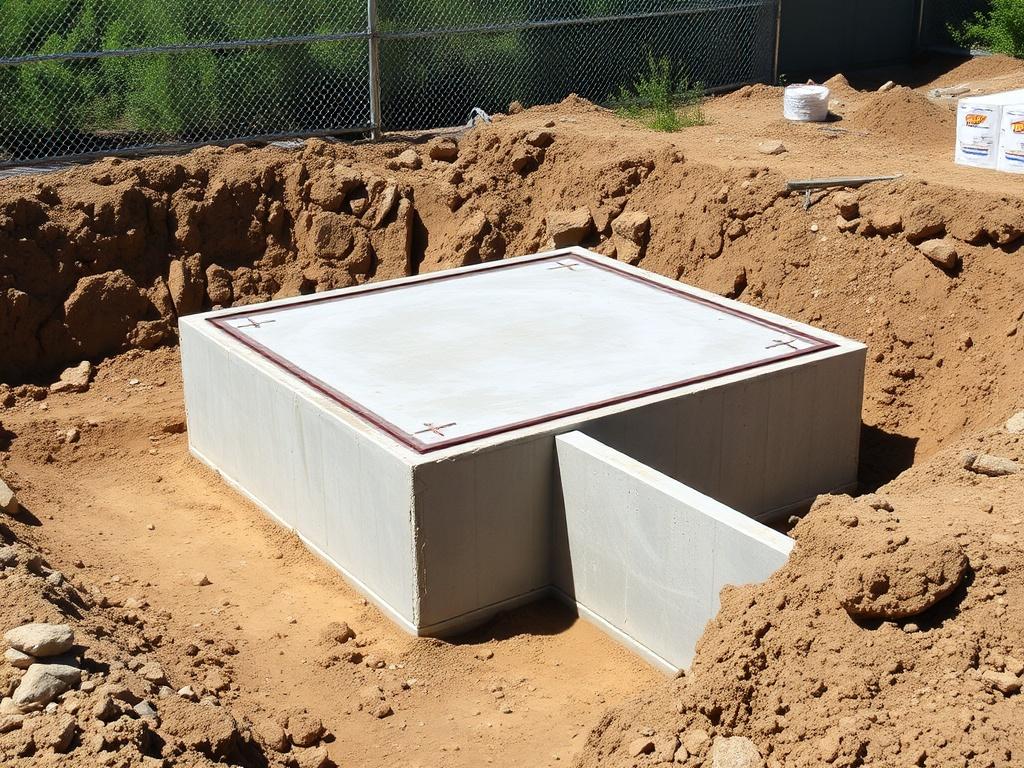
Match the foundation type to the structure’s loads and the site conditions. Continuous wall footings, isolated pad footings, combined footings, and mat foundations each have a place. For small residential structures, strip footings under load-bearing walls are common; larger structures or poor soils may call for a raft or piles.
Load paths must be continuous and traceable from roof to footing. Know the tributary areas, the live and dead loads, and how lateral forces are resisted. If the job has unusual loads—heavy masonry, equipment pads, or concentrated columns—factor these into footing sizing early.
soil investigation and tests
A hole, a hand auger, and basic bearing tests are better than guesswork. For most residential jobs, a single boring with standard penetration test (SPT) or a hand auger and a simple plate-bearing test gives useful direction. For anything commercial or uncertain, order a full geotechnical report with recommended allowable bearing pressures.
Permeability, shrink-swell potential, and frost susceptibility are all key parameters. High clay content, organic soils, or shallow groundwater often require deeper footings, drains, or soil replacement. Document everything and attach soil reports to the job file for permit and quality control purposes.
local codes, permits, and inspections
Codes set minimums; local jurisdictions can add stricter requirements. Check foundation depth relative to local frost lines, minimum rebar sizes, anchor bolt spacing, and required inspections before pouring. Permits typically require engineered drawings for anything beyond a basic single-family footing.
Inspections are not just bureaucratic hurdles—they’re a check that your substrate, formwork, and reinforcement are correct before concrete covers them. Coordinate with the inspector: have rebar tags, layout stakes, and shop drawings ready so approvals go quickly.
design considerations that save time and money
Design choices influence cost, constructability, and durability. Optimize footing widths and depths to match loads and constructability rather than over-designing “just to be safe.” Overly large footings cost more and take longer to excavate; under-designed ones fail and cost far more in remediation.
Where repetition exists, design for repetition. A uniform footing layout speeds forming and reduces waste. If loads vary significantly, consider isolated pads for heavy points and continuous footings elsewhere to balance material and labor efficiency.
footing size, depth, and typical values
Footing sizes depend on bearing capacity and superimposed loads. As a rule of thumb, light residential walls on competent soils often use 12- to 24-inch-wide continuous footings, while column pads can range from 2 to 4 feet square depending on loads. These are starting points—confirm with structural calculations and local code.
Depth must consider frost penetration and any soft surface soils. In frost-prone areas, place footing bottoms below local frost depth and on undisturbed or compacted subgrade. Where frost depth is shallow, temporary insulation or engineered systems may permit shallower footings—but only under engineered design and local approval.
Typical application
Typical footing width (starting point)
Notes
Light residential wall
12–24 inches
Depends on soil bearing capacity; reinforce as required
Two-story house load-bearing wall
18–30 inches
Often 8–12 inches thick; check structural loads
Column pad (small)
2–3 feet square
Thickness varies; may need thicker pad or beams
Mat/raft foundation
Full area
Used for poor soils or heavy loads
frost depth, drainage, and capillary action
Frost heave can lift a well-built structure if footings and backfill are not handled properly. Drainage away from footings, elimination of frost-susceptible fines, and proper compaction reduce risk. Use clean granular backfill in the first several feet where freeze-thaw cycles are a concern.
Capillary rise from a high water table can keep soil moist and reduce effective bearing; install perimeter drains or choose sub-slab membranes where needed. Slope the site away from foundations and design surface drainage so water does not pool next to footings.
reinforcement: what, where, and why
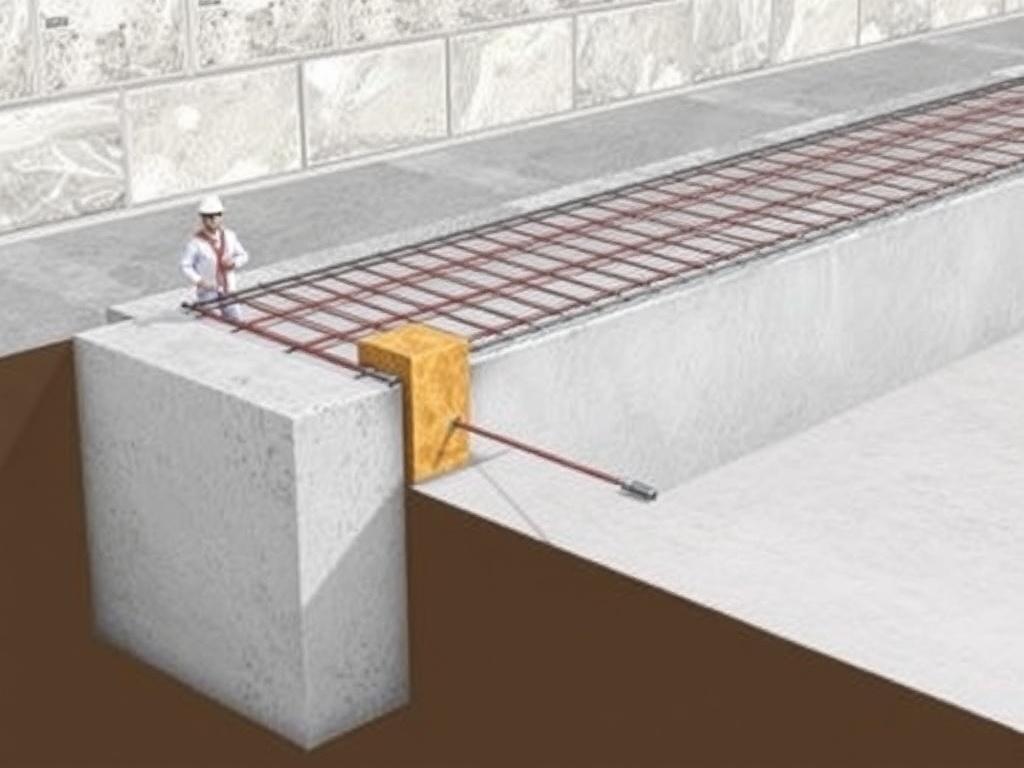
Rebar in footings controls tensile stresses, cracks, and differential movement. Typical practice places longitudinal bars near the top and bottom faces of continuous footings to resist bending, with stirrups or ties in column footings for shear. Always follow structural drawings for bar sizes and spacing.
Place chairs or concrete blocks to maintain the specified clear cover and avoid embedding chairs directly in plastic concrete when possible. Laps, splices, and development lengths must meet code—improvised splicing on-site can lead to weak spots under load.
materials and concrete mix fundamentals
Your concrete mix dictates strength, durability, and workability. For most footings, 3,000 to 4,000 psi mixes are common, with air entrainment added for freeze-thaw resistance when exposure warrants it. Chemical admixtures—plasticizers, retarders, accelerators—help tailor the mix to temperature and placing challenges.
Aggregate gradation affects pumpability and segregation. Use well-graded aggregates to minimize voids and reduce cement paste demand. Avoid mixes that are too wet to improve finish and reduce shrinkage unless you need extreme workability for complex pours.
choosing concrete strength and additives
Specify compressive strength based on design loads and exposure class; common residential footings often call for 3,000–4,000 psi at 28 days. In aggressive soils or where chlorides are present, consider higher strength and supplementary cementitious materials like fly ash or slag for improved durability.
Admixtures can fix a lot of on-site problems. Use set retarders in hot weather, accelerators in cold, and water reducers to maintain slump with less water. Keep a record of admixture types and doses—repeatability is essential across multiple pours.
ordering, batching, and delivery logistics
Coordinate truck arrival windows with crew and pump availability. Over-ordering wastes money and under-ordering invites cold joints and delays. Confirm batch sizes, slump, and admixture additions with the plant and leave room for contingency—plan for a 5–10% overrun on large pours.
Track the truck’s ETA and verify mix tickets on arrival. Check the slump on-site and make adjustments before placing. If pumping, keep hose lengths known and ensure the pump’s capacity matches the pour rate to avoid overloading and delays.
formwork and layout best practices
Formwork sets the footprint of your foundation and must be square, true, and rigid. Use straight, well-braced boards or prefabricated forms sized to give the required concrete cover. Remove loose soils and compaction issues before setting forms so the formwork references a stable base.
Layout accuracy at this stage prevents costly rework. Batter boards, string lines, and laser levels let you locate footings within a fraction of an inch over reasonable distances. Always snap chalk lines and measure diagonals to confirm squareness before building forms.
setting forms and batter boards
Batter boards provide a fixed reference even when excavation goes deep. Set them outside the excavation and transfer offsets with a tape and nail or transit. Once batter boards are in place, you can remove forms or perform layout checks repeatedly without re-measuring.
When building forms, remember to allow for anchor bolt placement and any embedment boxes. Form ties and bracing should resist concrete thrust; overdesign bracing for vibration work when power tools will be in use to avoid bulging or blowouts.
ensuring level, alignment, and differential heights
Footings must be at the correct elevation to accept wall systems and to maintain consistent load distribution. Use a laser level or total station to set elevations and double-check critical corners. For stepped foundations on slopes, set clear step heights and record elevations to prevent surprises during wall framing.
When tolerances are tight, use shims or groutable pocket blocks to adjust during wall erection. Recording elevation points on the job sheet speeds later trades and reduces finger-pointing at handover.
reinforcement placement and embedments
Reinforcement needs to be clean, correctly positioned, and stable before the concrete arrives. Secure bars with ties and blocks so they don’t float during the pour. Pay special attention to the zones around columns and beam intersections—errors there are costly to fix.
Embed plates, anchor bolts, and rating tags must be placed precisely. Bring templates for anchor bolt patterns and verify bolt heights and projections relative to finished slab or wall surfaces. If anchors are off, you face field drilling, epoxy anchors, or worse—structural compromise.
rebar tying, chairs, and spacing rules
Tie rebar securely and in a way that allows for minimal movement. Use double-over ties where slippage might occur and clip on chairs or wire them to the bottom bars to ensure designed cover. Maintain specified clear cover with neoprene or plastic chairs; metal chairs can corrode and stain concrete if left embedded in certain exposure conditions.
Spacing matters for load distribution and crack control. A simple rule: keep bar spacing less than three times the footing thickness for most continuous footings, but always follow structural drawings. Avoid grouping bars without structural justification—congestion leads to poor consolidation and honeycombing.
placing anchor bolts and embeds
Anchor bolts should be installed in templates and braced to remain plumb during pour. Verify layout with the structural plan and check distances to slab edges and joints. When using post-installed anchors later, follow manufacturer guidance and accept the higher labor and material cost compared with cast-in-place anchors.
Label embedded items and take photos for records. Photos help the inspector and serve as a reference if a future owner or maintenance crew needs to know where utilities or bolts are located.
the pour: scheduling, technique, and quality
Pour day requires orchestration: trucks, pumps, crew, inspectors, and weather. Start early, confirm all materials are on site, and run a short briefing with the crew to cover sequence, safety, and contingency plans. A missed pre-pour checklist item is the most common root cause of delays.
Adopt a methodical placing sequence. Pour continuous footings in manageable segments with continuous vibration and consolidation. For pads, keep the pour uniform and avoid cold joints at column locations unless planned and reinforced.
scheduling and logistics
Reserve concrete trucks and pumps well in advance and plan for traffic, plant delays, and washout areas. Determine a concrete truck staging area that permits access for the return trip and ensures wash water doesn’t contaminate soil or storm drains. Coordinate with the ready-mix plant on mix design, delivery increments, and the expected pour duration.
Bring extra tools—shovels, rakes, brooms, and spare vibrators. It’s quicker to replace a tool than to stop the pour while you source one. Keep communication lines open between the pump operator and the foreman to avoid surges and over-pumping.
placement technique: vibration, consolidation, and avoiding cold joints
Consolidation removes trapped air and helps achieve full contact with reinforcement. Internal vibrators are standard and should be used in overlapping strokes to avoid creating voids. Avoid over-vibrating near form faces to prevent segregation and bleeding.
Cold joints occur when fresh concrete meets concrete that has set enough to resist bonding. Plan pour sizes and sequence so that interfaces are structurally acceptable and well-bonded. When cold joints are unavoidable, roughen the existing surface and apply bonding agents or keyways per specification.
handling cold and hot weather pours
Cold weather reduces set time and early strength. Use heated water, warm aggregates, and accelerators as permitted by code. Protect fresh concrete from freezing for the first 48–72 hours with insulated blankets or temporary enclosures and allow longer cure times before load application.
Hot weather increases slump loss and evaporation. Shade materials, use retarding admixtures, and schedule pours for cooler parts of the day when possible. Keep water for curing and avoid plastic shrinkage by covering surfaces quickly after finishing.
finishing, curing, and quality control
Footings usually require minimal finish—clean, well-formed faces and true elevations. Screeding to level, checking elevations, and removing high spots are the main tasks. Avoid over-troweling; excessive finishing on foundations can close the surface and affect keying for subsequent concrete or masonry.
Curing is non-negotiable. Keep the concrete moist to allow hydration; typical methods include wet burlap, curing compounds, or continuous misting for lighter pours. Poor curing reduces long-term strength and increases shrinkage and cracking risk.
screeding, bullfloating, and early finishing for footings
For continuous footings, screed rails and strike-off tools get you to elevation quickly. Bullfloating immediately after screeding removes ridges and compacts the top layer; follow with light finishing only when bleed water has receded. For pads and grade beams, maintain a slightly roughened top if masonry or slab is to be bonded later.
Keep a clean edge and avoid dropping concrete from excessive height directly onto rebar to prevent segregation. Use a funnel or tremie for deep columns and pads to place concrete more gently and maintain uniform consolidation.
curing methods and timeframes
Curing time depends on mix and temperature but generally maintain moisture for at least seven days for normal cement mixes and longer for high-performance or low-cementitious mixes. Membrane-forming curing compounds are effective when applied uniformly and permitted by the downstream trade; otherwise, use water curing for the most reliable results.
Record curing start and end times, ambient conditions, and actions taken. These records support warranty claims and provide evidence in the event of later distress linked to curing inadequacy.
testing, documentation, and on-site quality control
Routine tests include slump, air content, and cylinder or cube molds for compressive strength. Take cylinders from representative batches and cure them under controlled conditions for laboratory testing. Missing or incomplete test records complicate claims and make it hard to diagnose problems later.
Maintain a daily log with mix tickets, weather, crew, and any deviations from plan. Photos at key milestones—formwork, reinforcement, pour, and finish—are invaluable. They reduce disputes with owners and create a professional job archive.
common problems and how to fix them
Problems typically fall into three categories: material, workmanship, and environmental. Many failures are avoidable with a basic checklist and a disciplined crew. When issues appear, stop and assess rather than patching over a hidden defect.
Common visible defects—honeycombing, segregation, and excessive cracking—point to specific root causes such as poor consolidation, overly wet mixes, or insufficient curing. Address these systematically and document corrective actions.
honeycombing and segregation
Honeycombing usually results from poor consolidation or congested reinforcement that prevents concrete from flowing into voids. Use additional internal vibration, reduce congestion, or temporarily modify reinforcement placement when possible. For severe honeycombing, remove and replace the affected concrete to the next intact plane.
Segregation—coarse aggregates separating from paste—occurs with high drop heights, overly fluid mixes, or excessive vibration at form faces. Control placement height, adjust mix consistency, and use tremies for deep or congested areas to prevent this problem.
cracking, shrinkage, and control joints
Plastic shrinkage cracks form when surface moisture evaporates too quickly. Prevent them with wind breaks, misting, evaporation retarders, and timely curing. For longer-term shrinkage control, specify fibers or control joints as designed in slabs; footings typically rely on reinforcement and continuity to manage shrinkage forces.
Settlement cracks indicate problems with subgrade compaction or bearing. If settlement is detected early and is localized, underpinning or grouting may be options. However, prevention—proper compaction and verified bearing at the time of pour—is far less expensive than remediation.
voids and poor consolidation beneath rebar
When rebar is congested, concrete can fail to fully encapsulate bars, leaving voids that reduce capacity and lead to corrosion. Space bars to allow vibrator access, or use external consolidation aids like form vibrators. If voids are found after removal of forms, repair by patching with a bonded repair mortar and follow manufacturer surface preparation instructions.
Inspect freshly stripped forms thoroughly and use nondestructive testing like chain drag or low-stress impact where suspect areas exist. Early detection prevents larger structural problems later.
safety, equipment, and crew management
Concrete work is physically demanding and can be hazardous. Prioritize PPE: gloves, eye protection, respirators for dusty work, and appropriate footwear for wet conditions. Train crews on safe vibrator handling, manual lifting, and traffic control around mixers and pumps.
Have emergency procedures in place for skin contact with wet concrete and for entrapment risks around machinery. Wet concrete burns are real—keep wash stations and neutralizing solutions available and ensure first-aid training is current.
tools, equipment, and a basic checklist
Essential equipment includes vibrators, screeds, laser or transit, shovels, rakes, pumps (if used), and measuring tools. Maintain spare vibrator heads, extra hoses, and basic hand tools on site to avoid downtime. Keep equipment logs for maintenance and replacement schedules.
Vibrators (internal and form)
Laser level / transit
Screeds, floats, trowels
Rebar chairs, ties, wire cutters
Safety gear and first-aid kit
crew roles and communication
Assign clear roles for each pour: form set crew, rebar crew, pour foreman, vibrator operator, and finishers. A single designated decision-maker should coordinate with the ready-mix plant and pump operator to control the pace of the pour. Good radios or headsets can save hours and eliminate confusion during noisy operations.
Hold a quick pre-pour huddle to confirm responsibilities, emergency contacts, and the plan for unusual scenarios. Keep communication lines open between the field and the office for logistics and documentation needs.
estimating costs, takeoffs, and productivity benchmarks
Estimating material and labor accurately starts with detailed takeoffs and realistic productivity rates. For simple continuous footings, a well-practiced crew can form, reinforce, and pour at predictable rates; for complex or congested layouts, factor in significant time increases. Always include contingency for unforeseen site conditions.
Waste factors are real: ordering 5–10% extra concrete is common, and extra rebar and formwork materials should be accounted for. Track actual usage on early jobs and adjust future estimates to reflect local conditions and crew speed.
Item
Typical unit
Common waste factor
Concrete
cubic yard
5–10%
Rebar
ton or lb
2–5%
Form lumber
board ft
5–10%
crew productivity benchmarks
Productivity varies widely by crew experience, site constraints, and weather. A productive three-person forming crew can set continuous footings at roughly 50–200 linear feet per day depending on complexity, while pour crews are usually limited by pump and truck rates. Use historical job data to create realistic schedules and avoid optimistic “best case” timelines.
Measure performance on each job and refine your units of production. Over time you’ll develop robust standards for bidding and scheduling that reduce risk and improve margins.
real-life project examples and lessons learned
On a small hilltop job I managed, early planning identified a shallow ledge under one corner. Rather than blasting and delaying, we redesigned that corner to a small isolated pad footing keyed into sound rock. The redesign cost less than anticipated and avoided schedule disruption—proof that flexibility in design planning pays.
In another job during a late spring thaw, an afternoon pour began on damp, partially frozen subgrade. We stopped, warmed the subgrade, added thermal blankets, and used an accelerated mix. The extra day and the small premium on admixtures prevented a large-scale repair later and taught the crew the value of resisting the temptation to “just get it done.”
common client concerns and how to address them
Owners worry about cracking, cost, and long-term durability. Provide clear documentation: soil reports, design rationale, mix specifications, and curing plans. Walk clients through why certain choices—deeper footings, drainage details, or higher-strength mixes—represent value rather than unnecessary expense.
Be transparent about schedule and weather risks and include contingency clauses in the contract. Honest early communication builds trust and minimizes friction at handover.
final inspections, documentation, and handover
Before backfilling, capture as-built elevations, photos of reinforcement, and inspection sign-offs. Deliver a package to the owner that includes mix tickets, test results, and warranty notes. This level of documentation distinguishes a professional contractor and simplifies future maintenance.
Coordinate final inspector visits when forms are stripped and before any critical concealment. Verify dimensions and bolt locations against anchor templates, and correct minor deviations before closing out the job.
warranties, maintenance advice, and client education
Offer clear guidance to the client about long-term care: maintain positive drainage away from foundations, avoid planting large trees close to footings, and report any unusual movement early. Provide a short maintenance sheet with key photos and warranty terms so the client knows what to expect.
Limit warranty exposure by documenting preexisting site conditions and by specifying reasonable client responsibilities. Most structural issues trace back to drainage and site changes after handover, so education pays off.
Pouring footings and foundations demands respect for detail, sequence, and conditions. With careful planning, strict quality control, and a crew that knows the plan, what often seems risky becomes routine. Keep learning from each job: log what worked, what failed, and why, and your next foundation will be smoother, faster, and more profitable.