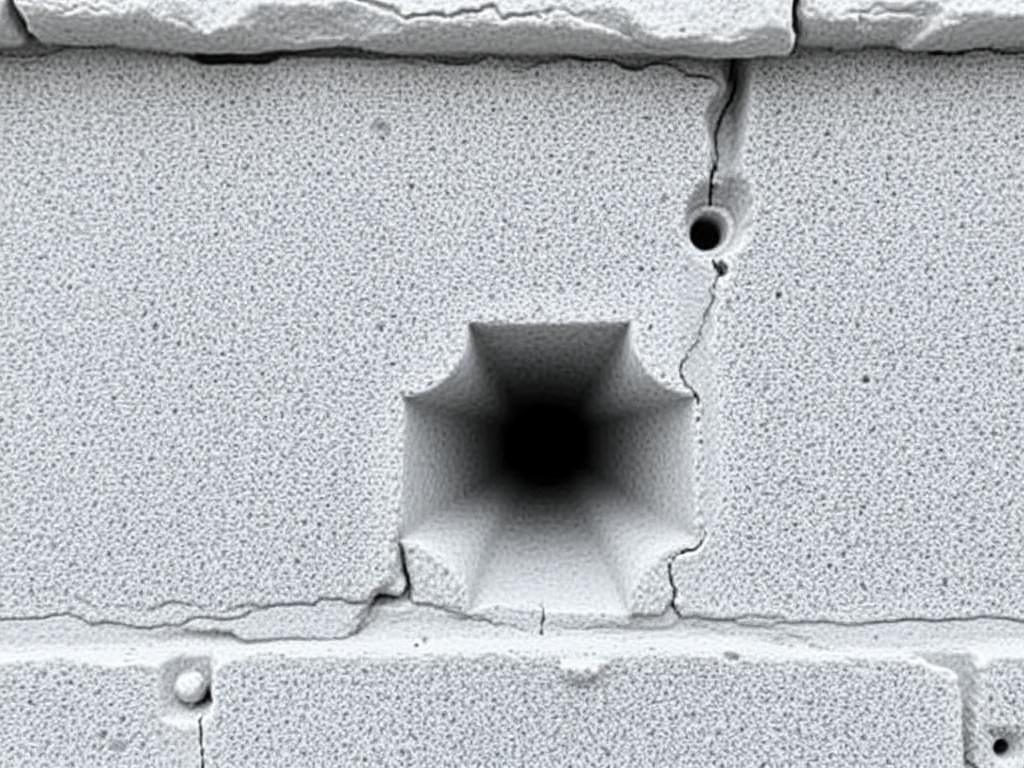
Successful concrete placement is a quiet triumph: the concrete pours, settles, and becomes solid without drama. Achieving that requires attention to one persistent problem—voids and honeycombing—which undermine durability, strength, and appearance. Effective Concrete Consolidation: Eliminating Voids and Honeycombing is not a single trick but a sequence of decisions from mix design through final curing, and this article walks through those steps with practical detail and field-tested advice.
What honeycombing and voids look like and why they matter
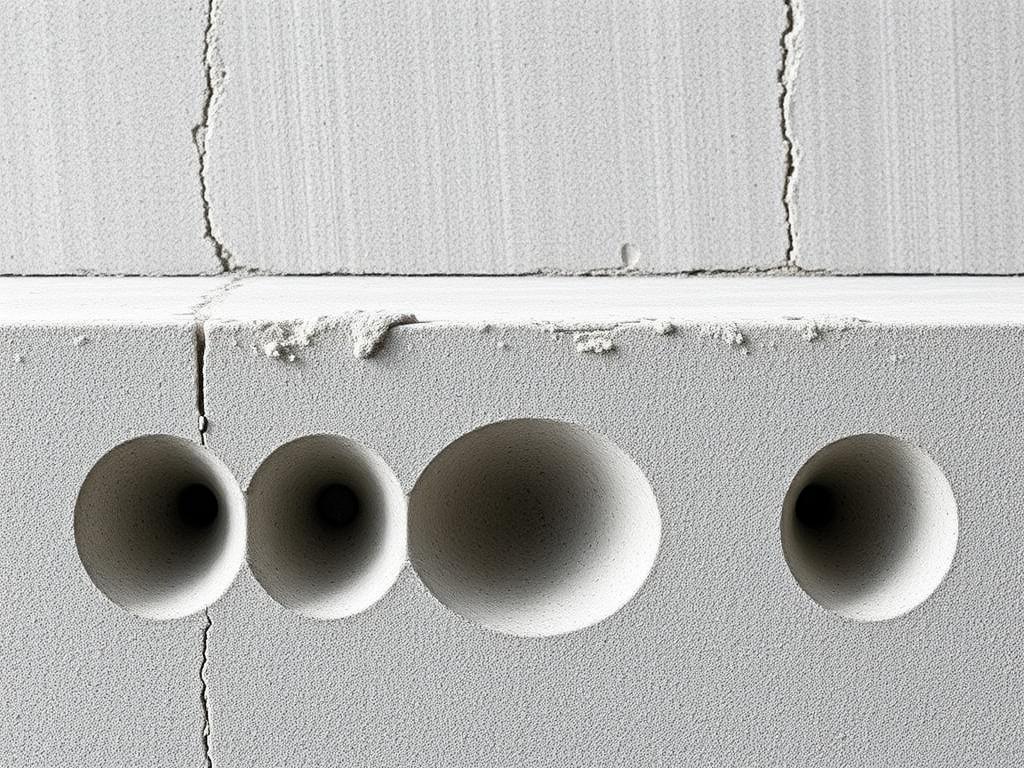
Honeycombing appears as small cavities or poorly consolidated zones in hardened concrete, often at form interfaces, corners, or around congested reinforcement. These defects are not merely cosmetic; they expose coarse aggregate, create stress concentrators, and open pathways for water and chlorides to reach steel reinforcement.
Voids reduce the effective cross-sectional area of the concrete and lower local compressive strength. Over time, freeze-thaw cycles, corrosion of rebar, and chemical attack accelerate when the concrete matrix is not dense and uniform.
Understanding where and why these defects occur helps prioritize prevention: most common causes include inadequate consolidation, poor placement techniques, overly stiff mixes, improper formwork, and congestion of reinforcement that blocks concrete flow.
Basic principles of consolidation
Consolidation means moving entrapped air and bleed water out of the concrete and seating the cement paste and aggregates against form surfaces and reinforcement. The goal is a dense, continuous matrix without pockets or gaps while preserving uniform aggregate distribution.
Timing matters: consolidation must occur when the concrete is still plastic and flowable, but not so wet that segregation will happen. The process requires energy, usually mechanical vibration or the use of self-consolidating mixtures, applied intelligently rather than excessively.
Good consolidation also protects fresh concrete from settling around reinforcement and formwork imperfections. If done correctly, it minimizes cold joints and produces a uniform surface that requires less repair work down the road.
Primary methods for consolidating concrete
There are three principal approaches to consolidation: internal vibration (poker vibration), external vibration (form vibrators), and using self-consolidating concrete (SCC). Each method has strengths and appropriate applications depending on member geometry, reinforcement density, and project constraints.
Choosing the right consolidation method begins with the placement strategy and ends with inspection. Often a combination of techniques—SCC for heavily reinforced sections combined with light external vibration for forms—offers the best outcome.
Internal vibration: how to use the poker correctly
Internal vibrators are the most widely used consolidation tool on construction sites. They work by creating a localized zone of fluidization around the head; air rises and paste fills voids while aggregates reposition to a denser packing.
Technique matters: insert the poker vertically, avoid dragging it through partially stiffened concrete, and keep the head submerged so it does not create a plastic lift or entrain air at the surface. The poker should be moved slowly between adjacent positions to allow overlapping zones of influence.
Overuse can be as damaging as underuse. Excessive vibration causes segregation—coarse aggregate sinks while paste and water separate—leading to weak, porous layers. Use short bursts of vibration and rely on visual clues: the surface should become glossy and free of bubbles for a short period before reinserting the poker elsewhere.
External form vibration: when pokers are impractical
External vibrators attach to formwork to shake the whole assembly and are valuable for thin walls, prefabricated panels, or when internal access is restricted. They transmit energy through the form into the concrete rather than into the mass from within.
Placement and distribution of external vibrators must be planned so the formwork vibrates evenly; otherwise, some zones will remain under-compacted. These units are especially useful with dense reinforcement or in situations where pokers would be too disruptive to finish operations.
Rodding, tamping, and hand consolidation
For small pours, repair patches, or shallow sections, rodding and tamping remain practical. Hand consolidation should be systematic—use overlapping strokes and sufficient energy to expel trapped air without causing segregation.
Rodding is labor-intensive and slower than mechanical vibration, but it can be more controlled in tight corners and around embedded items. Use it as a complement to mechanical methods rather than a substitute for large pours.
Self-consolidating concrete as a consolidation strategy
Self-consolidating concrete flows under its own weight and fills forms without mechanical vibration, making it ideal for heavily reinforced sections, architectural surfaces, and precast work where appearance is critical. SCC emphasizes high flowability while controlling segregation through admixtures and optimized aggregate grading.
Designing SCC requires careful use of superplasticizers, viscosity-modifying agents, and a balanced aggregate skeleton; small changes in dosage or packing can alter performance drastically. Testing for slump flow, passing ability (J-ring), and segregation resistance is essential before field use.
When SCC is used correctly, it eliminates much of the risk of honeycombing caused by blocked flow around congested reinforcement. However, SCC does not excuse sloppy placement practices—misdirected chutes, extreme drops, or blocked flow paths can still create defects.
Mix design and materials: the foundation of good consolidation
A well-designed concrete mix reduces the amount of mechanical consolidation required and minimizes segregation risk. Key variables are water-cement ratio, aggregate gradation, maximum aggregate size, and the use of admixtures like superplasticizers.
Coarse aggregate that is too large for the member thickness will bridge at the form and prevent full compaction. Match maximum aggregate size to the smallest clear spacing in the formwork or reduce it accordingly for heavily reinforced sections.
Air-entraining admixtures help freeze-thaw durability but increase the amount of air to be removed during consolidation; balance is required to achieve both durability and density. If possible, conduct trial batches to validate the combined behavior of materials under real placement conditions.
Formwork design and placement strategies
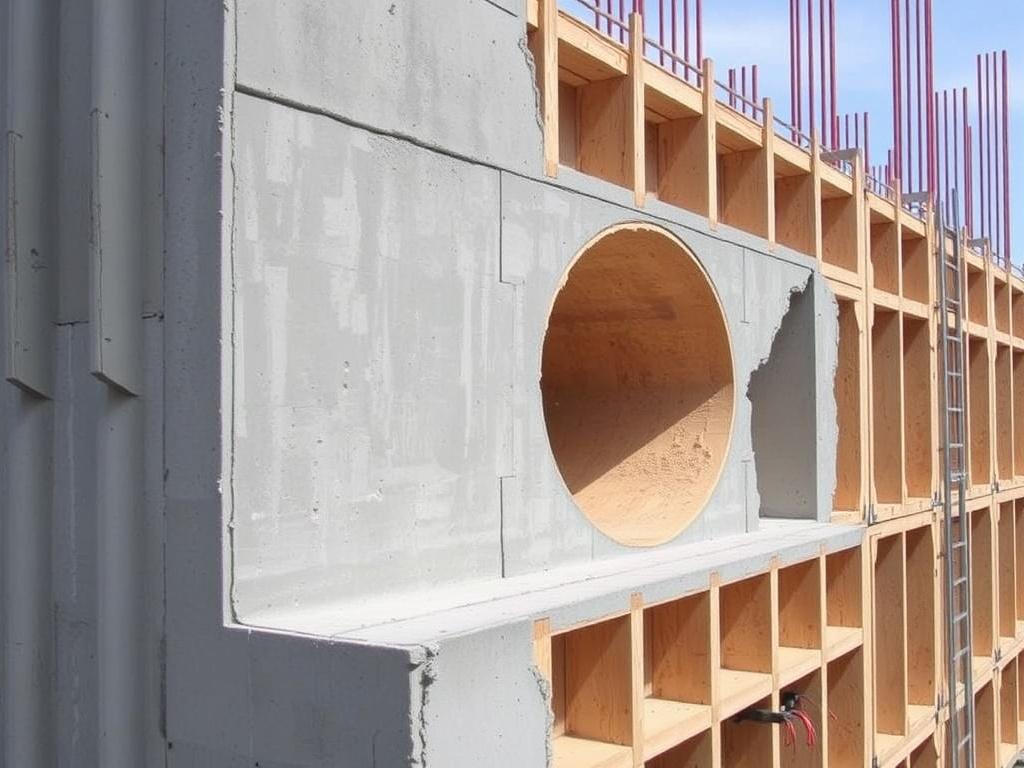
Formwork geometry and quality influence how easily concrete consolidates. Smooth, tight-fitting forms with proper bracing help transfer vibration energy efficiently and reduce leakage that can cause voids and surface blemishes.
Design forms to avoid narrow pockets and dead zones where concrete can stagnate. Where thick reinforcement or embedded fixtures are present, consider extra pour vents, staggers in placement sequence, or using SCC to improve flowability around obstructions.
Placement technique matters as much as the form itself. Limit free fall to prevent segregation; when drops are unavoidable, use chutes, tremies, or controlled pumping to direct concrete without shocking the mixture. Place concrete as close as possible to its final position to reduce the need for excessive vibration.
Equipment selection and operating parameters
Selecting the right vibrator involves matching head size, shaft length, and power to the mix and member dimensions. A head that is too small requires more insertion points and longer run times; one that is too large may be unwieldy and waste energy.
Poker vibrators are characterized by frequency, amplitude, and power; manufacturers provide recommended head diameters for given concrete mixes and thicknesses. Consult manufacturer guidelines and guidelines in project specifications rather than guessing operating parameters on the fly.
Immersion technique is key: insert the head vertically at steady intervals, allow the surface to quiet, and withdraw slowly. Avoid leaving the vibrator running while the head is outside the concrete and avoid moving it rapidly while at full power inside the mass.
Practical guidance on vibrator spacing and timing
The concept of an “influence zone” helps plan vibrator insertion. Each insertion affects a volume of concrete around the head; adjacent insertions should overlap these zones so no area remains untreated. Visual cues during placement—reduced bubbles, glossy surface sheen, and aggregate settlement—tell you the concrete has been adequately fluidized.
How long to vibrate at each position depends on the mix and location. Lighter mixes reach consolidation in a few seconds; stiffer mixes need longer. If you must choose a rule of thumb, prioritize manufacturer guidance and adjust based on observed response rather than a fixed time per insertion.
Keep records on typical times and spacing for common mixes on a project so crews learn what works. Over time, this empirical knowledge saves time and prevents under- or over-vibration across different pours and weather conditions.
Field tests and inspection techniques
Quality control starts before pouring with tests: slump for consistency, air content measurement, and unit weight or yield verification. For SCC, use slump flow, T50, and J-ring tests to confirm flowability and passing ability.
After placement, visual inspection is the first line of defense. Look for surface voids, aggregate exposure, and discoloration along form joints immediately after form removal. Early detection gives options for surface repair before the damage becomes structural.
Non-destructive evaluations such as ultrasonic pulse velocity and impact echo can detect internal voids without cutting into concrete. When concerns are localized, consider core sampling to quantify the defect depth and extent, and consult a structural engineer before major remedial work.
Common mistakes that create honeycombing
Several recurring errors cause poor consolidation: using a too-stiff mix to reduce bleed, placing from excessive height, crowding reinforcement without planning, and relying on too few vibrator insertions. Each mistake has a specific fix if identified early.
Another frequent issue is poor communication between the concrete supplier, placers, and formwork crew. If the mix differs from expected, crews must adapt their consolidation approach immediately; otherwise the least controlled variable tends to win—usually with poor results.
Ignoring manufacturer recommendations for equipment use or attempting to “double duty” a vibrator head across different mix types without recalibration invites defects. Treat each pour as a distinct operation that deserves attention rather than a routine task to rush through.
Repairing honeycombed concrete: assessing the defect
Not all honeycombing requires the same remedial approach. Shallow, nonstructural surface voids might be repaired with patching mortar, while deep or widespread defects can compromise structural capacity and will need engineering assessment and possibly partial removal and replacement.
Start any repair by chiseling out unsound concrete until you reach solid, well-adhered material. Clean the area of dust, debris, and loose aggregate, then prepare the substrate to enhance bond—this often means wetting to saturated surface dry conditions or applying a compatible bonding agent.
Use repair materials selected for compatibility with the parent concrete, considering modulus of elasticity, shrinkage behavior, and exposure conditions. For structural repairs or where reinforcement corrosion is present, consult materials specialists and structural engineers to select the right system and sequence.
Step-by-step repair procedures for common scenarios
For small surface honeycombs: remove loose material, clean and pre-wet the cavity, apply a bonding slurry, and place a polymer-modified repair mortar in layers, compacting each layer to avoid entrapped air. Finish and cure according to manufacturer instructions to prevent rapid drying and shrinkage.
For deeper or structural honeycombing around reinforcement: expose and clean corroded bars, treat or replace reinforcement if necessary, and rebuild with structural repair mortars or patched-with-inserts systems that restore section and bond. Maintain sequence and curing to rebuild intended structural capacity.
Always document repairs with photographs and scan reports. Owners and future inspectors need records showing the defect extent, methods used, and verification testing to maintain confidence in the repaired element.
Testing table: comparing consolidation methods
| Method | Best applications | Pros | Cons |
|---|---|---|---|
| Internal vibration (poker) | Slabs, columns, footings with access | Efficient, fast, controllable | Requires access; risk of segregation if misused |
| External vibration (form) | Thin walls, precast panels, restricted access | Good for thin sections and with dense reinforcement | Requires rigid formwork and careful placement of units |
| Self-consolidating concrete | Highly reinforced sections, architectural finishes | Eliminates need for mechanical vibration; good finish | Needs precise mix control; costlier materials |
Quality control checklist for each pour
Before the pour, verify the mix design, confirm aggregate gradation and maximum size, and test trial batches if unfamiliar. Ensure the supplier delivers consistent material, and record fresh properties upon arrival.
Confirm formwork integrity and alignment, check reinforcement placement and clearances, and verify access for the chosen consolidation method. Assign roles to crew members so vibrator operators, finishers, and pour supervisors coordinate timing and insertion points.
During the pour, monitor slump or slump flow continuously and watch for signs of segregation. After placement, inspect surfaces and record any areas of concern for immediate correction before forms are removed.
Training crews and building skill
Competent consolidation depends on operator judgment as much as equipment quality. Train crews to recognize proper consolidated appearance—the short-lived glossy sheen and slowing of subsurface bubbles—and how different mixes respond to the same vibration pattern.
Mock pours are an inexpensive investment: practice with the actual formwork and reinforcement configuration to learn insert patterns, spacing, and timing. Encourage feedback loops so operators and pour supervisors jointly refine methods between pours.
Keep manufacturer contact information and technical data sheets on site for vibrators and admixtures. When operators can access guidance in the moment, they avoid guesswork that leads to over- or under-vibration in critical pours.
Monitoring and documentation
Document key parameters: test results for each batch, vibrator serial numbers and operating settings, insertion times and spacing patterns, and any deviations from plan. This documentation helps if defects appear later and provides data for continuous improvement.
Photograph critical stages of the pour, especially in areas prone to congestion. These images serve as references for evaluating formwork behavior and consolidation effectiveness during and after curing.
When problems arise, a record of procedures and materials makes it easier to trace root causes and justify repair strategies. Good documentation also protects contractors and owners by showing diligent quality control practices were followed.
Dealing with congested reinforcement
Reinforcement congestion is one of the most frequent contributors to honeycombing. Address it during design and detailing: provide minimum clearances, avoid unnecessary overlaps, and use bar chairs and supports that do not block flow paths.
When dense reinforcement is unavoidable, plan for SCC or staged pours with embedded tremies to ensure concrete reaches all pockets. Avoid trying to ram concrete through congested zones with vibration alone; instead, combine flowable mixes with careful placement technique.
For retroactive issues where congestion was underestimated, selective removal of formwork to create temporary openings for placement or the use of pressure grouting may be considered, but these approaches require engineering evaluation to ensure structural integrity.
Weather considerations: cold and hot conditions
Temperature affects both workability and setting time, which in turn influence consolidation windows. In hot weather, mixes stiffen faster and may need adjustments such as retarding admixtures or cooler materials to extend workable time for consolidation.
Cold conditions slow setting and change consolidation behavior; colder concrete is stiffer and vibration may need to be more persistent, but avoid freezing water in the mix. Protect fresh concrete from freezing and adjust curing practices to ensure hydration continues uniformly.
Plan pours based on forecasted weather and have contingency measures—shading, cooling, heating, or additives—ready to preserve the fresh-state properties needed for complete consolidation without compromising long-term performance.
Noise, vibration impacts, and worker safety
Vibration equipment generates noise and hand-arm vibration that pose health risks to operators. Use modern vibrators with reduced hand-transmitted vibration where possible and require personal protective equipment including hearing protection and vibration-damping gloves.
Formwork vibration can transmit to adjacent structures causing nuisance or minor damage; schedule high-vibration activities with awareness of surrounding occupants and monitor for unusual movement or distress in nearby elements.
Safe handling also involves electrical considerations for powered vibrators, slip and trip hazards around wet placement sites, and proper lifting procedures for heavy equipment. Regular maintenance reduces unexpected failures that could compromise both safety and consolidation quality.
Costs and lifecycle benefits of good consolidation
Investing time and resources in proper consolidation reduces the need for repairs, prolongs service life, and lowers lifecycle costs. A small increment of planning and better training often prevents expensive and disruptive corrective measures later.
Self-consolidating concrete and higher-spec admixtures increase initial material costs but can save money by cutting labor, reducing rework, and improving surface finishes that require less patching or aesthetic correction. Evaluate investments on a whole-life basis rather than up-front unit costs alone.
Contractors who build a reputation for consistently dense, durable concrete command premium work and fewer disputes. Good consolidation practices are both good engineering and sound business strategy.
Personal experience: a column pour that taught practical lessons
On a recent mid-rise project I supervised, a column grid around a stairwell proved stubbornly difficult to consolidate—dense ties and embedded conduits blocked access for pokers. Initial pours produced small pockets at the corners that only became visible after form stripping.
We switched to an SCC specification for subsequent columns, arranged for external form vibrators at tight spots, and staged the pour in smaller lifts to allow paste to flow into confined zones. The combination eliminated new honeycombing, and the repair work on earlier columns was limited to cosmetic patches after careful cleaning.
The lesson was clear: anticipate congestion at design and planning stages, and be ready to use a different consolidation strategy rather than pressure operators to extract results with single-method tactics.
Sustainable choices and reducing waste
Minimizing honeycombing reduces material waste and the added carbon footprint of repairs or replacement. Designing mixes that consolidate well without excessive cement content supports sustainability goals while maintaining performance.
Efficient consolidation also eliminates the need for chemical patching in many cases, and better first-pass quality reduces downtime and rework-related emissions. Simple practices—trial batching, careful formwork, and crew training—yield measurable environmental benefits on large projects.
Consider recycled aggregates and supplementary cementitious materials with care: they can perform well but change flow and consolidation behavior. Validate any sustainable substitution through trial mixtures and field testing to avoid unintended consolidation problems.
When to involve a structural engineer
If honeycombing affects section depth, exposed reinforcement, or shows a pattern indicating potential structural loss, involve a structural engineer immediately. Some defects are superficial, but many have implications for load path and long-term performance that require technical assessment.
An engineer can prescribe the appropriate repair approach—local patching, section strengthening, or full replacement—based on a combination of visual inspection, nondestructive testing, and cores as needed. Do not treat significant honeycombing as just a cosmetic issue when safety or durability could be compromised.
Early consultation saves time and money compared with ad-hoc repairs that may be unsuitable for structural conditions. Document all findings and actions for future reference and warranty purposes.
Final thoughts on keeping honeycombing out of your work
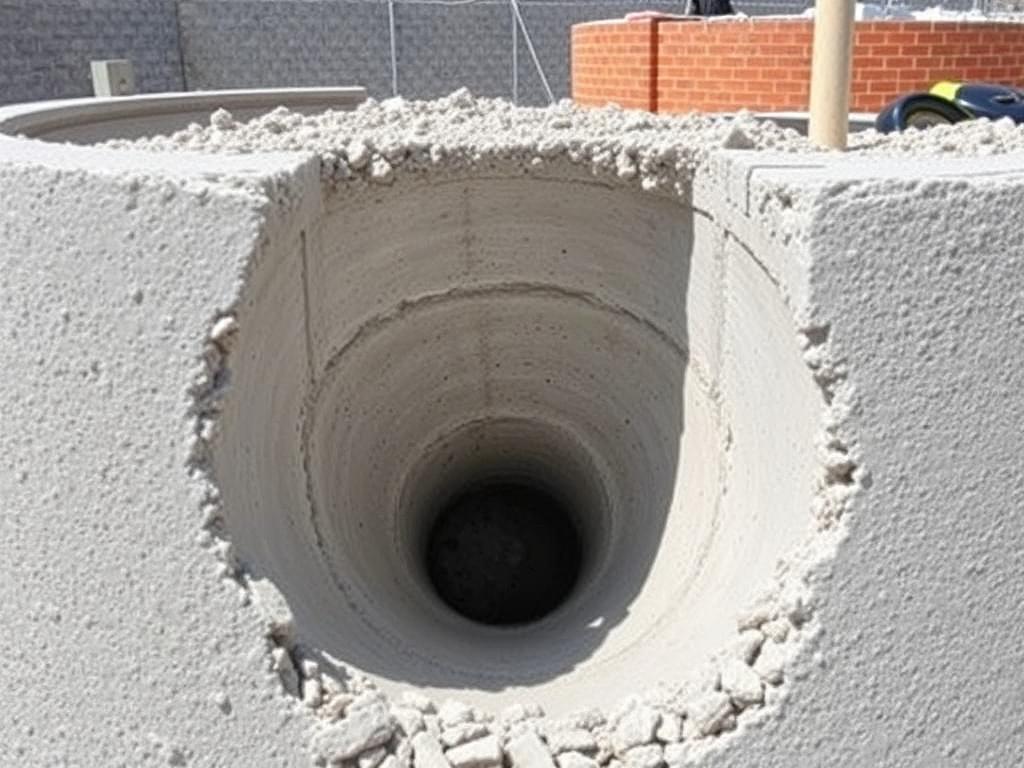
Preventing voids and honeycombing is a layered practice: good mix design, compatible formwork, proper placement techniques, appropriate consolidation methods, and vigilant inspection. Each layer supports the others to create durable, sound concrete.
Train crews, test mixes under field conditions, and keep open lines of communication between designers, suppliers, and on-site teams. When problems occur, measure and document before acting and bring engineers into the loop for anything beyond superficial repair.
With these practical measures in place, you’ll find that honeycombing becomes an exception rather than an inevitability—and the concrete you place will perform the way you intended for decades to come.