Concrete’s fluidity can feel like an opinion until you measure it. The slump test translates that subjective judgment into a number that contractors, engineers, and inspectors use to make real-time decisions on the job. This article walks through what the slump test actually measures, how to perform it correctly, how to interpret the results, and when the test should or should not guide changes to a mix.
What slump measures and why it matters
At its core, the slump test quantifies the consistency of fresh concrete—how easily it flows and deforms under its own weight. That single measure helps predict how the mix will behave during placement, consolidation, and finishing. For crews pouring slabs, columns, or pavement, an appropriate slump keeps the job efficient and helps avoid defects like honeycombing or excessive segregation.
Workability is not a single property; it bundles fluidity, cohesiveness, and ease of consolidation. Slump captures fluidity and gives indirect insight into how readily concrete can be placed and compacted with the equipment at hand. However, it does not fully describe cohesiveness or resistance to segregation, so it must be interpreted alongside other observations and tests.
Physically what happens in the test
The test uses a standardized conical mold filled in three layers, each tamped with a rod. When the mold is lifted, the concrete subsides; the vertical distance between the mold top and the highest point of the slumped concrete is the slump. That measurement reflects internal friction, paste volume, and water content—parameters that control the mix’s ability to deform.
Different materials change the slump response. Well-graded aggregates with higher fines and more paste tend to produce a more coherent slump. Large, angular aggregates or a low paste volume can reduce slump even at the same water content, because the particles interlock and resist flow.
Workability versus other fresh-concrete properties
Slump is one lens on workability, but other lenses are necessary for a full picture. For example, slump tells you how the mix deforms, but it won’t reveal how easily it flows through a pump, how well it fills complex forms, or how resistant it is to segregation when vibrated. Those are controlled by a mix of rheology and material cohesion, not a single number.
Engineers use slump together with placement method, admixture use, and experience to judge suitability. For critical structures or unique mixes—self-consolidating concrete, fiber-reinforced mixes, or very high-performance concretes—additional tests like slump flow or rheometry are usually needed for reliable prediction.
Equipment and standards
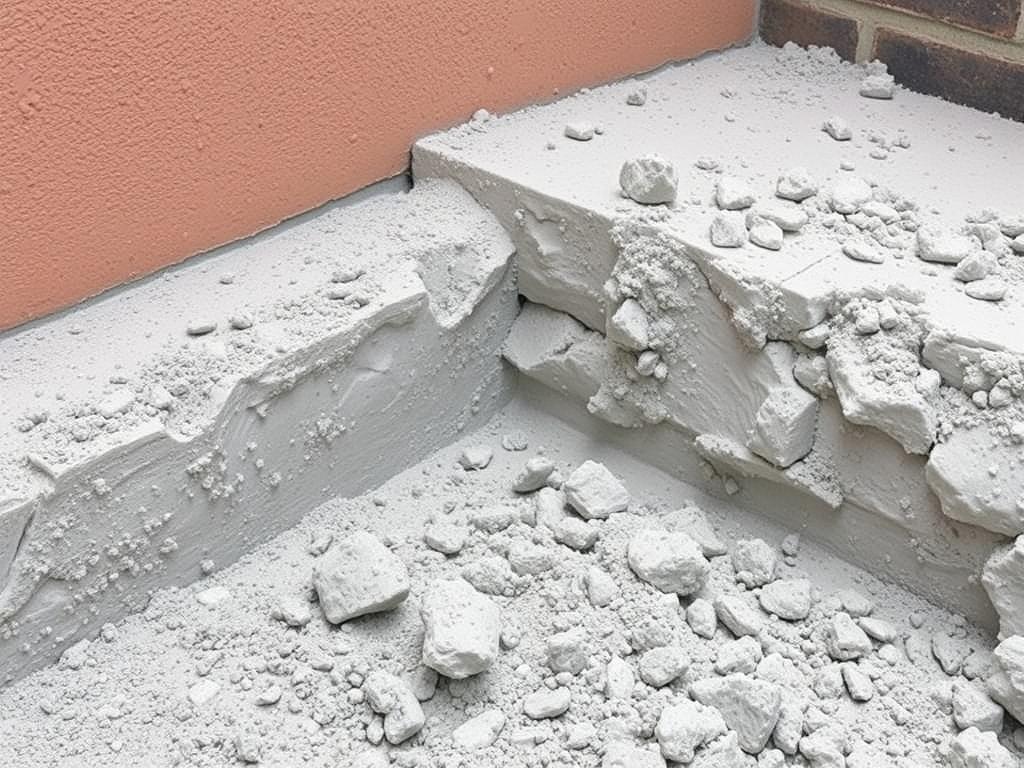
Performing a valid slump test requires a few simple, standardized items: the slump cone (Abrams cone), a tamping rod, a base plate, and a level area. The cone is a frustum of a cone, typically 12 in tall with a 4 in top diameter and 8 in bottom diameter. Using the correct geometry is essential because the test result depends on the mold shape and dimensions.
Standards provide the rules that make tests comparable between sites and labs. In the United States, ASTM C143/C143M is the go-to standard for the slump test. It defines the apparatus, sample handling, filling procedure, number of strokes for tamping, and measurement technique. Following the standard minimizes variability and keeps results defensible for quality control.
Other regions have equivalent standards—EN 12350-2 in Europe, for example—and many commercial concrete suppliers will quote slump in accordance with whichever standard is called out in the contract documents. If you rely on slump for acceptance criteria, be sure the specification references the correct standard and units (inches versus millimeters).
Performing the slump test: step-by-step
Accuracy in the slump test is all about repeatable, consistent handling. Take the sample from the discharge or truck in a way that represents the mix and test it quickly to avoid changes from evaporation or bleed. The mold must sit on a rigid base that doesn’t absorb water or deform during the test.
- Place the cone on a flat, nonabsorbent surface and hold it firmly in place.
- Fill the cone in three approximately equal layers.
- Tamp each layer 25 times with the standard 5/8 in diameter, 24 in long rod, distributing strokes evenly.
- Strike off the top with the rod so the cone is level and then lift the cone vertically without battering the sample, using a smooth upward motion in 5–10 seconds.
- Immediately measure the slump as the drop in height between the cone top and the highest point of the specimen.
Each of those steps matters. Over-tamping, improper lifting, or a tilted cone can introduce significant error. In the field, training and occasional proficiency checks help ensure consistent technique among technicians. Small differences in technique translate into meaningful differences in acceptance decisions.
Time is also critical. Test the sample within a few minutes of obtaining it, and record the time so later decisions can account for any setting or agitation effects. For long hauls or hot-weather conditions, slump can change rapidly and the timing of the test must be carefully controlled.
Common variations and field adaptations
On busy sites, technicians sometimes test the cone directly under the truck discharge rather than moving a sample to a lab area. This is acceptable if the surface is flat and nonabsorbent. Some crews place a steel plate under the cone before filling to eliminate variability from the substrate.
For very wet mixes or those containing fibers, the standard slump test can behave oddly—either collapsing completely or giving an unstable slump. In those cases, field crews may use modified procedures, such as a larger cone or a flow table, but results must be linked back to the specification or an agreed-upon correlation to remain useful.
Types of slump and their interpretation
When the cone is lifted, three typical behaviors emerge: a true slump, a shear slump, or a collapse. Each behavior hints at different mix qualities and potential placement issues. Recognizing the pattern is as important as recording the numeric slump.
A true slump shows the specimen subsiding more or less uniformly with the top surface remaining roughly planar. It indicates balanced cohesion and a predictable mix. Shear slump shows one side sliding down, leaving a stepped surface: that signals poor cohesion or coarse aggregate interlock. A collapse—when the concrete completely flattens—means the mix is extremely fluid and may risk segregation or excessive bleed.
| Slump type | Appearance | Likely implication |
|---|---|---|
| True slump | Uniform subsidence with planar top | Mix is cohesive and stable for standard placement |
| Shear slump | One side collapses; stepped profile | Poor cohesion, potential segregation, or excessive coarse aggregate |
| Collapse | Specimen spreads out and loses form | Very wet mix, risk of segregation and high bleed |
Interpreting these types must be context-sensitive. A collapse slump might be acceptable for self-consolidating concrete, where flowability is desired, but is a red flag for conventional mixes intended to be consolidated by vibration. Similarly, a shear slump in a heavily reinforced pour could hint at downstream issues during pumping or placement.
Factors that affect slump
Many variables influence slump: water content, aggregate properties, cementitious content, admixtures, temperature, and mixing time all play roles. Understanding which parameter controls the observed slump allows for targeted adjustments rather than blind additions of water.
Water plays the dominant role. Higher free water increases slump and fluidity, but it also lowers strength and durability if not compensated with supplementary cementitious materials or admixtures. Contractors sometimes add water on site to improve workability, but this must be weighed against design strength requirements and potential rejections.
Aggregates and grading
Aggregate shape, size distribution, and surface texture significantly affect how particles interlock and how much paste is needed to lubricate the system. Rounded, well-graded aggregates yield higher slump with the same water content compared to angular, poorly graded materials. Fines content and the presence of dust also affect cohesion and slump stability.
Coarse aggregate maximum size influences slump as well. Larger maximum sizes typically reduce paste demand for a given workability, but they can make the mix less workable in places with dense reinforcement. Adjusting aggregate grading or increasing paste content are common levers for modifying slump without changing water content dramatically.
Admixtures and cementitious materials
High-range water-reducing admixtures (superplasticizers) are the most effective way to increase slump without raising water content. They improve flow and reduce yield stress, often enabling a low water-cement ratio mix to achieve high slump suitable for pumping or complex forms. However, dosage must be controlled to avoid overdosing and unexpected set times.
Supplementary cementitious materials like fly ash or slag can improve workability and slump retention by increasing paste volume and lowering internal friction. Their slower reaction rates and spherical particle shapes often give more workable mixes for the same water content, which can help with longer placement windows and reduced water demand.
Temperature and time
Heat accelerates hydration and evaporation, both of which reduce slump over time. In hot weather, slump measured at the plant can be higher than slump at the pour location, making field checks essential. Cooling measures—ice in the mix water, shaded aggregate piles, or adjusting admixture schedules—help maintain target slump.
Time in the truck also matters. Mixing action during transport can increase slump slightly, but ongoing hydration and bleed can reduce it. Specifying a maximum transit time and measuring slump at arrival give teams a clearer basis for decisions about adjustments.
Interpreting slump in practice
A numeric slump is only meaningful when compared to target ranges derived from the placement method, reinforcement density, and finishing requirements. A 4-inch slump might be excellent for a slab placed with internal vibration but too stiff for a congested column where pumping and flow are essential. Context is everything.
Consider also the finishing technique. For hand-finishing thin slabs, too high a slump increases the risk of plastic settlement and surface blemishes. Conversely, low slump may lead to cold joints and poor consolidation. Aligning slump targets with finishing expectations avoids surprises once the formwork comes off.
Using slump to make adjustments on site
When slump deviates from the target, a few practical options exist: add approved water (if specifications permit), use a water-reducing admixture, or request a different mix from the supplier. The choice should balance immediate workability needs against long-term performance goals like strength and durability.
On a recent bridge deck pour I supervised, the truck slump came in 1 inch lower than specified. Instead of adding water, we asked the batch plant to increase the superplasticizer on the next loads and used vibrating equipment to ensure consolidation for the earlier loads. This saved strength and reduced bleed while keeping placement consistent through the pour.
Limitations of the slump test and alternatives
The slump test is simple and widely used, but simplicity limits what it can tell you. It does not quantify flowability for highly fluid mixes, nor does it provide rheological parameters such as yield stress and plastic viscosity. For those properties, other tests are more informative.
Alternative or complementary tests include the slump flow test for self-consolidating concrete, the Vebe test for stiff mixes, and modern rheometers that provide numerical values for yield stress and viscosity. Each has trade-offs in cost, portability, and interpretability, so choose tools that match the demands of the project.
- Slump flow: measures horizontal spread for SCC and assesses filling ability without vibration.
- Vebe test: times the vibration required for a stiff mix to consolidate, useful for low-slump mixes.
- Rheometer: provides detailed parameters for research and advanced mix control, though less common on jobsites.
For many ordinary jobs, the slump test combined with experienced judgment is sufficient. For specialized mixes or critical pours—high-rise pumping, heavily reinforced elements, or decorative finishes—investing in more specific testing pays off with fewer field problems and a more predictable outcome.
Quality control and documentation
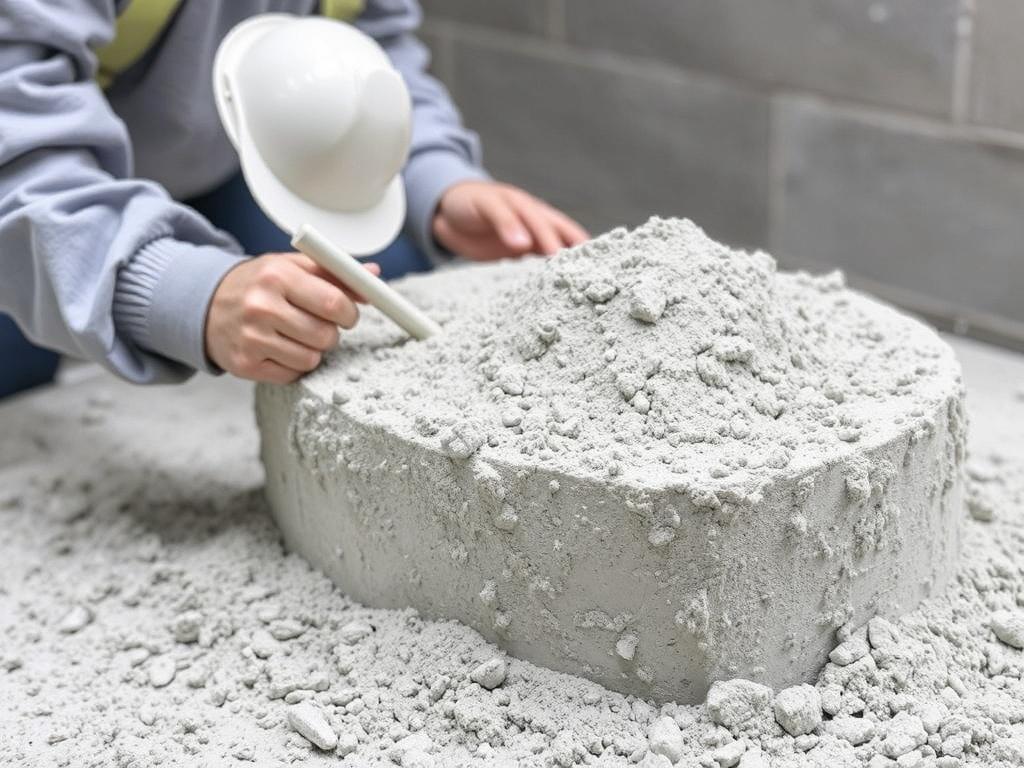
Repeatable records are the backbone of quality control. Document slump values, time of sampling, truck identification, ambient conditions, admixture dosages, and any field adjustments. This documentation helps trace problems and supports discussions with suppliers when mixes do not perform as expected.
Sampling frequency should reflect the criticality of the pour and variability of the supplier. For a continuous paving project, testing every load or every few loads may be necessary. For a small footing, a single representative test might suffice. The specification or project quality plan should define acceptable frequencies and actions for out-of-tolerance results.
Proficiency testing for technicians reduces human error. Regular auditing of technique, equipment condition, and calibration keeps variability low and ensures that recorded slumps reflect the concrete, not the tester. In my experience supervising field labs, simple retraining sessions cut measurement scatter more effectively than changing mix proportions.
Troubleshooting common slump problems
When slump is too low, the instinctive fix is adding water—but that can compromise the mix. Better first steps are checking for an overdue or missing admixture dose, verifying aggregate moisture, and examining whether segregation or improper mixing caused the issue. Often, adjusting admixture dosage or ordering a corrected mix from the plant is the best path.
When slump is too high, check for overdosing of high-range water reducers or excess batch water at the plant. If the slump is high due to unintended batch water, strength could be compromised and the load may need to be rejected or put in non-structural use. For slight over-slumps, adding pozzolans or extra cementitious materials on-site is rarely practical or effective.
- Low slump remedies: adjust admixture, reduce aggregated moisture miscalculations, request re-batch from plant.
- High slump remedies: verify admixture overdose, slow placement, use retarders if risk of settlement, consult supplier for corrective action.
- Unstable slump (shear or collapse): evaluate aggregate grading and cohesion; consider different test method for SCC.
Slump and concrete strength, durability, and long-term performance
There is a well-known inverse relationship between water content and strength: more free water in a mix generally means lower strength for a given cement content. Because slump correlates with free water, a high slump often hints at lower strength unless water reducers or supplementary cementitious materials are used to compensate.
Durability is also tied to water-cement ratio and to the mix’s tendency to segregate or bleed. A high slump that leads to segregation can create zones rich in paste and others rich in aggregates, which undermine uniform durability. For structural elements exposed to freeze-thaw cycles, chloride ingress, or sulfate attack, controlling water content and preventing segregation are critical to long life.
That said, a single slump measurement cannot certify long-term performance. It is one piece of a quality control mosaic that includes mix design verification, compressive strength testing, air content measurement, and curing practices. Use slump findings to guide immediate placement decisions, and rely on laboratory tests to confirm performance over time.
Special considerations for pumping and reinforced pours
Pumping places unique demands on slump and rheology. A mix that pumps well needs a balance of flow and cohesion so it can pass through hoses and bends without blocking or segregating. Contractors often request slightly higher slump plus a designed admixture program or additives to ensure pumpability without sacrificing strength.
For heavily reinforced pours, slump must be high enough to move around congested rebar but not so high that it segregates when vibration is used. In these situations, trial mixes and mock-up pours are invaluable. I recall a hospital foundation pour where pre-pour trials saved us from costly stoppages by demonstrating the optimal admixture dosing for pumpability and consolidation.
Practical tips for reliable slump testing
Keep the mold and tools clean and free of hardened residue. A slightly deformed cone or a rod with nicks changes how the mix compacts and produces inconsistent results. Store the cone upright in a dry place and inspect it regularly for damage that affects the internal surface or dimensional accuracy.
Always measure slump on a flat, rigid, nonabsorbent surface. Placing the cone on wet earth or an irregular area introduces tilt and drainage effects that distort the measurement. If a flat plate is not available, carry a small steel or plywood board to create a consistent base for the test.
Train technicians to lift the cone straight up with a steady motion and to measure immediately. Small deviations in the lift angle or delays in measuring can change the recorded slump by fractions of an inch, which matter when passing or failing a load against tight tolerances. Regular calibration and inter-operator checks preserve consistency over the course of a project.
When slump is not the right tool
For self-consolidating concrete, the slump test is usually inadequate because collapse is likely and the number is not reflective of flow performance. Instead, the slump flow test and J-ring are standard tools for SCC, providing clearer information about filling ability and passing capability around reinforcement.
Similarly, for very stiff mixes like lean concrete for blinding layers, the Vebe test or measures of compactability under vibration give better insight than slump. Rheometers remain the gold standard where precise control of rheological properties is required, but they are less practical on typical job sites due to equipment needs and specialist operation.
Bringing it all together on the job
Interpreting the slump test well means combining the number with knowledge of the mix design, the placement method, and field conditions. A single test result should prompt investigation—check the truck ticket, admixture schedule, and ambient conditions—before making adjustments that could have unintended consequences.
Use slump as a decision-support tool rather than an absolute arbiter. When in doubt, replicate the test, consult the batch plant, and consider small trial adjustments in a controlled way. That approach minimizes rework and supports consistent placement quality across a project.
Understanding Concrete Slump: Testing and Interpretation for Workability in practice
The phrase Understanding Concrete Slump: Testing and Interpretation for Workability captures the dual nature of the test: measurement paired with judgment. Good concrete practice is less about slavishly chasing a number and more about using that number alongside observations and communication with suppliers to produce durable, constructible concrete.
Throughout my time on site and in the field lab, projects that treated slump as part of a system rather than a single requirement invariably performed better. When crews, engineers, and batch plants communicated around the slump results and the broader mix behavior, pours flowed more smoothly and the number of corrective actions dropped markedly.
Next steps for teams and managers
For project teams looking to tighten control: codify slump targets in the project specifications, train testers, and include a protocol for corrective action when results fall outside acceptable ranges. For complex mixes, invest in complementary testing and initial trial pours to align expectations among crew, engineer, and supplier.
Ultimately, the simple slump cone remains a powerful tool because it is portable, inexpensive, and immediate. When used with an understanding of its limitations and the right on-site practices, it helps translate abstract mix designs into concrete results—measurable, manageable, and, most importantly, buildable on the job.