Installing a successful concrete overlay begins long before the cement truck arrives; it starts with the substrate beneath your feet. Surface Preparation for Concrete Overlays and Toppings is the foundation of longevity, appearance, and performance, and it demands methodical attention to detail. This article walks through assessment, cleaning, profiling, repairs, and quality control so you can avoid common failures and achieve a durable, attractive finish.
Why surface preparation matters more than the overlay material
An overlay can only perform as well as the surface it sits on. If the substrate is weak, contaminated, or improperly profiled, even the best overlay mix or topping system will delaminate, crack, or discolor within months. Proper preparation creates a mechanical and sometimes chemical bond that transfers loads, resists moisture and freeze-thaw cycles, and prevents localized failures.
Beyond performance, preparation affects aesthetics and longevity. A uniform profile allows thin toppings to cure evenly and accept pigments or sealers consistently, while missed contaminants can lead to blotchy patches or patchy adhesion. Preparing the surface is not an optional preface—it’s the single most influential factor in overlay success.
Experienced contractors often say the time spent on preparation repays itself many times over in fewer call-backs and better client satisfaction. In practice, that means planning for the right tools, testing, and repair materials before the first grind or blast, rather than improvising on the job.
Initial assessment: what to look for before you start
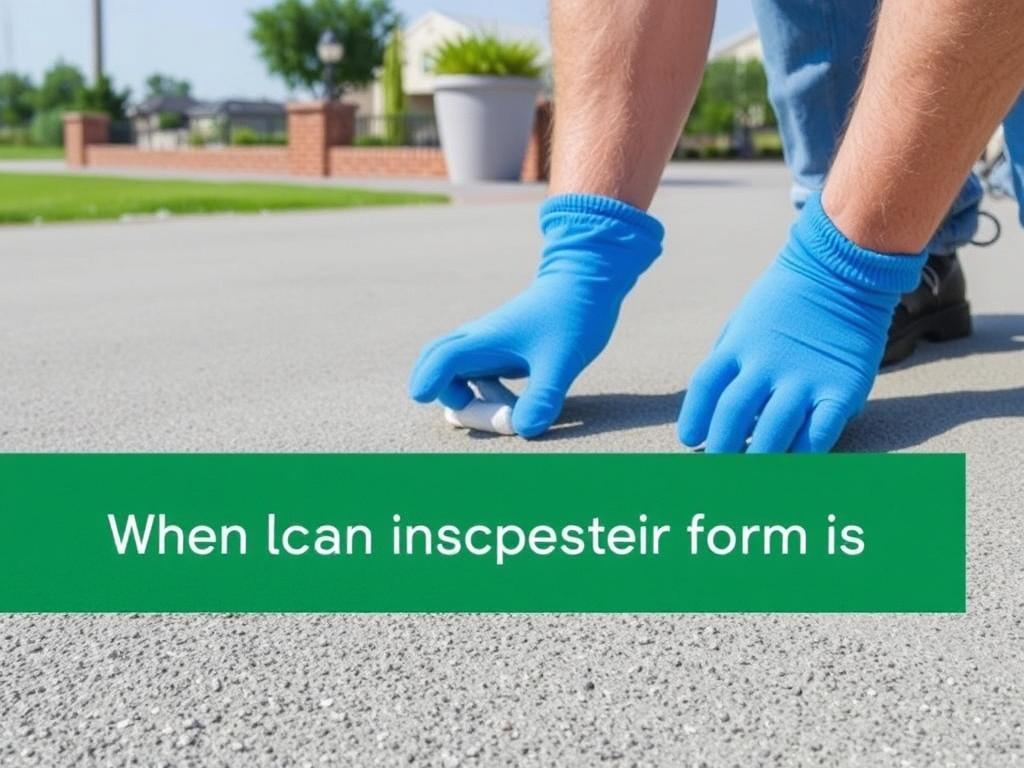
The first step is a careful visual and tactile inspection. Look for cracks, spalls, unsound concrete, oil stains, previous coatings, curing compounds, and areas of laitance or efflorescence. Note locations of drains, heavy machinery, and expansion joints—these will influence how you detail the overlay and where additional reinforcement may be required.
Use simple tools: a hammer for sounding hollow spots, a knife or screwdriver to test soft or powdery areas, and a moisture probe for suspicious slabs. Record obvious elevations or depressions with a straightedge and level; overlays work best on slabs that are within the manufacturer’s tolerances for flatness or when sufficient depth exists to level low areas.
Document everything with photos and notes. A thorough pre-bid or pre-installation report saves time and avoids disputes. It also clarifies whether you need to remove and replace parts of the slab or whether localized repairs will suffice.
Substrate strength and delamination testing
Pull-off testing provides quantitative evidence that the substrate can accept an overlay. Instruments like a portable pull-off tester measure the tensile bond strength of the concrete surface. Standards typically recommend minimum pull-off strengths depending on the overlay type; for many thin toppings, a minimum of 200 to 300 psi of intact substrate is often sought, though specifications vary.
Where pull-off tests reveal low strength or delamination, investigate the cause—poor consolidation, freeze-thaw breakdown, or prior surface treatments. For large areas of unsound concrete, plan for removal and replacement rather than bonding a new layer to a failing base. Localized weak spots can sometimes be removed and patched prior to profiling.
Keep in mind that pull-off testing is only a snapshot. Test multiple locations across the slab and near critical transitions such as joints, drains, and previous repairs to build a representative picture of substrate condition.
Moisture testing and vapor considerations
Moisture control is critical for many overlay systems, especially those that are polymer-modified or use epoxy primers. Excess moisture vapor emission from the slab can cause bubbling, adhesion loss, or curing problems in moisture-sensitive toppings. Conduct in-situ tests such as calcium chloride (ASTM F1869) and relative humidity testing using probes (ASTM F2170) to measure emission and internal moisture.
Relative humidity testing gives insight into internal moisture conditions and is often preferred for thicker slabs or where the slab’s history is unknown. Many manufacturers set maximum allowable internal RH percentages—commonly around 75% for cementitious overlays but lower for resins—so knowing the slab’s moisture profile dictates product choice and mitigation steps.
If moisture tests exceed allowable limits, options include delaying work until conditions improve, installing a vapor barrier, applying moisture-tolerant primer systems, or performing slab remediation methods like depressurization or moisture mitigation membranes. Each approach has cost and schedule implications that should be planned in advance.
Removing contaminants: oils, curing compounds, sealers, and salts
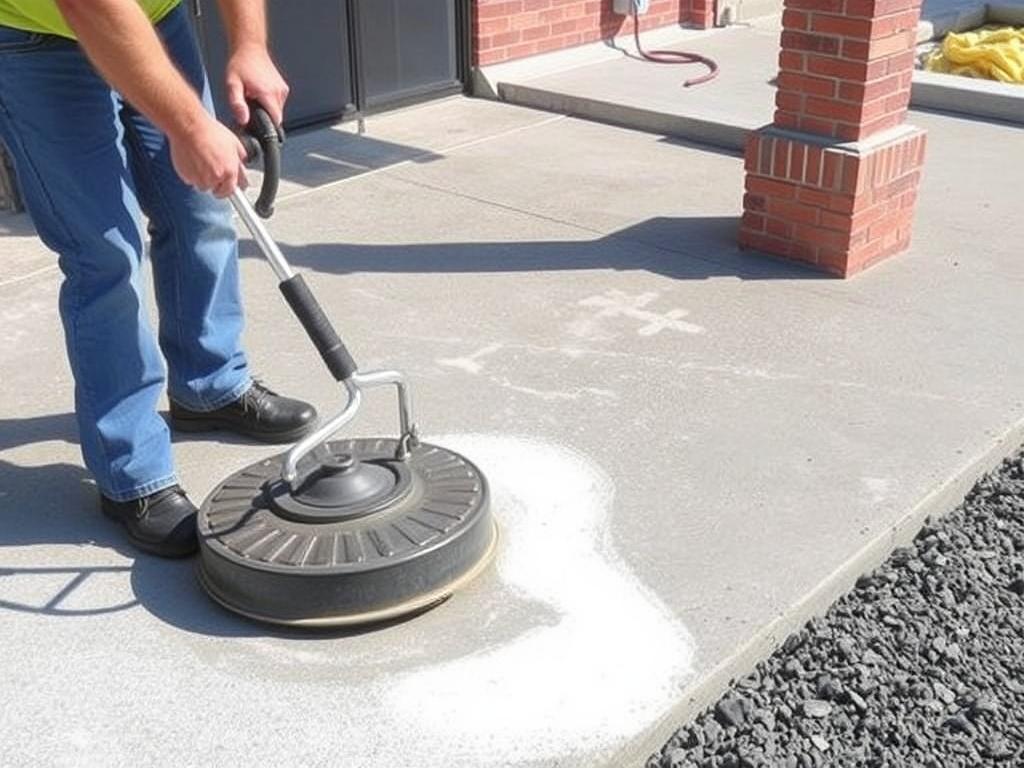
Contaminants are the most common cause of overlay failures. Oil, grease, curing compounds, silicones, and salts interfere with bonding and must be removed. Start with a visual map of contamination, then apply the appropriate cleaning method rather than a one-size-fits-all approach.
For oil and grease, aggressive detergent scrubbing, steam cleaning, or hot pressure washing can remove surface residue. For deeply penetrated hydrocarbons, you may need to remove contaminated concrete and replace with fresh patching material. Chemical cleaners and emulsifiers can help, but always follow environmental regulations for runoff disposal.
Curing compounds and form-release agents often require mechanical removal—acid etching rarely penetrates deeply enough. Test a small area to confirm that cleaning exposes aggregate and creates a scorable profile; if it doesn’t, escalate to grinding or shot blasting.
Efflorescence and salt mitigation
Efflorescence—white salts on the surface—signals soluble salts in the slab or water pathways from the ground. While efflorescence itself isn’t always catastrophic, it indicates moisture migration that can carry salts into the overlay and cause future flaking or discoloration. Remove visible salts with stiff bristle brushing and washing, then treat with poultices or cleaners designed for salts if necessary.
If salts are recurring, address the source—improve drainage, install vapor barriers, or apply specialized membranes. For overlays sensitive to salt, comprehensive moisture and salt mitigation is non-negotiable to prevent premature failure.
Document the presence of salts and mitigation steps in the project log. Future maintenance teams and clients appreciate knowing what was encountered and how it was managed.
Creating the proper profile: what is CSP and why it matters
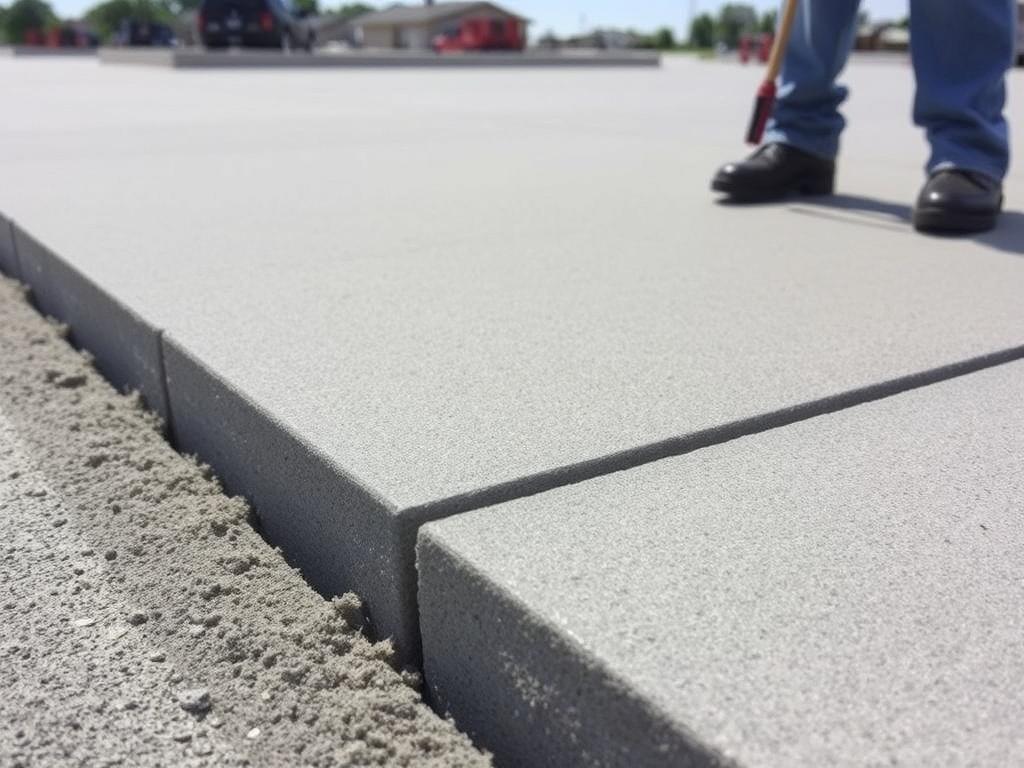
The Concrete Surface Profile (CSP) is a standardized way to describe the roughness of the prepared surface. Ranging from CSP 1 (nearly smooth) to CSP 9 (very rough), the correct profile depends on overlay type, thickness, and adhesive strategy. Manufacturers typically specify a target CSP to ensure mechanical interlock and consistent bonding.
Achieving a uniform CSP prevents contouring and bond variability. Localized overprofiling or underprofiling can lead to stress concentrations and delamination. Use appropriate equipment and measure profile depth or visually compare to ICRI guidemaps to confirm that you’re in the right range.
Remember that profile is not simply about roughness; it’s about uniformity. A consistent CSP across the entire slab gives predictable adhesion and allows thin overlays to perform as intended without variable strength zones.
Shot blasting
Shot blasting is a fast, efficient method to remove contaminants and create a uniform CSP in the range suitable for many thin toppings. Abrasive steel shot is propelled at the slab, removing weak surface material and leaving a textured finish that promotes mechanical bonding. It’s particularly effective for large, open areas and for removing coatings or paint.
Advantages include minimal dust with proper equipment, controlled profile depth, and quick turnaround. Limitations include difficulty reaching tight corners and the need for specialized machinery and trained operators. Shot blasting also produces spent abrasive that must be collected and disposed of properly.
From experience, shot blasting saved days on a warehouse floor project versus manual grinding, and it produced the predictable profile we needed for a 1/4-inch polymer-modified overlay.
Diamond grinding
Diamond grinding is precise and predictable, especially when surface flatness and joint interfaces matter. It uses rotating diamond cutters to remove a controlled amount of material and can smooth high spots as well as remove contaminants. Grinding is excellent for preparing small areas, ramps, and edging where blast equipment can’t reach.
Grinding produces fine particulate dust, but modern machines with HEPA-filtered vacuums keep work areas clean. The method provides a profile that often falls within mid-range CSPs suitable for many overlays and is advisable when a flatter finish is needed at the transitions.
When I worked on a retail storefront, diamond grinding allowed us to match a finished threshold precisely and avoid a trip hazard at the doorway while still achieving the bond profile necessary for a decorative topping.
Hydrodemolition and scarification
Hydrodemolition uses high-pressure water jets to remove deteriorated concrete selectively without damaging embedded reinforcement. It is ideal for structural repairs and for removing weak or contaminated concrete ahead of a topping. Scarifiers and milling machines are alternatives where water use is impractical, although they are more aggressive and can leave a rougher profile.
Hydrodemolition is expensive and logistically demanding, requiring water handling and debris management, but it preserves rebar and minimizes vibration-induced damage. Use it when the slab has significant localized deterioration that would compromise an overlay’s structural integrity.
On a bridge deck refurbishment project, hydrodemolition allowed us to remove unsound concrete around corroded rebar and keep the reinforcement intact—saving time and avoiding costly rebar replacement.
Chemical etching and acids
Chemical etching (muriatic acid) and detergents are sometimes used for light laitance removal and surface cleaning. While economical, acids are limited in depth of action and often fail to provide an adequate mechanical profile for thin toppings. Use them only where manufacturers approve and after confirming they will not leave residues that interfere with adhesion.
Acid treatments require strict safety and disposal procedures; neutralization and runoff control are essential. When time and resources allow, mechanical methods are generally preferred for creating a consistent profile.
For small decorative slabs where the overlay was several inches thick and minor laitance was the only issue, a carefully applied acid wash followed by thorough neutralization worked, but I would not recommend acid as the sole method for thin overlays or heavy-traffic floors.
Repairing damage before overlaying
Repairs should address structural and surface defects so the overlay has a sound and uniform substrate. Patching spalls, stabilizing delaminated areas, and repairing cracking are all part of pre-overlay work. Use compatible repair mortars and adhere to manufacturer guidelines for curing and profile integration before topping application.
Remove loose concrete back to sound material; feathering repairs are often less desirable than defined edges for overlays. When extensive repairs are required, consider bonding keys, dowels, or rebar lap-splicing to restore continuity and load transfer across repaired regions.
Match repair material properties to the slab and overlay—differences in stiffness or shrinkage can create secondary failures. It’s better to use a slightly stronger, low-shrinkage repair compound than a quick, underperforming patch that blisters under traffic.
Crack evaluation and treatment
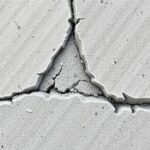
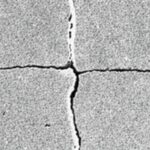
Not all cracks require the same approach. Hairline shrinkage cracks may be tolerated if they do not reflect to the overlay, while moving cracks and structural cracks demand more robust treatment. Evaluate cracks for width, movement, and depth to determine whether to rout-and-seal, stitch with dowels, or cut and fill with a flexible sealant before overlaying.
For non-moving cracks that are likely to transmit stress into a thin topping, routing and filling with a cementitious or polymer-modified repair mortar can create a smoother transition. For active joints, provide isolation with saw-cut joints or install flexible joint strips to prevent reflective cracking through the overlay.
On a commercial parking deck, we routed and embedded stainless-steel staples across wide, non-moving cracks and then filled with a polymer-modified repair mortar; the overlay held without reflection for years after, even under heavy traffic.
Dealing with joints and movement
Joints are predictable sources of movement and should be addressed in the design and preparation phase. Overlay continuity across expansion joints is rarely desirable unless the joint is detailed with appropriate isolation materials. Maintain or reconstruct joints as required by the overlay manufacturer’s recommendations.
For control and construction joints, saw-cutting down into the slab and installing flexible joint seals before overlaying can prevent reflective cracking. Where functional joints are removed or bridged, expect stress concentrations and plan reinforcement or increased thickness accordingly.
Careful coordination with the owner and structural engineer is essential when altering or covering joints; improper treatment is a leading cause of overlay failure and warranty claims.
Primers, bonding agents, and tack coats
Primers and bonding agents can improve adhesion, reduce dust, and bridge minor surface imperfections. Cementitious bonding slurries, epoxy primers, and polymer-based contact adhesives each have specific applications and limitations. Select a product compatible with both the substrate condition and the overlay chemistry.
Epoxy primers often perform well in high-moisture or chemically exposed environments, while cement-based slurries are suited to cementitious toppings where vapor permeability is a concern. Follow manufacturer coverage rates and cure times, and ensure the primer is applied to a clean, properly profiled surface for best results.
Do not rely on a bonding agent to compensate for a contaminated or unsound surface. Primers are part of an overall bonding strategy, not a substitute for proper cleaning and profiling.
Application tips for primers and slurries
Mixing, pot life, ambient temperature, and substrate temperature affect primer performance. Prepare small test batches if using unfamiliar materials on site. Apply primers evenly and avoid puddling; over-application can trap solvents or moisture and weaken the bond.
Observe open time and recoat windows; some systems demand that the overlay be placed within a narrow timeframe after primer application. If recoat windows are missed, reactivation, sand broadcast, or complete re-priming may be necessary to regain adhesion.
On one job, missing the recoat window on a polymer-modified primer forced us to grind and re-prime a 2,000-square-foot area—an expensive lesson in timing and site coordination.
Ambient conditions and timing
Temperature, humidity, and wind influence curing, workability, and adhesion. Many overlays have manufacturer-prescribed temperature ranges for both the ambient and substrate. Avoid application on very hot, cold, or windy days unless products and procedures are specified for those conditions.
Plan for temperature shifts between day and night; surfaces that cool rapidly can create condensation, leading to bond issues in the early cure period. Monitor weather forecasts and schedule pours and installations to minimize these risks. Protective tents, heaters, or cooling measures may be warranted for critical projects.
Timing also matters for traffic return and curing time. Communicate realistic cure schedules to the owner and coordinate trades and vehicular traffic to avoid premature loading that could damage the overlay.
Quality control: measuring success on the job
Quality control starts at the pre-job inspection and continues through cleaning, profiling, priming, and final acceptance testing. Keep a project log of test results, photographs, equipment used, and personnel responsible for each phase. This documentation protects both contractor and client when questions arise later.
Perform regular pull-off tests, profile checks, and adhesion tests as recommended. Use a calibrated profilometer or comparator cards to validate CSP and keep records of moisture testing and primer application. Random verification ensures that the entire area meets specifications rather than just a few handpicked locations.
Communicate QC findings promptly and adjust workmanship as needed. Catching an under-profiled floor or missed contamination early allows for cost-effective remediation rather than expensive rework after overlay placement.
Common testing standards and references
Industry references such as ICRI (International Concrete Repair Institute) guideline 310.2R, ASTM standards for pull-off and moisture testing, and manufacturer-specific installation guides provide the technical framework for preparation and testing. Use these documents to write clear specifications and acceptance criteria into the contract documents.
Adherence to standards reduces ambiguity and sets objective benchmarks that both installer and owner can accept. When in doubt, require testing per recognized standards and build quality acceptance into the payment schedule to incentivize proper work.
My projects always referenced ICRI guidemaps and ASTM moisture testing in the contract; it saved disputes by creating measurable expectations from day one.
Safety, containment, and environmental considerations
Surface preparation can generate dust, noise, and wastewater. Protect workers and occupants with PPE—respirators, hearing protection, eye protection, and proper gloves. For silica-containing dust, follow OSHA silica standards and implement engineering controls like vacuum-equipped grinders.
Containment minimizes dust migration and protects adjacent finishes. Use plastic sheeting, negative-air machines, and HEPA filtration to keep other areas clean. For projects with hazardous contaminants like lead paint or asbestos, engage certified abatement contractors and follow regulatory protocols.
Waste disposal must comply with local environmental regulations. Collect, characterize, and dispose of spent abrasive, slurry, and contaminated wash water per municipal guidelines to avoid fines and environmental harm.
Equipment selection and maintenance
Choose equipment that matches the job size, profile requirements, and site constraints. Larger shot blasters and grinders increase productivity on big jobs but may be impractical in tight spaces. Smaller walk-behind units and handheld grinders serve detail work and edges effectively.
Keep equipment blades, discs, and shot media in good condition; worn tooling produces inconsistent profiles and can slow work. Regularly inspect vacuum systems, hoses, and seals to ensure dust collection functions properly—failure here compromises safety and conceals problems that will affect bonding.
Having backup components on site reduces downtime. On a rush job, a spare diamond wheel and extra fuel for shot blast units kept the schedule intact when one wheel failed mid-day.
Step-by-step checklist for a typical overlay preparation
A structured checklist reduces oversights. Below is a concise sequence that can be adapted to project specifics: assess and document slab; perform moisture testing; remove contaminants; profile to specified CSP; repair spalls and cracks; install joints and movement isolation; prime where required; and verify adhesion before overlay placement. Adjust the order when manufacturer guidance or site conditions dictate.
Use written sign-offs at each stage, with responsible personnel initialing test results and completion of each item. This creates accountability and helps track progress against schedule.
Adapt the checklist to include local regulatory needs, such as dust control measures or wastewater handling, so nothing is left to chance on site.
Quick tools and consumables checklist
- Shot blaster or diamond grinder with vacuum attachment
- PPE: respirators, gloves, eye and ear protection
- Pull-off tester and profilometer or CSP comparator cards
- Moisture testing probes and RH sensor kits
- Pressure washer or steam cleaner (with containment)
- Repair mortars, bonding agents, and primers
- Hand tools: chipping hammer, scrapers, brushes
- Waste collection and disposal containers
Troubleshooting common problems
When overlays fail prematurely, the root cause is often one or more lapses in preparation. Common issues include residual oil, inadequate profile, moisture vapor complications, and missed weak zones. Address problems methodically: test, identify, and remediate rather than patching symptoms with thicker material or additional adhesive.
If you see blisters or delamination soon after placement, suspect trapped moisture or contaminants. Perform destructive testing—cut out small areas and inspect the interface—to determine whether failure occurred at the primer-slip plane, within the overlay, or within the substrate itself. The cure depends on the failure plane.
For recurring edge lift or cracking, check for inadequate edge details, insufficient thickness, or thermal movement that wasn’t accommodated. Often the remedy is a combination of added reinforcement, joint detail rework, and improved substrate repairs.
Costs and scheduling: planning realistically
Proper preparation adds cost and time up front but reduces lifecycle expenses and downtime. Budget line items for testing, shot blasting or grinding, repairs, primers, and waste disposal. Include contingency for unexpected substrate conditions uncovered during preparation—rarely does every slab match the original estimate exactly.
Schedule preparatory work to allow time for repairs and moisture mitigation when needed. While quick turnarounds are attractive to clients, they are risky when they compress essential steps like curing of repair mortars or re-testing after mitigation efforts.
Explaining cost-benefit trade-offs to owners—demonstrating how investment in prep reduces maintenance and replacement costs—helps secure the resources needed for a sound installation.
Maintenance and post-installation care
Once the overlay is in place, maintenance extends its life and preserves appearance. Regular cleaning, prompt addressing of localized damage, and periodic resealing when appropriate keep the system performing. Track manufacturer guidance for cleaning agents and traffic limits during early cure periods.
Schedule inspections at 6 months and annually thereafter to check joints, edges, and high-wear areas. Early attention to small delamination or cracking prevents these issues from growing into expensive repairs.
On interior commercial floors, we implemented a maintenance contract that included annual inspections and resealing every three to five years; it significantly reduced long-term repair costs and kept the floor looking new for a decade.
Real-world examples and lessons learned
In one project, a municipal building with decades-old slab underwent a decorative overlay. Initial moisture testing was skipped to save time, and the overlay bubbled in several areas within weeks. Retesting revealed high internal RH from a poor vapor retarder below, and remediation required removing the overlay and installing a moisture mitigation system—doubling the original cost.
In contrast, a warehouse floor that received comprehensive prep—shot blasting to the correct CSP, targeted hydrodemolition of spalled zones, and careful moisture testing—remained serviceable under forklifts and heavy traffic for over eight years without repair. The difference was not product choice but the thoroughness of preparation.
These examples underline a simple truth: saving pennies on preparation often costs dollars later. Invest in proper testing, cleaning, and profiling, and the overlay will reward you with durability and low maintenance.
Common myths and misconceptions
One myth is that a thicker overlay will fix a poor substrate. Thickness cannot compensate for contaminated or delaminated concrete; overlays need a sound base. Another misconception is that acid etching is sufficient for most overlays—this is rarely the case for thin or traffic-bearing toppings that require a mechanical profile.
Some believe that primers alone will bond to any surface, but primers merely complement mechanical interlock and must be applied to an appropriate profile and clean substrate. Finally, expecting preparation to take less time than it actually does is a frequent planning error that causes rushed, incomplete work.
Dispelling these myths helps set realistic expectations and drives better decision-making on projects.
Resources and further reading
Standards and publications from the ICRI, ASTM, and ACI (American Concrete Institute) provide technical guidance that complements manufacturer instructions. Manufacturer installation guides and technical data sheets are indispensable for product-specific parameters like allowable substrate moisture, required CSP, and cure times.
Training courses in concrete repair and surface preparation, as well as hands-on demonstrations from equipment manufacturers, are valuable for crews and supervisors. Investing in education helps teams avoid costly mistakes and keeps them current with best practices and regulatory changes.
Keeping a small library of these references on-site or accessible digitally can streamline decision-making when unexpected conditions arise during preparation.
Practical takeaways and a short checklist you can use today
Start every overlay project with a thorough substrate assessment, documented testing, and a written plan for cleaning and profiling. Allocate time and budget for proper mechanical profiling and repairs, and only rely on primers and chemicals where they are specifically recommended. Monitor and record testing, and never skip moisture testing for moisture-sensitive systems.
Use the checklist below as a quick reminder before starting fieldwork. It captures the essential, non-negotiable tasks that protect your overlay investment and help prevent common failures.
- Document slab condition with photos and notes.
- Conduct moisture testing (RH and/or calcium chloride) and pull-off tests.
- Remove contaminants and existing coatings to the required degree.
- Profile the surface to the specified CSP uniformly.
- Repair spalls, delamination, and structural defects.
- Install joint details and movement isolation as required.
- Apply primer/bonding agent per manufacturer instructions.
- Verify adhesion with spot tests before placing the overlay.
Preparing a slab for an overlay is as much art as it is science—balancing test data, equipment selection, and field judgment. When done well, the result is a surface that performs quietly and reliably for years. When done poorly, the failures are dramatic and expensive, and they often look deceptively sudden to owners and users.
Approach each job with respect for the substrate, insist on measurable outcomes, and keep a tight log of test results and decisions. Over time, you’ll build a library of solutions for common problems, and your projects will reflect that experience in the durability and appearance of the finished overlay.
With careful planning, correct methods, and disciplined execution, surface preparation becomes a competitive advantage—saving money, time, and reputation while delivering floors and decks that last.