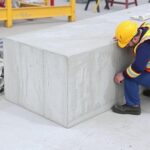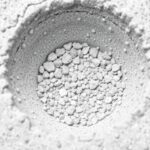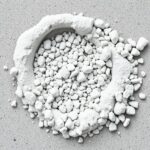
Concrete has a thousand faces, and two of the most interesting are lightness and permeability. Working with lightweight and pervious concrete mixes opens doors to applications that conventional concrete can’t touch—better thermal performance, reduced dead load, and surfaces that let water pass through instead of pooling. This article walks through what these mixes are, how they behave, practical tips for mixing and placing them, and real-world lessons learned on jobsites.
Why choose lightweight or pervious concrete?
Choosing a specialty concrete is always a balance between performance goals and practical constraints. Lightweight concrete reduces structure weight, enabling longer spans, smaller footings, or extra payload capacity in precast units, while pervious concrete addresses stormwater management by permitting infiltration through the pavement.
Both types can contribute to sustainability: lightweight mixes can lower embodied energy when using certain aggregates, and pervious pavements reduce runoff and recharge groundwater. At the same time, each brings trade-offs in strength, durability, and placement procedures that demand attention during design and construction.
Definitions and basic properties
Lightweight concrete includes mixes made with lightweight aggregates or technologies like aerated admixtures and foam. It typically has a lower unit weight—anything from about 50 to 115 lb/ft3 depending on the type—and reduced thermal conductivity compared with normal-weight concrete.
Pervious concrete is a gap-graded mixture with little or no fines, producing a connected void structure that allows water to flow through at rates typically measured in inches per hour. It’s not designed for high compressive strength; instead, its main properties are permeability and adequate structural capacity for the intended use.
Types of lightweight concrete
There are two broad categories: lightweight aggregate concrete and cellular concrete. Lightweight aggregate concrete uses naturally light materials like expanded shale, clay, or slate, or manufactured materials such as expanded polystyrene beads. These aggregates carry load like normal aggregates but weigh less and often have higher porosity.
Cellular or foam concrete creates air voids intentionally through chemical foaming agents or air-entrainment, producing very low density mixes used for void filling, thermal insulation, and non-structural backfill. Each type suits different tasks: structural precast elements favor lightweight aggregate concrete, while leveling fills and insulation layers lean toward cellular concrete.
Types of pervious concrete
Pervious concrete is typically a no-fines mix of cement, coarse aggregate, water, and a small amount of admixture when needed. Variations include exposed-aggregate finishing for plazas and decorative pavements and structural pervious mixes for low-traffic parking lots and some light road applications.
Because pervious concrete relies on open pore channels, it tolerates little or no sand in the mix. Designers tailor the gradation and compaction to achieve a target permeability, usually between 0.1 and 1.0 in./s, while ensuring that structural strength meets the project requirements.
Materials and ingredient selection
Aggregate choice defines both lightweight and pervious mixes. Lightweight aggregates should be tested for water absorption and crush resistance; for pervious concrete, angular coarse aggregates with a controlled gradation create stable interconnected voids. For both, cleanliness matters—contaminants can compromise bond and permeability.
Cement type is usually ordinary Portland cement, but blended cements with fly ash, slag, or silica fume can be used to modify workability and durability. Admixtures play a key role: water reducers improve strength and reduce water demand, while set retarders or accelerators adjust working time as conditions require.
Key material properties to check
When specifying materials, insist on test data for aggregate absorption, particle shape, and gradation. Lightweight aggregates commonly show higher absorption rates—sometimes 10 percent or more—which affects effective water content and must be accounted for in mix design.
For pervious projects, permeability testing and sieve analysis are essential. Also check for fines contamination from stockpiles or hauling, which can plug the void structure and dramatically reduce permeability if not controlled.
Mix design principles
Designing these mixes differs from conventional concrete. For lightweight concrete, you balance unit weight reduction against required strength and stiffness; for pervious, you trade off permeability and load-carrying capacity. The process starts with defining performance targets, then iterating proportions in the lab to meet them.
Water content is critical. Lightweight aggregates may soak up mix water and reduce effective water-to-cement ratio, so pre-wetting or accounting for absorption is necessary. In pervious concrete, minimal water is used—just enough to coat the aggregates and hydrate the cement paste—without filling the voids.
Typical proportioning approaches
Lightweight aggregate concrete often uses higher cement contents to compensate for lower aggregate stiffness and to develop required strengths. A trial batch might begin with a water-cement ratio around 0.40–0.50 for structural lightweight concrete, adjusted based on aggregate absorption and desired workability.
Pervious mixes commonly use a high coarse aggregate-to-cement ratio, with cement content anywhere from 350 to 550 lb/yd3 depending on structural needs. Water-cement ratios for pervious mixes can be relatively high in terms of paste concentration but low in absolute water because paste volume must be controlled to keep voids open.
Laboratory testing and trial batches
Never send a design to the field without trial batches. Lab testing will reveal how pre-wetting aggregates, changing mixing time, or using admixtures affects properties like unit weight, compressive strength, and permeability. Small variations in materials often require re-tuning the mix.
For pervious concrete, permeability testing on compacted slabs and compressive testing on cylinders provide a practical view of how the mix will perform in place. For lightweight concrete, measure dry and saturated unit weight, compressive strength, and modulus of elasticity as part of acceptance criteria.
Batching and mixing techniques
Good mixing practices reduce variability and ensure uniform distribution of paste, admixtures, and aggregates. For lightweight mixes, sequential batching often helps: add water and admixtures first, then cement, then aggregate, and finally adjust with small amounts of water if necessary. Pre-soaking very absorptive aggregates is a proven method to prevent them from taking water out of the paste during mixing.
Pervious concrete is sensitive to overmixing and excess water; both will reduce interconnected voids. Use short, vigorous mixing cycles that coat aggregate uniformly without producing excess fines or paste. In many cases, adding admixtures directly to the mixing water yields better dispersion of chemicals.
Equipment considerations
Standard ready-mix trucks can deliver both lightweight and pervious mixes, but adjustments are necessary. For lightweight aggregate concrete, watch for aggregate segregation and protect aggregates from crushing in the truck drum. For pervious concrete, avoid prolonged drum agitation that might compact the mix or cause bleeding.
On-site mixers and smaller mobile plants sometimes yield better control for pervious mixes because they allow precise mixing and immediate placement. When using truck mixers, coordinate delivery times tightly so the mix is placed shortly after production.
Transport and handling
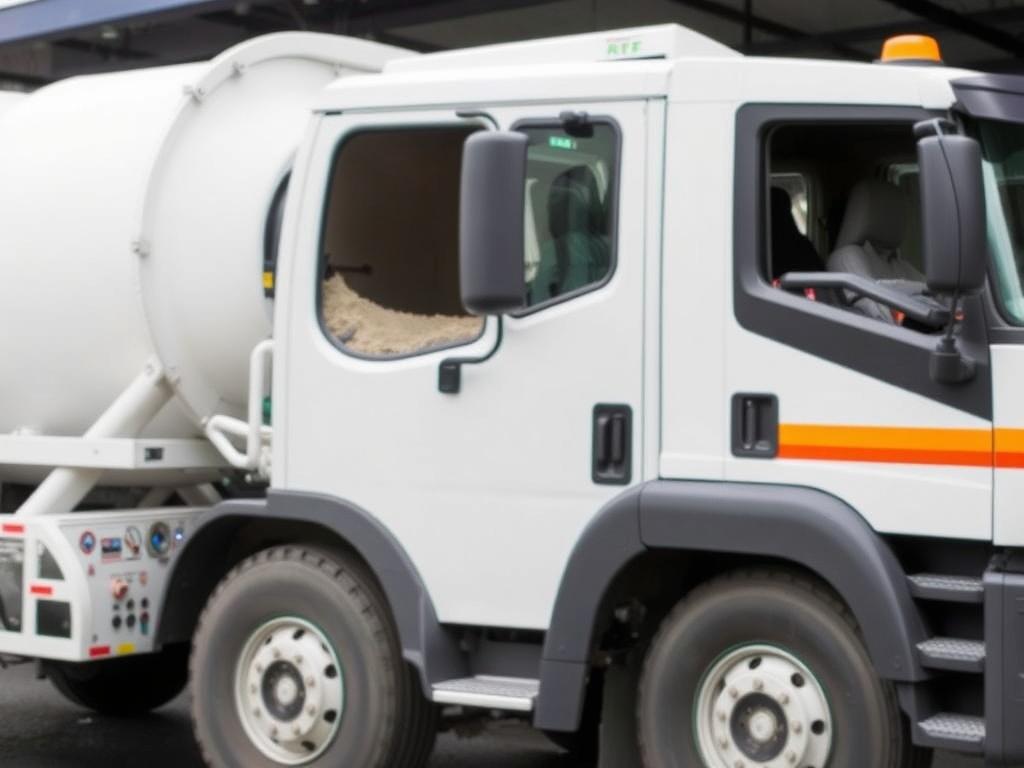
Transport conditions affect quality. Protect lightweight aggregates from contamination and moisture changes in transit. If pre-wetting is required, keep accurate records of the aggregate moisture content and adjust batching water accordingly so the designed water-cement ratio is achieved.
Pervious concrete must be handled gently to preserve the designed void structure. Use dumpers or wheelbarrows with wide tires, and limit drop heights when conveying the material onto the subbase. Rapid placement after mixing minimizes the need for rehandling.
Subbase and preparation for pervious pavements
One of the most important steps for pervious pavements is subbase preparation. A uniform, well-graded permeable subbase supports infiltration and prevents ponding or clogged spots. The subbase often consists of compacted open-graded stone layers designed to store and slowly percolate stormwater.
Ensure geotextile selection and placement prevent fines migration from the subgrade into the pervious layers while maintaining desired infiltration. On sloped sites, consider curb details and flow paths for overflow to protect against erosion during intense storms.
Placement techniques for lightweight concrete
Place lightweight concrete with attention to settlement and finishing protocols. Structural lightweight concrete can be placed with pumps, conveyors, or chutes. Pumping lightweight concretes is feasible but choose pump lines and pressures that accommodate the aggregate size and do not crush delicate aggregates.
Consolidation differs from normal concrete; over-vibration of lightweight concrete risks segregation and loss of entrained air content. Use gentle vibration or rely on self-consolidating mixes where appropriate, always checking that the fresh density and finish meet project requirements.
Placement techniques for pervious concrete
For pervious slabs, continuous placement and careful screeding are essential. Place pervious concrete in lifts no thicker than recommended, typically 3 to 4 inches for many pavements, and avoid excessive compaction that would close voids. Use a screed board or mechanical screeder that floats the surface to the correct elevation without crushing the aggregate skeleton.
Rolling with a light roller on larger areas helps to firm the surface but avoid heavy rollers and repeated passes. Consistency of placement speed and depth ensures uniform permeability across the pavement.
Finishing methods and timing
Finishing pervious concrete is minimal—once the surface is screeded, use a pass with a darby or light float only to remove high spots; avoid troweling which can smear paste into the voids. Do not use steel trowels to produce a hard, shiny surface unless the design intentionally calls for reduced permeability in specific areas.
For lightweight concrete, finishing follows normal practices but watch surface cure and protect against rapid moisture loss. Because some lightweight aggregates can leach fines, a light broom finish or textured finish often works best for exposed applications to reveal the aggregate character without damaging the surface.
Curing strategies for specialty mixes
Curing is one of the most frequently neglected aspects that affects performance long term. Lightweight and pervious concretes have different curing needs: lightweight mixes can suffer from internal moisture migration, while pervious mixes can dry out rapidly because of open voids. Use curing compounds, wet coverings, or continuous moisture systems as appropriate for the project climate and mix type.
With pervious pavement, curing compounds may reduce surface permeability if applied too heavily, so opt for water retention methods like wet burlap or polyethylene sheeting when feasible. Short, frequent moist curing intervals usually produce better hydration and surface integrity than a single heavy application of curing compound.
Quality control and testing
Establish QC checks early and often. For lightweight concrete, monitor unit weight (dry and saturated), compressive strength at specified ages, and moisture content of aggregates. For pervious concrete, acceptance testing typically includes compressive strength, permeability rate, and surface void measurements.
Field testing for pervious pavements can include simple infiltration tests assembled on-site and in-situ core tests later to confirm compaction and void content. Document every batch’s raw material sources and ambient conditions; variability in aggregates or weather will manifest quickly in test results.
Common problems and their remedies
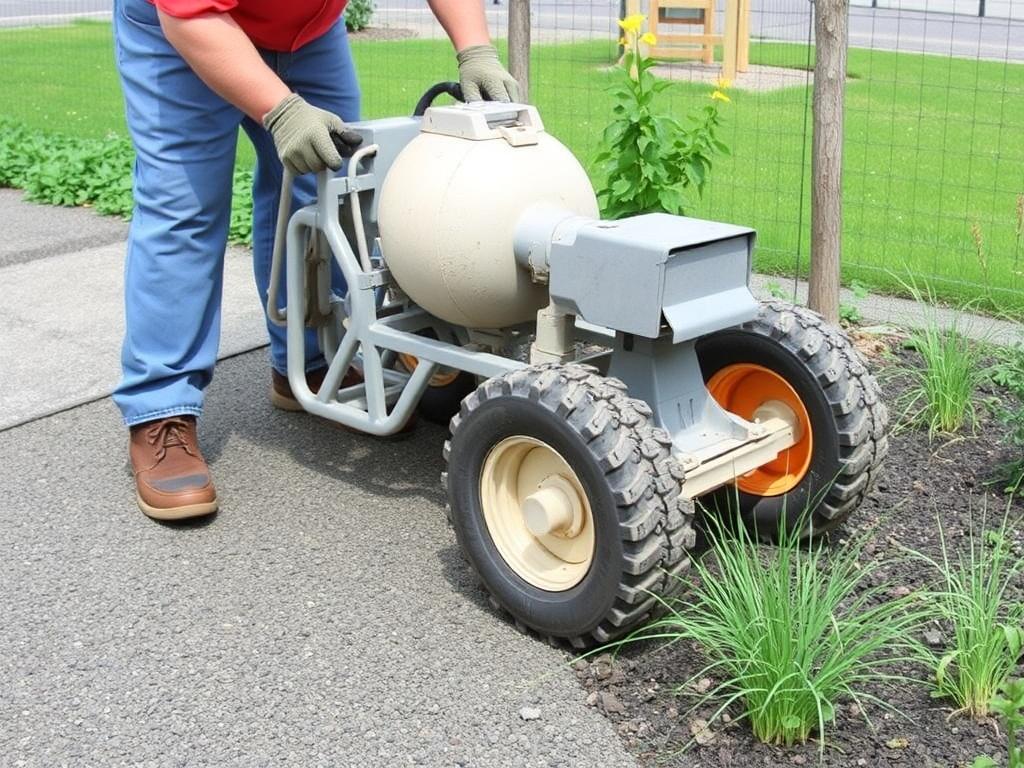
Segregation, low strength, and blocked voids are frequent issues. For segregation in lightweight mixes, reduce slump and improve aggregate gradation; in pervious mixes, too much fine material or over-vibration often causes blockages. Control sources of fines—the stockpile, conveyors, or dust from adjacent operations—and wash or screen aggregates if necessary.
Low early strength in lightweight concrete often results from aggregate absorption; pre-soaking or adding compensating water solves this. For pervious mixes that lose permeability, consider surface vacuuming to remove paste-rich fines or, in severe cases, removal and replacement of affected panels may be necessary.
Freeze-thaw and durability considerations
Pervious concrete is more vulnerable in freeze-thaw climates if water penetrates and freezes within a saturated, poorly drained subbase. Design the pavement and subbase to ensure rapid drainage and storage away from the freeze-prone zone, and use air-entrained mixes where necessary for blended mixes intended to resist cycles.
Lightweight concrete durability depends on aggregate type. Some lightweight aggregates resist abrasion and freeze-thaw well, while others do not. Select aggregates with proven performance characteristics or perform accelerated weathering tests when the structure’s longevity is critical.
Maintenance of pervious pavements
Maintenance for pervious pavements is periodic and preventive. The most common maintenance is vacuum sweeping to remove sediments that clog pores. For sites with heavy sediment loads, design inlet controls or sediment traps upstream to reduce loading.
Snow and deicing strategies differ because pervious surfaces drain meltwater quickly. Use minimal deicing chemicals where possible, as excessive salts can carry fines into the pavement pores and alter subbase chemistry over time.
Structural performance and limitations
Neither lightweight nor pervious concretes should be specified purely for aesthetics; they must satisfy structural requirements. Lightweight concrete often attains design strengths comparable to normal-weight mixes but may have lower modulus of elasticity and different creep behavior, which designers must account for in deflection and long-term serviceability calculations.
Pervious concrete typically provides lower compressive strengths than conventional mixes of similar cement content. It’s perfectly suitable for parking areas, pedestrian paths, and light roadway shoulders, but heavy truck routes or heavily loaded pavements usually require a conventional pavement section or a hybrid design incorporating a structural layer under the pervious surface.
Design detailing and joints
Joint treatment for pervious pavements is critical to performance. Joints should allow for expected thermal movement without creating seepage paths for fines into the subbase. Use sealing strategies that do not block porosity near joints and detail drainage to prevent differential settlement.
In lightweight structural members, connection details and anchorages require careful calculation. Bolted or embedded connections must consider lightweight aggregate crush and embedment behavior; sometimes local reinforcement around anchors is advisable to avoid localized failures.
Case studies: small parking lot retrofit
On a municipal project I worked on, a small parking lot was retrofitted with pervious concrete to address chronic ponding and reduce downstream stormwater fees. The design included a two-layer open-graded stone subbase and a 3-inch pervious layer supported by wider drainage swales for overflow. The owner has reported reduced maintenance and fewer puddles after three years, though seasonal vacuuming has become part of the maintenance regimen.
Early in that project we encountered an unexpected supply issue: the local aggregate source had a higher fines content than the lab samples. We adapted by adding a pre-screening step and slightly enlarging the subbase drainage capacity to accommodate the difference. The lesson was clear—verify every batch source before full-scale production.
Case studies: lightweight precast panel project
I also assisted on a prefabricated façade panel project that relied on expanded shale lightweight aggregate to reduce dead load and simplify crane lifts. The reduced weight enabled smaller cranes and a quicker erection schedule, which saved money and lowered safety risk around congested sites. We paid particular attention to mix consistency so panels had predictable shrinkage and matched camber tolerances.
During production, we monitored aggregate absorption daily and adjusted batching water to keep shrinkage within allowable tolerances. That level of control is nonnegotiable in precast operations because variation translates directly to fit-up problems in the field.
Sustainability and environmental benefits
Both mix types can support sustainability goals. Pervious pavements reduce stormwater runoff, lower the need for detention basins, and help recharge aquifers. Lightweight concrete can reduce the volume of raw materials needed for foundations and supports, and when using recycled or industrial byproduct aggregates, the embodied carbon can be lower than normal-weight counterparts.
Material selection and life-cycle thinking matter. Selecting locally available lightweight aggregates, maximizing recycled content where appropriate, and designing for maintainable pervious systems deliver both environmental and economic benefits over the lifetime of the pavement or structure.
Cost considerations and budgeting
Initial costs for pervious and lightweight concretes can be higher than standard concrete due to specialized aggregates, admixtures, or additional subbase work. However, lifecycle cost savings—smaller structural elements, reduced stormwater infrastructure, or lower energy consumption—often offset upfront premiums. Quantify those downstream savings when making the business case to clients.
Careful scheduling and batching control reduce waste and change order risk, which bolsters cost predictability. Also factor in maintenance—pervious pavements require periodic vacuuming, which should be part of long-term budgeting and owner education.
Regulatory and permitting issues
Pervious pavements sometimes yield permitting advantages because they reduce impervious cover and stormwater runoff. Local codes may offer credits or reduced stormwater fees for compliant installations. Ensure early coordination with permitting agencies to align design and testing criteria with local standards.
Structural lightweight projects may trigger different code considerations around fire resistance, density limits, or seismic detailing depending on jurisdiction. Provide complete material data and testing evidence during plan review to avoid delays.
Best practices checklist
- Verify aggregate sources and pre-qualify suppliers for absorption and gradation.
- Perform laboratory trial batches and adjust for field moisture variations.
- Use gentle, controlled mixing and avoid overworking pervious mixes.
- Coordinate delivery and placement to minimize transit and waiting times.
- Cure appropriately and plan maintenance, especially vacuum sweeping for pervious pavements.
Safety considerations on the jobsite

Handling specialty aggregates can present new hazards. Lightweight aggregates in dust form can be respirable and require dust control and PPE. Foam or chemical admixtures for cellular concretes necessitate manufacturer guidance for safe handling and storage.
Pervious pavements often require work within the pavement footprint for longer periods, so traffic control and fall-protection planning remain important. Keep crews trained on handling procedures to prevent burns from cementitious materials and to work safely around concrete pumps and compactors.
Emerging trends and innovations
Research continues into hybrid systems—structural lightweight layers topped with pervious surfaces—that balance load capacity with stormwater benefits. New admixtures and polymer-modified pastes expand the potential for durable, permeable surfaces in harsher climates. Additionally, recycled plastics and glass are making their way as aggregate alternatives in both lightweight and pervious applications.
Monitoring technologies such as embedded moisture sensors and permeability gauges are improving maintenance planning by providing real-time performance data. Expect to see more data-driven asset management for pervious pavements over the next decade.
Practical tips for contractors
Document everything. Keep records of aggregate moisture, batch weights, ambient conditions, and time from mixing to placement. These details save hours of troubleshooting later and protect both the contractor and owner when disputes arise.
Train crews specifically for these mixes. Techniques that work for normal concrete—excessive vibration, heavy finishing—often backfire with lightweight or pervious concretes. A short crew training session before the first pour pays dividends in reduced rework and better finishes.
Maintenance plan template for pervious pavements
| Task | Frequency | Notes |
|---|---|---|
| Visual inspection | Monthly | Look for siltation, vegetation, or standing water |
| Vacuum sweeping | 1–2 times/year | Timing depends on local sediment loads and leaf fall |
| Power washing | As needed | Use gentle pressures; avoid forcing fines into subbase |
| Subbase inspection | Every 5 years | Investigate any prolonged ponding or settlement |
Working with designers and owners
Collaboration across disciplines is essential. Designers must understand constructability limits and maintenance implications, while owners need clear expectations for lifecycle costs and operational responsibilities. Bring operations staff into the design conversation early for practical feedback on maintenance access and cleaning schedules.
Provide simple owner manuals that explain why vacuuming matters, what to avoid (e.g., sanding, excessive fine-grained runoff), and whom to call for specialized maintenance. Clear communication reduces misuse and prolongs pavement life.
Common myths and clarifications
Pervious concrete is not a cure-all for stormwater; it helps when designed and installed correctly but fails if clogged by upstream sediment. Similarly, lightweight concrete is not inherently weak—many lightweight mixes deliver structural strengths adequate for serious applications, but designers must account for different stiffness and shrinkage behaviors.
Another myth is that pervious pavements require no maintenance. In reality, a simple maintenance plan extends service life significantly and prevents early failure from common clogging mechanisms.
When not to use these mixes
Avoid pervious pavements in locations with heavy fine sediment loads (e.g., construction access roads that will generate dusty runoff) without upstream controls. Also avoid pervious installations where contaminants may seep through into groundwater unless the pavement is part of a managed system with filtration or treatment stages.
Lightweight concrete is not suitable for all structural scenarios—if extremely high stiffness is required, normal-weight concrete or specialized solutions may be better. Evaluate project-specific constraints before committing to a specialty mix.
Contract specification tips
Specifications should be precise about acceptable aggregate sources, water-cement ratios, required permeability rates, testing frequencies, and acceptance criteria. Include handling and curing protocols and assign responsibilities for maintenance and inspection after handover to avoid ambiguity. Performance-based specs often work well: state desired permeability, unit weight, and strength, then allow contractors to propose compliant mixes.
When available, reference local or national standards for pervious and lightweight concretes, and require prequalification testing and a mock-up panel for aesthetic or critical performance attributes.
Personal reflections from the field
Over the years I’ve seen the difference between a well-run pervious project and a poorly executed one: the former behaves predictably for traffic and water, the latter becomes a puddled, clogged mess within a season. The common thread in successful projects is planning—knowing the aggregate, scheduling tight placements, and educating the owner on maintenance.
On the lightweight side, I still remember a bridge deck project where switching to lightweight panels was a game-changer. The contractor reduced crane time, simplified foundation work, and cut trucking costs. We had to be meticulous about mix control, but the schedule gains justified the extra attention to detail.
Resources and further reading
Stay current with industry guidance from organizations like the American Concrete Institute and local DOTs, which publish technical committees’ reports and practice guides for specialty concretes. Manufacturer datasheets and independent laboratory reports also provide critical hands-on information about specific aggregates and admixtures.
Workshops and site visits offer practical exposure—seeing paving crews handle pervious concrete or watching lightweight precast production informs decisions in ways that papers cannot. Invest time in those practical learning opportunities when preparing to specify or install these materials.
Final thoughts
Working with lightweight and pervious concrete mixes requires a shift in thinking from conventional concrete practices. Success depends on careful material selection, disciplined mixing and placement, and an appreciation for the trade-offs between strength, durability, permeability, and weight. Treating these mixes as tailored solutions rather than drop-in replacements will pay off in performance and longevity.
With the right planning, training, and maintenance, lightweight and pervious concretes offer practical, sustainable options for many modern construction challenges. They invite creative design choices and can deliver both functional and environmental benefits when executed with care.