Too often the visible slab is credited for a concrete pour’s success while the soil underneath goes unexamined. Yet the layer beneath—the subgrade—controls how that slab will behave for decades. A carefully prepared subgrade reduces cracking, prevents settlement, and saves money in the long run. In this article I’ll walk through what a good subgrade looks like, why it matters, and how to build one the right way.
Defining the subgrade and its role in a concrete slab
The subgrade is the native soil or placed fill directly beneath the subbase and the concrete slab. It may be natural earth, compacted fill, or a combination of both. Its stiffness, drainage characteristics, and uniformity determine how loads transfer from the slab into the ground.
Think of the subgrade as the foundation for the foundation. If it’s soft, wet, or variable, the slab above will bend, crack, or settle unevenly. A structurally sound subgrade reduces localized deflections that lead to surface distress.
How poor subgrade preparation shows up on a finished slab
Signs of inadequate subgrade work are often blamed on concrete or reinforcement, but the root cause is usually below. Common symptoms include wide or map cracking, edge spalling, corner pops in slabs, and differential settlement that creates trip hazards or pooling water.
In many repairs I’ve overseen, surface fixes like crack injection or overlay simply delayed failure because the underlying material continued to move. Fixing the soil problem is almost always more permanent than addressing surface symptoms alone.
Soil types and their behavior
Not all soils act the same. Granular soils like sand and gravel drain well and compact easily, giving predictable support. Clay-rich soils absorb water, swell, and lose strength when wet, creating potential for significant movement.
Organic soils, peat, and highly compressible silts are poor candidates to remain under a slab. They compress under load and often require removal or stabilization. Knowing your site’s soil types early saves time and money.
Site investigation: what to test and why
Before you dig, get a simple soil report or at least a couple of borings. A geotechnical engineer will identify bearing capacity, moisture conditions, and problematic layers and recommend treatment. Even for small projects, a single test hole can reveal surprises.
Key tests include Atterberg limits to assess clay properties, Standard Proctor or Modified Proctor for compaction behavior, and classification tests (USCS) to identify grain-size distributions. These results inform compaction targets and whether stabilization is necessary.
Clearing and stripping: getting rid of unsuitable materials
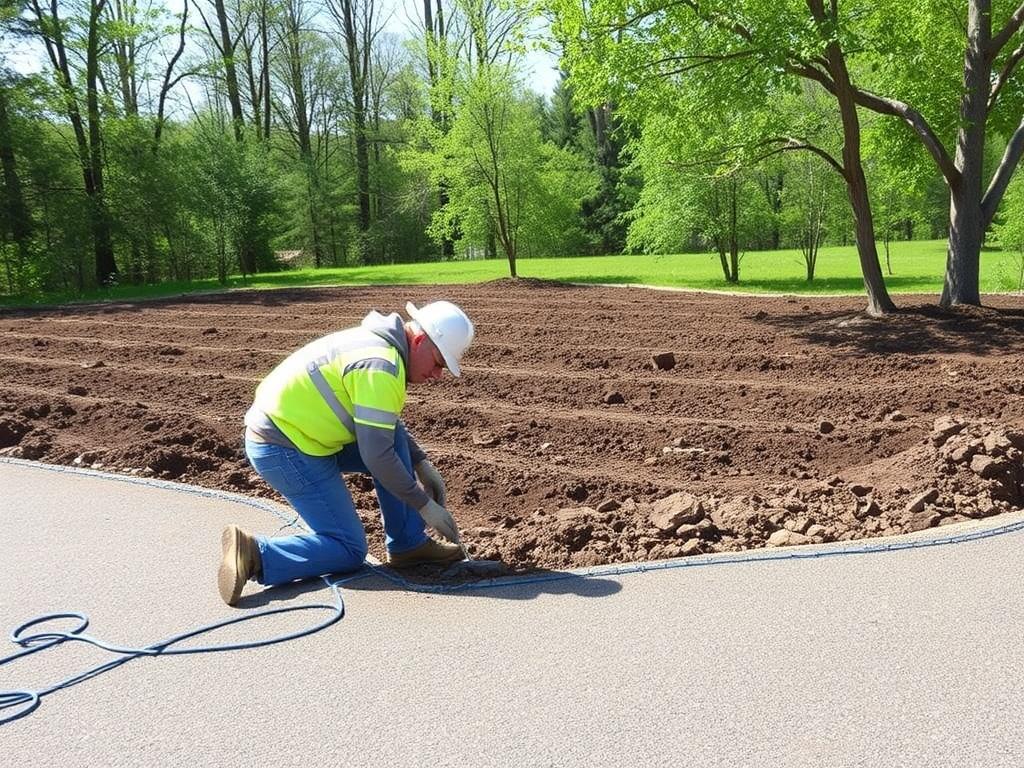
Preparation starts with removing topsoil, vegetation, and any organic matter that will decompose or compress. Left in place, these materials will create voids and settlement under the slab. Clear to the depth specified by the engineer or designer.
In one small warehouse job I managed, we stripped only two inches of topsoil to save budget and paid later with a settled interior slab that required full removal and re-pour. Skipping proper stripping is a false economy.
Grading and establishing subgrade slope
Uniform grading ensures the slab will have a consistent structural reaction to loads and that surface drainage won’t concentrate water at the edges. The subgrade should be graded to the elevations shown on drawings and to provide positive drainage away from the slab perimeter.
Grade tolerances are typically tighter for slabs-on-grade than for roads. You’ll want to check elevations frequently with a laser or transit and correct low spots before compaction to avoid soft pockets beneath the concrete.
Compaction fundamentals: density and moisture control
Compaction increases the soil’s stiffness by reducing voids and increasing interparticle contact. Most specifications call for a compaction percent of the maximum dry density from a Proctor test—commonly 95% for structural slabs, though project documents may vary.
Moisture control is as important as energy applied. Soil compacted too wet will struggle to reach the target density; soil too dry may require water to achieve adequate compaction. Field technicians commonly use a nuclear gauge or sand cone to confirm both density and moisture content.
Equipment and techniques for compaction
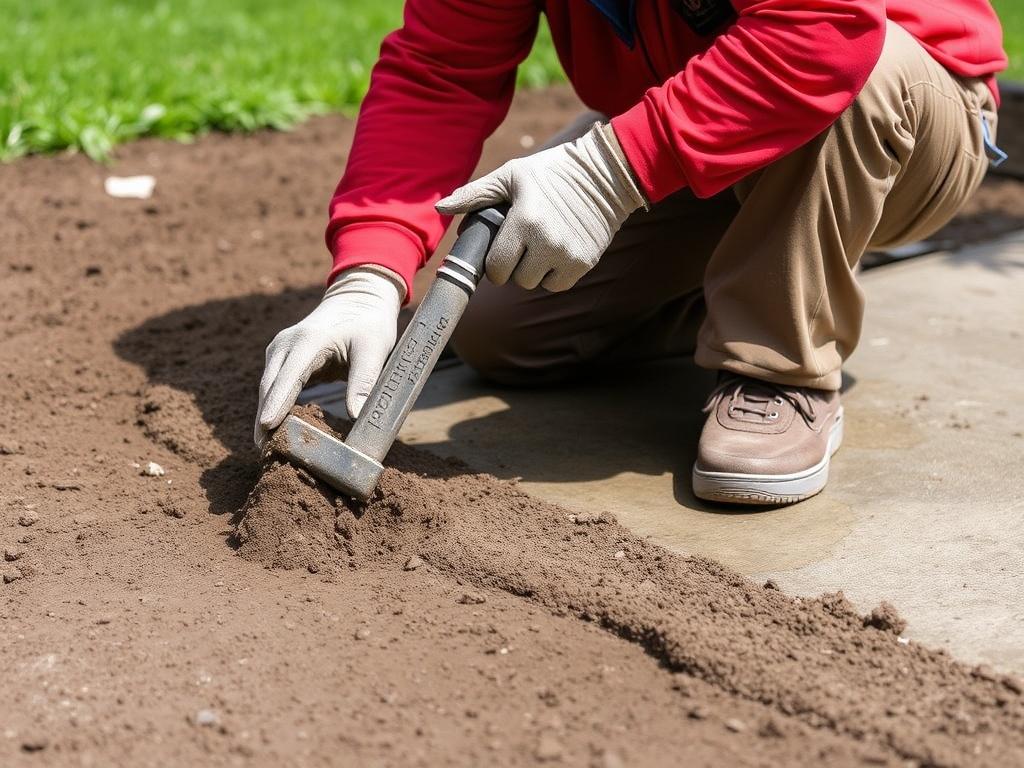
Select compaction equipment to match soil type and layer thickness. Vibratory plate compactors and rammers work well for thin layers and granular soils, while heavy sheepsfoot rollers or padfoot rollers are appropriate for cohensive clays and thicker lifts. Use roller passes and pass patterns recommended by the engineer.
Lift thickness matters: compacting in controlled lifts—often 6 to 8 inches for heavy roller compaction or thinner for plate compactors—ensures the compaction energy penetrates the entire lift. Overly thick lifts are a common cause of under-compaction.
Stabilization methods: lime, cement, and mechanical options
When native soils are problematic, stabilization can turn them into a reliable subgrade. Lime or cement treatment changes clay mineralogy and reduces plasticity, improving load-bearing capacity and reducing swelling. Mechanical stabilization uses geogrids or aggregate to reinforce the subgrade.
Choosing a stabilizer depends on soil chemistry and expected loads. Lime is effective for high-plasticity clays; cement is better for sandy soils needing strength. Laboratory mix designs from the geotechnical engineer ensure the right treatment and dosage.
Geotextiles and geogrids: when and how to use them
Geotextiles separate fine soils from aggregate layers, preventing contamination and preserving drainage. Geogrids provide tensile reinforcement, distributing loads and reducing rutting or shear failures. Both are invaluable in weak soil conditions or where differential settlement is a risk.
Installation matters: geotextiles must be overlapped per manufacturer guidance, and geogrids often require placement beneath the granular subbase. Proper anchoring and seam preparation prevent migration and ensure long-term performance.
Granular subbase selection and layering
A well-graded crushed stone or aggregate subbase creates a stable working platform and enhances drainage beneath the slab. The typical residential subbase is 4 to 6 inches of compacted crushed stone, while commercial slabs may require 6 to 12 inches or more based on loads.
Use clean, angular aggregate that compacts tightly. Gradation matters: a blend that minimizes voids while allowing drainage is ideal. The subbase should be compacted to the same percent density specified for the subgrade or as directed by the geotechnical report.
Drainage control and groundwater management
Standing water beneath a slab is a silent destroyer. Poor drainage can raise moisture content, soften the subgrade, and create frost heave in cold climates. Surface grading, perimeter drains, and sub-slab drainage systems can be necessary components of subgrade preparation.
If the water table is high, consider a capillary break such as a layer of clean coarse aggregate or geotextile to prevent moisture migration up into the slab. For sites with persistent groundwater, underdrains or sump systems may be required.
Temperature and frost considerations
In colder climates, freeze-thaw cycles can heave an improperly protected subgrade and damage the slab. Remove frost-susceptible soils and provide insulation or deeper subgrades below frost lines when necessary. Protect freshly prepared subgrades from freezing before the concrete is placed.
For early-season pours, pre-warming subbase materials and delaying the pour until subgrade temperature is stable reduces the risk of inconsistent compaction and thaw-related settlement after the pour.
Proof-rolling and field verification
Proof-rolling is an economical way to find soft pockets and highly compressible areas before the subbase or slab is placed. Using a loaded pneumatic-tired roller or truck, crews roll the prepared subgrade while an engineer observes for pumping, rutting, or deflection.
Areas that show distress during proof-rolling should be excavated, replaced, or stabilized. Relying only on density tests without proof-rolling can miss localized failures that affect slab performance.
Testing and documentation: keeping quality on record
Density and moisture tests are the backbone of quality control. Nuclear gauges, sand cones, and laboratory Proctor tests together create a reliable record that shows the subgrade met the specified conditions before the concrete arrived. Keep all test reports on file.
Documentation protects owners and contractors alike. When disputes arise, a complete set of test records and site photos often clarifies whether failures are due to workmanship, materials, or design assumptions.
Integration with concrete design and reinforcement
Subgrade design and concrete mix design are linked. A weak subgrade may require thicker slabs, closer joint spacing, or additional reinforcement to distribute loads. Bring the structural and geotechnical teams together early so that slab thickness and reinforcement match subgrade conditions.
In practice, I’ve seen contracts where the structural drawings called for a 4-inch slab without considering a marshy subgrade; the compromise was a thicker slab and added reinforcement to compensate, which could have been avoided with better early coordination.
Edge support and exterior transitions
Edges are vulnerable when the subgrade drops away, such as at footpaths, driveways, or curbs. Properly compacted and supported edges prevent spalling and edge breaks. Design edge details to extend width or provide stiffened curbs where loads concentrate.
Transitions from slab to pavement or landscaping must account for different stiffnesses. A gradual change or a properly detailed keyed joint prevents stress concentrations at interfaces.
Working around utilities and existing structures
When utilities traverse a slab area, coordinate protection of the utility lines with subgrade compaction. Backfill around pipes should be compacted in controlled lifts and, where sensitive utilities exist, use lean-mix concrete or flowable fill as bedding and support.
Adjacent structures can transfer loads or restrict compaction equipment access. Temporary measures like lightweight plate compactors or shallow lifts may be used in tight spots, with field verification to ensure density targets are still met.
Environmental and regulatory considerations
Soil disturbance may be subject to erosion and sediment control regulations, especially near waterways. Implement silt fences, sediment traps, and stabilize exposed soils until construction is complete. Avoid stockpiling unsuitable materials near drains or slopes.
Contaminated soils discovered during stripping require special handling and may alter the project schedule and budget. Test suspicious soils early and engage environmental specialists when necessary.
Cost-benefit analysis: expense now versus repair later
Investing in proper subgrade preparation adds upfront cost, but the lifecycle savings are substantial. Repairs to a failed slab—full-depth removal, replacement, or underpinning—are typically an order of magnitude more expensive than doing the subgrade right the first time.
Owners often balk at initial expense, but sensible contractors include clear estimates of the risks and potential hidden costs of inadequate preparation. A dollar spent on compaction often prevents ten dollars in repairs.
Common mistakes to avoid
Contractors often make the same avoidable mistakes: inadequate stripping of organics, failing to test for moisture content, over-relying on visual compaction checks, and ignoring poor soil conditions. Each risk can be mitigated with simple field procedures and proper supervision.
Another frequent error is proceeding with a pour after heavy rainfall without reassessing the subgrade. Wet conditions change compaction behavior and can lead to long-term issues. When in doubt, delay and retest.
Troubleshooting post-pour issues and repair strategies
If problems appear after the pour, start with a diagnostic approach: coring for slab thickness and subgrade profiling, ground-penetrating radar for voids, and load testing for bearing concerns. Understanding the failure mechanism guides repair choices.
Common repairs include slab jacking (polyurethane or grout), full-depth replacement of localized areas, and installation of under-slab drainage. When settlement is widespread, reconstructing the subgrade with proper stabilization might be the only durable solution.
Scheduling and coordination on site
Subgrade work often competes with other trades. Plan work sequences so compaction, testing, and any stabilization occur well before concrete placement windows. Allow contingency time for unexpected conditions discovered during stripping.
Communicate with concrete crews about access and protection. A freshly prepared subgrade should be kept clean and free of heavy tracking from other site traffic that could distort the finished surface elevations.
Safety considerations during subgrade preparation
Excavations create fall, cave-in, and equipment hazards. Follow OSHA excavation safety standards, provide shoring or sloping for deep cuts, and control the movement of heavy equipment near edges. Train operators on the risks of compacting near buried utilities.
Dust control is also a safety and community concern. Use water or dust suppressants as required by local regulations to reduce airborne particulate matter during grading and compaction operations.
Materials sourcing and quality control
Select subbase and fill materials from reputable suppliers with documented gradations and crush characteristics. Reject materials that contain excessive fines, organics, or deleterious contaminants. Field testing of delivered materials verifies consistency.
When using recycled materials, ensure they meet the same performance criteria as virgin aggregates. Recycled concrete aggregate can be acceptable in many applications but may require additional testing and processing to meet specifications.
Documentation checklist before the concrete pour
Before the pour, require sign-off items: proof of compaction tests, moisture content reports, proof-rolling observations, subbase thickness checks, and any stabilization reports. Photos of the prepared subgrade are useful supporting evidence for future reference.
A short table below summarizes a typical pre-pour sign-off checklist for site teams and owners to use as a quick reference.
Item
Pass/Fail
Notes
Topsoil/organic removal
Subgrade elevation and grade
Compaction tests (density/moisture)
Target % of Proctor
Proof-rolling observation
Any soft spots remediated
Subbase thickness and material quality
Drainage measures in place
Perimeter drains, slopes
Practical tips from field experience
From years on jobsites, I can share a few practical tips that separate good outcomes from mediocre ones. First, walk the subgrade at the end of each day and after any rain. You’ll notice subtle softening or pooling early enough to act.
Second, never let the subgrade become the playground for unrelated trades. Heavy tracked equipment, material stockpiles, and foot traffic can all alter compacted elevations. Designate routes and staging areas to protect prepared surfaces.
Communication between stakeholders
Successful subgrade preparation requires clear roles: the owner, geotechnical engineer, general contractor, and testing agency must agree on acceptance criteria and schedules. A pre-pour meeting to review test results and sign-offs prevents last-minute disputes.
When changes occur—such as discovering unsuitable soils—document the decision-making and cost impacts. A shared record helps maintain trust between parties and speeds resolution of unforeseen issues.
Design allowances and conservative thinking
Conservatism in design often pays dividends. If a site is marginal, designers can specify a slightly thicker slab, more reinforcement, or a deeper aggregate base as a hedge against unknowns. These modest changes are inexpensive relative to potential repairs.
Similarly, specifying a slightly higher compaction percent or including a geotextile where soils look marginal can eliminate the need for costly stabilization later. Small increments of preventive care are powerful.
Innovations and modern approaches
Modern tools like ground-penetrating radar, real-time compaction monitoring, and improved stabilizers give contractors more certainty. Intelligent compaction systems allow continuous compaction measurement, reducing the number of discrete tests needed and providing a broad view of compaction uniformity.
These technologies aren’t cheap, but on large projects they reduce rework and speed timelines. Owners and contractors should consider them as part of a value-engineered approach rather than premium add-ons.
Case study: saving a warehouse slab through remediation
On a mid-sized warehouse job I oversaw, initial borings revealed a buried peat lens under the northeast slab. Removing the peat and backfilling with compacted aggregate was estimated at 15% of the pavement budget, but prevented unpredictable settlement in a high-traffic area.
We stabilized adjacent areas with geotextile and increased subbase thickness near the lens. The result was a uniform slab with no settlement issues after a full year of heavy forklift traffic. The early decision avoided disruptive and costly repairs later.
When to call a specialist
If you encounter expansive clays, perched water tables, contaminated soils, or historic fill, bring in a geotechnical specialist. These conditions often require tailored approaches and laboratory testing to choose the right stabilization method and avoid repeating work.
Specialists can also provide performance-based specifications rather than prescriptive ones, giving contractors flexibility while ensuring the required stiffness and longevity of the subgrade.
Checklist for day-of-pour readiness
On pour day, verify the following: no standing water on the subgrade, compaction reports approved, reinforcement and vapor barriers in place, and access for the concrete truck and pump arranged. A quick site walk with stakeholders avoids surprises.
Also confirm that weather conditions meet the pour requirements. High winds, rapid temperature changes, or unexpected rain can compromise both subgrade and fresh concrete performance.
Long-term maintenance considerations
After the slab is in service, its longevity still depends on the subgrade. Good drainage and routine maintenance, like keeping gutters and downspouts functional and preventing concentrated loads at edges, protect the subgrade’s performance. Avoid planting large trees adjacent to slabs where roots can disturb the soil.
Keep records of as-built subgrade conditions and test reports; they are invaluable when planning future modifications or repairs and help troubleshoot any long-term issues that might arise.
Summary of best practices
The essentials are straightforward but require discipline: investigate the soil, remove unsuitable materials, provide a stable and well-drained subbase, compact to specified density and moisture, test and document the results, and coordinate across trades. Following these steps reduces risk and extends service life.
Think of subgrade preparation as insurance for the slab above. It’s not glamorous work, but it’s where durability starts. Companies that treat it as a priority deliver better-performing structures and fewer surprises over the building’s life.
Final thoughts on prioritizing the groundwork
A concrete pour is a visible milestone, but the unseen preparation determines whether that milestone lasts. Prioritizing subgrade work saves time, money, and headaches in the long run and produces a slab that performs as intended.
When planning your next pour, insist on proper investigation, clear acceptance criteria, and documented verification before the concrete truck arrives. The extra care beneath your slab pays dividends for decades of service.