Concrete is often called the most-used material on earth after water, and cement is the invisible glue that makes modern construction possible. This article, a practical and detailed guide to different types of cement and their applications, walks through the chemistry, performance characteristics, typical uses, handling considerations, and sustainable choices that matter to engineers, contractors, and homeowners alike.
Whether you are specifying a mix for a coastal foundation, choosing a repair mortar for a historic building, or trying to reduce the carbon footprint of a project, understanding cement varieties helps you avoid costly mistakes. I’ll share technical facts, selection checklists, and a few field-tested tips from real projects I’ve encountered over the years.
How cement works: the basics you need to know
At its simplest, cement is a finely ground binder that reacts with water to form a paste capable of binding aggregates into a hard, stone-like mass. That chemical reaction, called hydration, builds strength gradually over days and weeks, and its rate and final properties depend on the cement’s mineralogy and fineness.
Cements are manufactured by heating raw materials like limestone and clay to high temperatures to form clinker, which is then ground and blended with additives. Those additives — gypsum, pozzolans, slag, or other oxides — are what produce the different cement types and tune their performance for specific environments and applications.
Performance variables you’ll repeatedly encounter include initial and later strength, setting time, heat of hydration, sulfate resistance, and durability in aggressive environments. Choosing the right cement is about matching those variables to the design requirements and the site conditions.
Classification of cement: how standards organize varieties
Standards organizations classify cement by composition and performance so specifiers can compare products. In the United States, ASTM designations like Type I, II, III, IV, and V for portland cements are common, while international standards (EN) use different labels such as CEM I, II, III, etc., corresponding to their blend contents.
Broadly speaking, classifications include ordinary portland cements, blended cements containing supplementary cementitious materials (SCMs), specialty cements designed for high early strength or resistance to specific chemicals, and niche products for oil-well, masonry, or refractory applications. The standard you use depends on project location and client specifications.
Understanding these categories allows you to read a spec sheet and immediately know if a cement will meet durability needs, control heat in mass pours, or resist sulfate attack in marine or industrial soils.
Ordinary portland cement (OPC / Type I)
Ordinary portland cement is the most widely used cement for general construction where special properties are not required, and it is essentially clinker ground with a small percentage of gypsum. Its balanced composition provides good early and later strengths, making it the default choice for slabs, beams, and columns on many projects.
OPC performs well in normal environments but is not ideal where sulfate exposure, pronounced heat-of-hydration issues, or aggressive chemical conditions exist. For those scenarios, one typically selects a specialty or blended cement tailored to the challenge.
In my experience specifying municipal sidewalks and standard residential foundations, I relied on OPC for predictable workability and curing behavior; it simplifies batching and admixture selection because many product datasheets assume OPC as the baseline binder.
Portland pozzolana cement (PPC)
Portland pozzolana cement blends portland clinker with pozzolanic materials like fly ash, volcanic ash, silica fume, or calcined clays. Those pozzolans react slowly with calcium hydroxide produced during hydration to form additional cementitious compounds, enhancing long-term strength and reducing permeability.
PPC is prized for durability in marine and sulfate-bearing environments, lower heat of hydration compared with OPC, and improved resistance to alkali-silica reaction when properly specified. It often offers cost advantages when fly ash is locally available and meets standard quality requirements.
On a lakeside apartment podium I worked on, the designer specified PPC because the mix reduced chloride penetration and provided a denser paste for the cast-in-place decks; the result was fewer cracking issues and better long-term performance without complicated admixture regimes.
Portland slag cement (PSC)
Portland slag cement incorporates ground granulated blast-furnace slag (GGBFS), an industrial byproduct, with clinker and gypsum to create a dense, sulfate-resistant binder. PSC lowers permeability and improves resistance to chemical attack, making it suitable for seawalls, sewage structures, and chemically aggressive environments.
The latent hydraulic reaction of slag contributes to long-term strength gains and can reduce the embodied carbon of the binder when it replaces a significant portion of clinker. However, PSC generally has slower early strength development, so scheduling and formwork removal must account for that property.
When we rehabilitated a pier exposed to tidal salts, the contractor used PSC to mitigate chloride ingress and reduce steel corrosion risk. The slower early strength required an adjusted pour sequence but the structure’s durability improved markedly over traditional OPC mixes.
Rapid-hardening and high-early-strength cements (Type III / special blends)
Rapid-hardening cements are engineered to achieve high early strength, allowing earlier formwork removal and faster construction cycles. This class includes Type III portland cements and some specially ground OPCs with higher alite content and greater fineness to accelerate hydration.
These cements are ideal for cold-weather work, fast-track projects, precast plants, and repair applications where downtime must be minimized. The tradeoff is often higher heat generation and possibly greater shrinkage, so thermal control and crack mitigation strategies are important.
In a winter emergency road repair I helped coordinate, a rapid-hardening blend allowed lanes to reopen within hours rather than days, preventing traffic backups and additional costs. The mix required strict batching control to prevent excessive temperature rise in thicker patches.
Sulfate-resisting cement (SRC / Type V)
Sulfate-resisting cements limit the content of tricalcium aluminate (C3A), the phase most reactive with sulfates, which helps prevent deleterious expansive reactions in sulfate-laden soils and groundwater. This property is critical for foundations, retaining walls, and structures exposed to seawater or industrial effluents.
While SRC is valuable in aggressive sulfate environments, it is not a universal cure; durability ultimately depends on quality mix design, proper cover to reinforcement, and moisture management. Testing the site soils and groundwater for sulfate concentration helps determine when SRC is necessary.
On a coastal wastewater treatment expansion, the engineer specified SRC for submerged elements and PSC for other parts to balance cost and performance. The strategy limited corrosion incidents and extended service life under harsh chemical exposure.
White cement
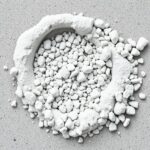
White cement is produced from raw materials low in iron and manganese and is fired under controlled conditions to keep the clinker very light in color. It provides aesthetic possibilities—anything from architectural concrete to colorful precast panels and tile grouts where color consistency matters.
Beyond appearance, white cement may have slightly different hydration behavior and is typically more expensive than gray cements. It is commonly used with pigments to create vibrant exposed finishes or in restoration work to match historic materials.
I once helped select pigmented white cement for a plaza’s decorative panels; the white base ensured strong color fidelity and allowed the contractor to achieve uniform pigment distribution without unexpected dark specks or shading.
Masonry cement and mortar blends
Masonry cement is formulated for mortars and includes portland cement or blended cement with additional plasticizers, lime, and sometimes air-entraining agents to improve workability, bonding, and durability in brick, block, and stone work. It simplifies on-site mixing and delivers consistent performance for masons.
For tuckpointing and unit masonry, mortar mixes are typically specified as Type N, S, M, or O, each with different strength and permeability characteristics. Selecting the correct mortar strength class is important to avoid stress transfer that can damage masonry units.
On an older brick restoration, the wrong high-strength mortar led to cracking in the bricks because the mortar was stiffer than the masonry units. Switching to a more suitable masonry cement blend prevented further damage and preserved the building’s historic fabric.
Oil-well and specialty cements
Oil-well cements are designed to withstand extreme down-hole conditions such as high temperature, pressure, and chemical exposure. They may contain special retarders, accelerators, and additives to ensure pumpability, zonal isolation, and bond with casing under challenging conditions.
Specialty cements also include refractories and high-alumina cements used in kilns, furnaces, or environments requiring resistance to very high temperatures. These products have distinct chemistries and handling procedures compared with general-purpose cements.
When a regional client needed geothermal well casing, the cement supplier provided a tailored oil-well cement blend with temperature-stable additives to maintain slurry properties during a long pump-down. It was a reminder that off-the-shelf cement rarely suffices for extreme environments.
High-alumina cement
High-alumina cement (HAC) is characterized by a high content of alumina and offers rapid strength gain and excellent resistance to high temperatures. It’s frequently used in refractory applications, castings subjected to thermal shock, and certain chemical environments.
HAC can lose strength or change mineralogy over time if exposed to moisture at moderate temperatures, making it unsuitable for many general applications; careful specification and awareness of long-term behavior are necessary. It’s a specialty product, not a replacement for portland-based cements in typical structures.
I recall a repair job on a furnace where HAC was the only viable choice because conventional cement could not withstand the thermal cycling and fire exposure; the repair lasted as designed, validating the use of a more expensive but appropriate binder.
Expansive and shrinkage-compensating cements
Expansive cements are formulated to produce slight expansion during the early setting phases to counteract shrinkage and reduce cracking in restrained elements. They are useful in grout, large slabs, and precision applications where dimensional control is critical.
Shrinkage-compensating cements typically include additives that create controlled ettringite formation or other mechanisms to offset drying shrinkage. Their use must be precisely calculated, as excess expansion can cause its own problems if not constrained by proper detailing.
On a precast yard project producing long, thin planks, shrinkage-compensating cement helped control cracking over time and reduced rejection rates, improving throughput while maintaining dimensional tolerances.
Specialty pozzolans and supplementary cementitious materials (SCMs)
SCMs such as fly ash, silica fume, metakaolin, and GGBFS are common additions to cement or concrete mixes because they enhance durability, reduce permeability, improve workability, and lower embodied carbon. Each SCM behaves differently, so specifying the right one depends on desired performance outcomes.
Silica fume, for instance, is very fine and greatly improves strength and impermeability in high-performance concrete but requires adjustments to water and admixture dosages. Fly ash and slag offer cost and sustainability benefits while improving long-term performance, especially in massive pours where heat control matters.
In a high-rise core pour, using a blend of fly ash and silica fume optimized pumpability and reduced peak temperatures, which helped prevent thermal cracking without sacrificing early strength necessary for climbing formwork.
Table: quick comparison of common cement types
The table below summarizes core attributes for several widely used cements to help you compare options at a glance.
Type
Key constituents
Main properties
Typical applications
OPC (Type I)
Clinker + gypsum
Balanced strength, general-purpose
Slabs, beams, columns, general construction
PPC
Clinker + pozzolans (fly ash, calcined clay)
Lower permeability, improved durability
Marine, foundations, pavements
PSC
Clinker + GGBFS
Sulfate resistance, dense matrix
Seawalls, sewage, aggressive soils
Type III / rapid hardening
Finer clinker
High early strength
Precast, repairs, cold weather work
SRC (Type V)
Low C3A clinker
Sulfate resistance
Foundations in sulfate soils, marine structures
Choosing the right cement: selection criteria
Selecting the correct cement is a balance of technical requirements, environmental conditions, construction schedule, and cost. Consider exposure class (chloride, sulfate, carbonation), required early and 28-day strengths, heat control in mass pours, aesthetic needs, and local materials availability.
Site investigation data—soil sulfate levels, groundwater chemistry, chloride content, and ambient temperature—should influence cement choice. For durability-critical structures, pairing a durable cement with the right cover depth and concrete mix design is more effective than relying on the cement alone.
Also consider compatibility with admixtures and aggregates. Some pozzolans can exacerbate alkali-silica reaction with certain aggregates, so testing and vendor communication are essential when specifying SCMs or reclaimed materials.
Mix design and compatibility with admixtures
Cement chemistry affects how admixtures perform; superplasticizers, retarders, and accelerators can interact with SCMs and clinker composition. Trial mixes are essential to dial in workability, set time, and strength while ensuring consistent pumpability and finishability on site.
Admixture suppliers often provide compatibility charts and recommended dosages for various cements, but real-world trials under local conditions are the best assurance. Adjust water-to-cementitious-materials ratio, monitor slump retention, and test air content if using air-entraining agents.
In my precast shop experience, switching to a new source of fly ash changed slump and set times; without a trial batch we would have faced casting delays. Always confirm admixture behavior when your cement source or SCM proportions change.
Mixing, curing, and practical handling tips
Proper mixing and curing are as important as the cement itself. Adequate mixing ensures uniform dispersion of cement and SCMs, while curing controls moisture availability for hydration and prevents thermal and drying shrinkage cracking, especially in the first 7 to 14 days.
For small jobs, measure carefully, use clean water, and avoid excessive retempering, which harms strength. For large pours, monitor concrete temperature, plan for staged placement, and use curing compounds or wet curing blankets where appropriate to maintain moisture during early hydration.
Storage matters: keep cement dry, off the floor, and sealed in a cool, ventilated space. Cement that has absorbed moisture or has agglomerated can lead to inconsistent batches and reduced strength—inspect bags or silos regularly.
Quality control and testing
Routine testing—compressive strength at 7 and 28 days, setting times, soundness, and chemical analyses—verifies the cement meets specifications. For blended cements, verify the proportion of SCMs and check for consistency between deliveries from suppliers.
On-site concrete testing complements cement QC: monitor slump, air content, 28-day strength, and permeability or rapid chloride migration tests if durability is a concern. Document results to support warranties and to trace problems back to materials or placement practices.
When I oversaw a bridge deck pour, we required mill certificates from the cement supplier and performed destructive core testing at later stages to validate the design life assumptions. Having those records simplified a later dispute about chloride-induced corrosion.
Cost considerations and procurement strategies
Cement cost is influenced by raw material and energy prices, distance from the plant, and whether blended cements incorporate local industrial byproducts. While OPC may be cheaper up front, blended cements like PPC or PSC can reduce lifecycle costs through improved durability and lower maintenance.
Procure cement with clear specifications, including allowable variability, acceptable SCM percentages, and required test certificates. Consider long-term contracts or local suppliers to minimize transport costs and ensure consistent supply for large projects.
When budgeting, account for differences in formwork stripping time, curing requirements, and admixture needs that accompany certain cements—these operational costs often outweigh small per-ton price differences in the binder itself.
Environmental impact and low-carbon alternatives
Traditional cement production is energy intensive and emits significant CO2 from clinker production. Using SCMs (fly ash, slag, calcined clays) to replace a portion of clinker, optimizing clinker chemistry, and adopting alternative fuels can reduce embodied carbon in concrete.
Newer low-carbon binders and calcined-clay cements (like LC3) show promise by lowering clinker factors while maintaining performance. Specifying higher SCM content where appropriate and encouraging suppliers to report product carbon intensity helps meet sustainability goals.
On a municipal project aiming for reduced embodied carbon, we specified a minimum clinker replacement ratio and required suppliers to tender based on carbon intensity. The change produced measurable reductions in lifecycle impacts without compromising durability or cost significantly.
Repair mortars, grouts, and specialty mixes
Repair and remediation demand cements or preblended mortars engineered for bonding, shrinkage control, and compatibility with existing substrates. Polymer-modified mortars, micro-concretes with silica fume, and non-shrink grouts are common choices depending on the repair scope.
Understanding the original structure’s cement and aggregate is crucial to avoid compatibility issues that can cause delamination or accelerated deterioration. Pre-blended repair products often simplify on-site mixing and provide reproducible performance when used as directed.
In a bridge splice repair, a non-shrink, high-early-strength grout was essential to achieve load-transfer quickly while preventing voids at the steel-concrete interface. Proper surface prep and curing were as important as the grout selection itself.
Maintenance, durability and lifecycle planning
Long-term performance is not just about initial cement choice but about detailing, cover to reinforcement, drainage, and maintenance regimes. Even the best cement can’t compensate for poor design that allows water and chlorides to accumulate on reinforcing steel.
Plan for inspection and maintenance cycles, especially in aggressive environments. Protective overlays, cathodic protection, or increased concrete cover may be necessary complements to choosing a sulfate-resistant or slag-blended cement to achieve the desired service life.
While working on a coastal parking structure, we combined PSC, corrosion inhibitors, and extra cover to the reinforcement; the multi-pronged strategy extended the expected maintenance-free life and justified the higher initial investment.
Testing for durability: beyond standard strength tests
Durability tests—chloride permeability, sulfate resistance, rapid carbonation tests, and freeze-thaw assessments—give insight into long-term behavior that compressive strength does not capture. For structures exposed to deicing salts or seawater, these tests inform appropriate mix choices and protective measures.
Many designers specify low-permeability concrete by setting maximum water-to-cementitious-materials ratios and requiring supplementary durability testing, especially where the cost of failure or repair is high. These proactive measures save money over the structure’s life.
When a hospital expansion required long-term reliability, the owner insisted on chloride diffusion testing for the specified mixes. That upfront testing avoided surprises and supported the decision to use PSC in vulnerable elements.
Practical checklist for specifying cement on a project
Follow a focused checklist when making your specification: determine exposure conditions, required strengths and schedule, local material availability, admixture compatibility, and sustainability targets. Include testing requirements, acceptable variation limits, and supplier qualification criteria.
Include clauses for mill certificates, batch traceability, and acceptance testing. Define remedial actions for nonconforming deliveries so contractors know how to proceed if a batch fails to meet required properties.
Assess site exposure and environmental risks
Specify required durability tests and strengths
Confirm SCM compatibility with aggregates
Require supplier certificates and traceability
Plan curing, formwork removal times, and QC checks
Real-world examples and lessons learned
Construction history is full of instructive failures and successes. The widespread rusting of reinforced members in chloride-rich environments often traces back to inadequate cement choice or insufficient cover, not just poor corrosion protection. Learning from previous projects helps refine specifications.
On one bridge rehabilitation, designers discovered that prior repairs using high-alkali cement accelerated alkali-silica reaction with local aggregates. The team then specified low-alkali cement and optimized SCM content for the new repair strategy, demonstrating how past mistakes can inform better choices.
Another case involved a high-rise core where switching from OPC to a blended cement with silica fume improved durability and finishability for exposed architectural surfaces, reducing maintenance and improving aesthetics over time.
Future trends in cement technology
The cement industry is evolving with focus areas that include lower-carbon binders, carbon capture on cement plants, alternative SCMs like calcined clays, and improved digital quality control. Expect more product-level carbon intensity data and sustainability certifications to appear in specs and bids.
Additionally, nanomaterials, engineered admixtures, and tailored SCM combinations will enable high-performance concretes with reduced clinker content while maintaining or improving durability. Designers and contractors should stay informed as new standards and guidelines emerge.
For practitioners, the takeaway is clear: cement selection will increasingly factor environmental metrics alongside traditional performance characteristics, and staying current will pay off both technically and commercially.
Practical tips and common pitfalls to avoid
Don’t assume a cement labeled “sulfate resistant” solves every durability problem; pair the product with appropriate cover, drainage, and mix design. Also, avoid specifying high early strength for convenience when project sequencing and thermal risk would be better handled with a slower-strengthing, lower-heat blend.
Always run trial mixes when changing cement sources or SCM proportions, and document the results. Poor documentation is a common source of disputes and rework when projects shift hands or contractors change during execution.
Finally, communicate with suppliers early. Cement chemistry and production variability can impact performance, and suppliers can often propose alternative blends, supply logistics, and testing support to meet project constraints.
Choosing the right cement is part science and part practical judgment; it requires matching chemistry and properties to exposure, schedule, aesthetics, and budget. By understanding the major types of cement, their benefits and limits, and how they interact with admixtures and aggregates, you can design concrete that performs for decades rather than years.
Use this guide to different types of cement and their applications as a reference when developing specifications, planning construction sequences, or evaluating supplier proposals, and always validate choices with testing and sound quality control on site. Thoughtful planning up front saves time, money, and headaches over the life of the structure.